The iPod classic
Apple's High-Capacity Sixth-Generation iPod
Forgotten Technology · 2007
Archived on
Associated With
Apple - creator and manufacturer, brand
Defining Feature
An 80GB or 160GB portable player with a colour display, Click Wheel interface and iTunes synchronisation
Status
Discontinued - Introduced in 2007 as the sixth-generation iPod
Overview
Apple introduced the iPod classic in September 2007 as its high-capacity sixth-generation iPod.
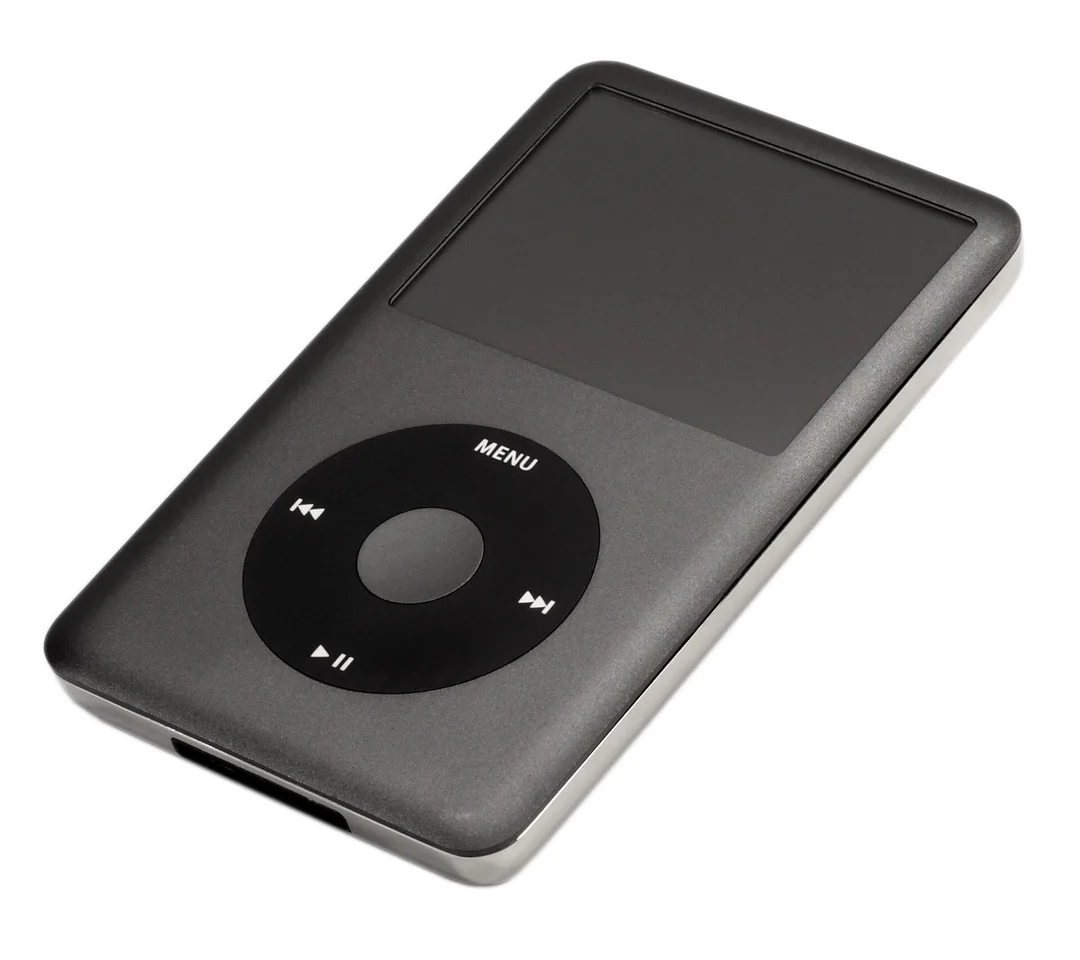
Sold in 80GB and 160GB versions, the all-metal player carried music, podcasts, photos, videos and games while retaining the familiar click wheel.
Cover Flow offered a visual way to browse albums, while iTunes managed and synchronised the media library. The 160GB model was rated for up to 40,000 songs or 200 hours of video.
Why It Mattered
As phones began to absorb more functions, the iPod classic remained focused on carrying a personal media library. Its storage placed thousands of songs and substantial video capacity in a dedicated player without requiring a mobile connection.
Original iPod Lineage
- Apple's 2001 iPod launch specified a 5GB hard drive, capacity for up to 1,000 songs and automatic iTunes synchronisation.
- The original iPod connected to a Mac through FireWire.
Classic Storage and Enclosure
- The 2007 iPod classic launched with 80GB or 160GB of storage.
- Apple described the sixth-generation model as having an all-metal enclosure.
- Apple rated the 160GB model for up to 40,000 songs or 200 hours of video.
Media and Included Software
- iTunes imported, managed and synchronised music, video, podcasts and games.
- The sixth-generation interface included Cover Flow and three preloaded games.
Sources & Records
- Apple Introduces New iPod classic — Announces the 2007 model, its storage capacities, enclosure and included software.
- Apple — identifying iPod models — Distinguishes the 2007, 2008 and 2009 iPod classic models and their storage capacities.
- Apple — obsolete iPod products — Confirms Apple’s obsolete-service classification for the iPod classic models.
- Apple Presents iPod — Documents the original 2001 iPod and its FireWire and iTunes features.
Gallery
Credit
Evan-Amos / Wikimedia Commons
Licence
Public domain
This image is recorded as public domain. Its source provides the provenance.
Caption
The iPod classic made a large personal music collection portable, with a click wheel and dedicated storage rather than the streaming services that later reshaped listening.