Aral Sea Ship Graveyard
The Fishing Vessels Stranded by a Vanishing Sea
Forgotten Places · 1960s
Archived on
Associated With
Soviet-era fishing and maritime industries - creator, owner or operator
Defining Feature
Fishing vessels stranded as the Aral Sea shoreline retreated
Status
Preserved - Former maritime landscape preserved through environmental and historical records
Overview
The Aral Sea ship graveyards left former fishing vessels stranded across exposed seabed in Central Asia.
The ships had served ports, processing plants and fishing communities before river diversion sharply reduced the sea’s inflow from the 1960s. As water levels fell and salinity rose, working maritime landscapes became desert.
Many vessels were abandoned or cut up for scrap as the shoreline retreated. Remaining ships, museum displays and satellite records preserve evidence of the lost fishery, while recovery projects have restored part of the North Aral Sea.
Why It Mattered
The stranded ships became a visible symbol of the social and environmental cost of large-scale river diversion: fisheries collapsed, port economies disappeared and the exposed seabed developed into the salt-laden Aralkum desert.
Ports Before the Retreat
- Ports such as Moynaq supported fishing fleets, canneries and communities while the Aral Sea remained one of the world’s largest inland bodies of water.
- Steel fishing vessels, harbour infrastructure and processing plants served the regional fishery.
- The ships were working objects before the retreating shoreline stranded them.
Creation of the Aralkum Desert
- From the 1960s, diversion of the Amu Darya and Syr Darya for irrigation sharply reduced inflow to the sea.
- Falling water levels and rising salinity destroyed fisheries and removed livelihoods around former ports.
- Exposed seabed became the Aralkum desert, spreading salt and contaminated dust across the region.
Ship Remains and Partial Recovery
- Many stranded vessels were abandoned or later cut up for scrap.
- Remaining vessels, museum displays and satellite records document the lost fishing economy.
- Recovery projects have restored part of the North Aral Sea, although the wider environmental transformation remains visible.
Sources & Records
- NASA Earth Observatory — shrinking Aral Sea — Explains the river diversion and provides satellite evidence of the sea’s retreat.
- World Bank — North Aral Sea Development and Revitalization Project — Explains how irrigation diverted the rivers feeding the sea and documents the Kok-Aral dam’s restoration of northern water levels and fish production.
Gallery
Credit
Photograph reproduced by Central Asia Travel; photographer not identified
Licence
Historical Ephemera
Displayed for commentary, criticism, research and historical documentation where permitted by applicable law. No permission for reuse is granted.
Caption
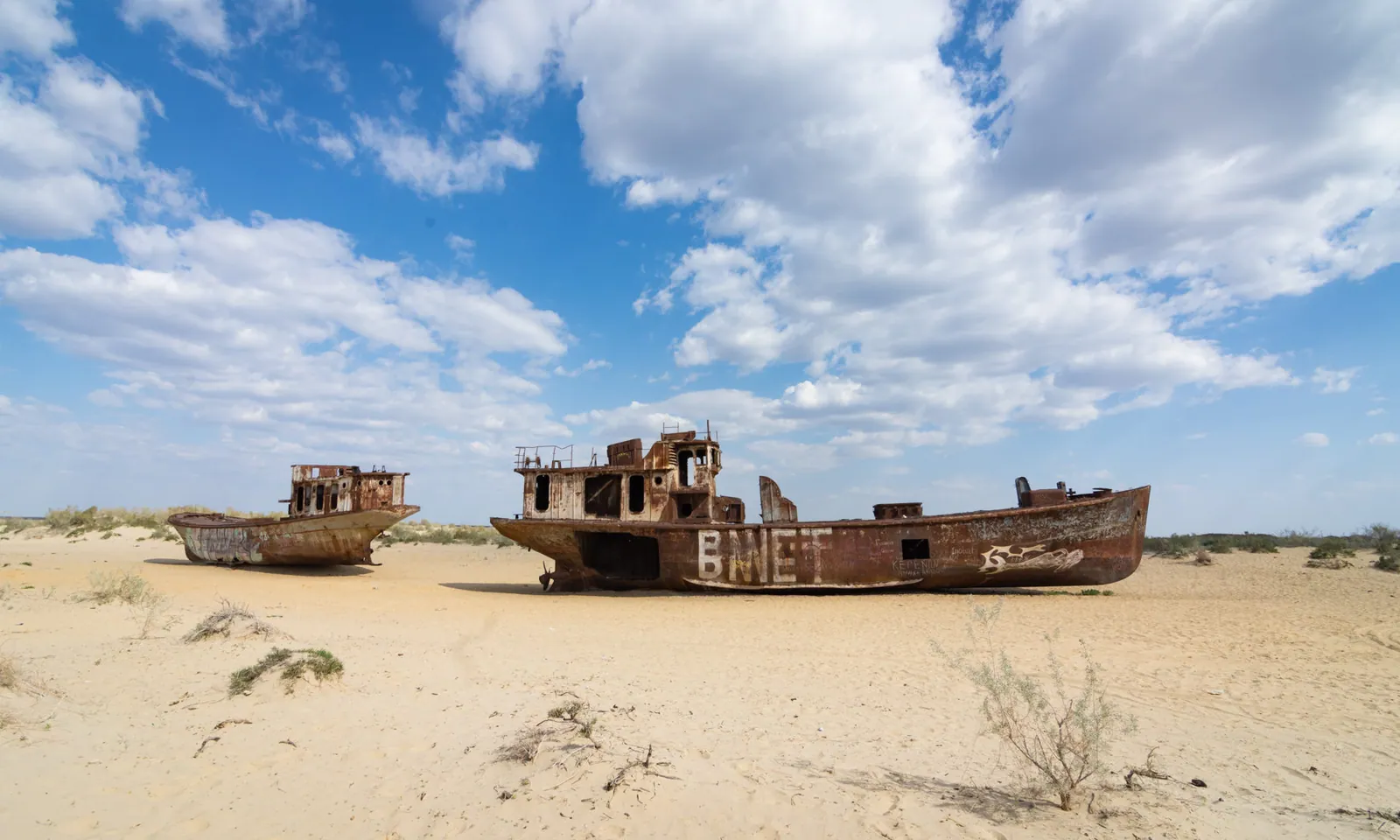
An abandoned vessel on the former Aral seabed shows what the retreating water left behind, separating a once-working boat from the industry and landscape it served.
Credit
Milosz Maslanka / Shutterstock; supplied via EurekAlert!
Licence
Historical Ephemera
Displayed for commentary, criticism, research and historical documentation where permitted by applicable law. No permission for reuse is granted.
Caption
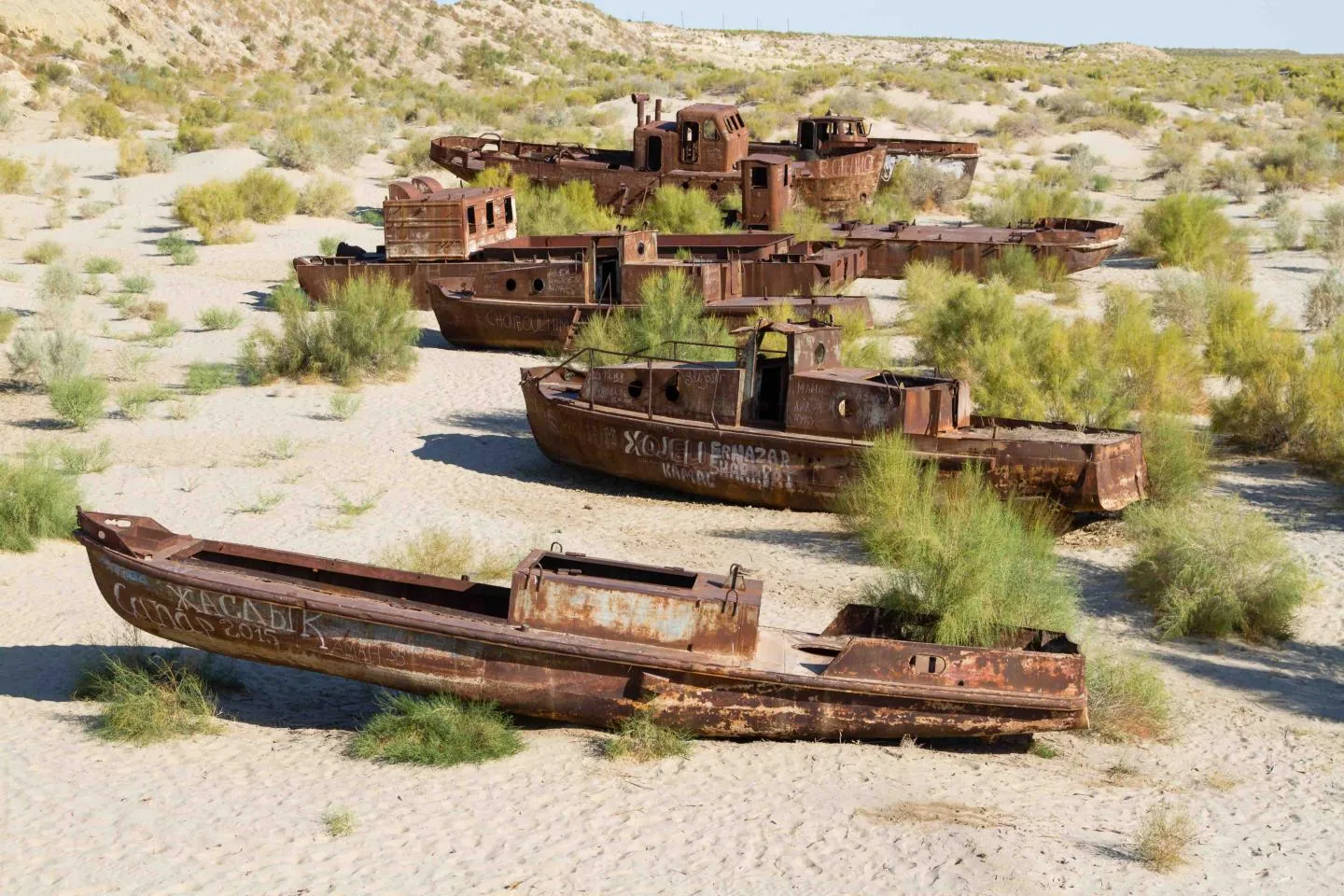
The Aral ship graveyard preserves the remains of a fishing economy on land that was once water, making the sea's contraction visible at the scale of individual vessels.
Credit
Photograph reproduced in the supplied GetYourGuide listing; photographer not identified
Licence
Historical Ephemera
Displayed for commentary, criticism, research and historical documentation where permitted by applicable law. No permission for reuse is granted.
Caption
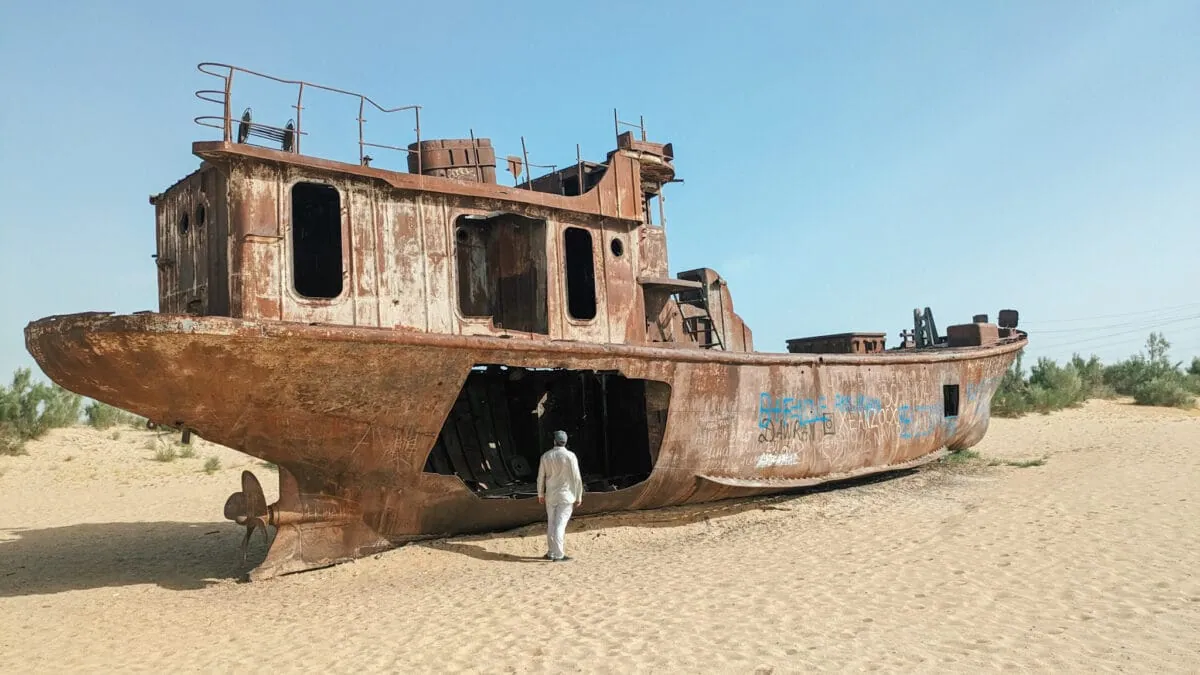
A visitor beside an abandoned Aral vessel gives a sense of its scale, connecting today's journeys across the exposed seabed with the boats' former working lives.
Credit
Photograph reproduced by One Ticket Just Go; named photographer not explicitly stated
Licence
Historical Ephemera
Displayed for commentary, criticism, research and historical documentation where permitted by applicable law. No permission for reuse is granted.
Caption
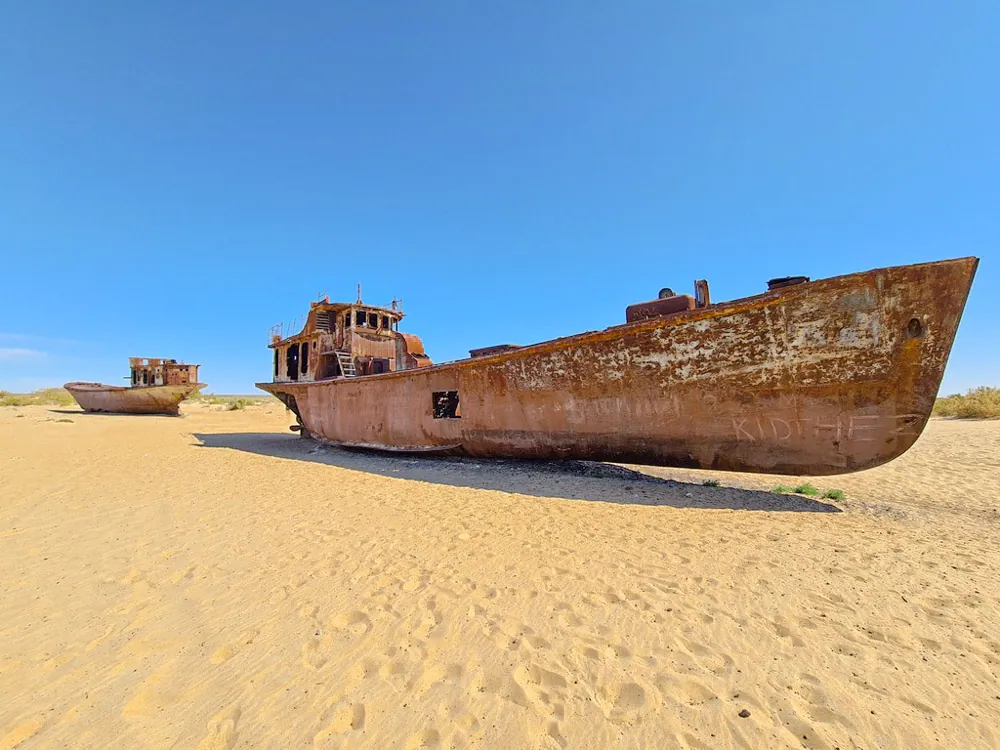
A Muynak vessel rests far from navigable water, illustrating how the Aral Sea's retreat transformed a port landscape into a destination associated with environmental loss.
Credit
WildTicket Asia; individual photographer not identified
Licence
Historical Ephemera
Displayed for commentary, criticism, research and historical documentation where permitted by applicable law. No permission for reuse is granted.
Caption
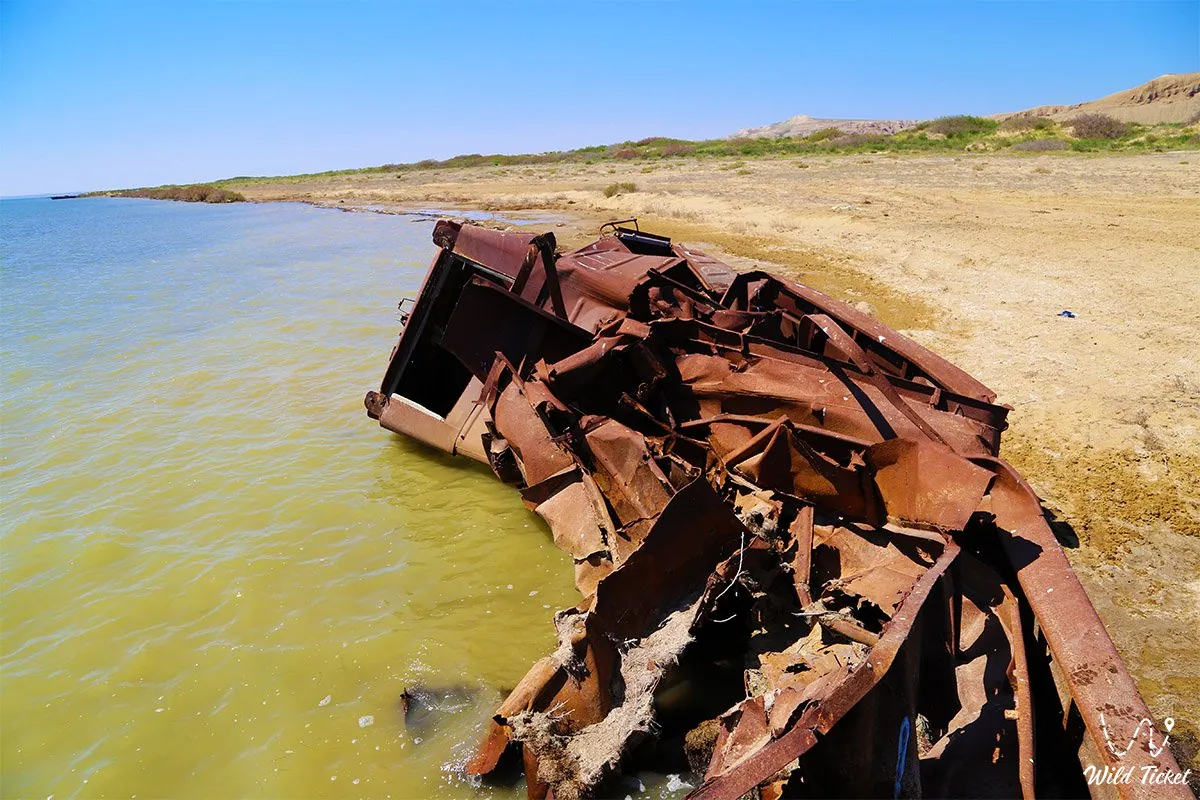
This partially submerged Aral wreck offers a different view from the dry ship graveyards, where the surviving waterline still meets the remains of a fishing vessel.