Britain’s Independent Phone Box Boom
The Companies That Challenged BT
Forgotten Trends · 1987–2000s
Archived on
Associated With
Mercury Communications, Interphone and New World Payphones - independent public-payphone operators
Defining Feature
Competing public-phone networks distinguished by their kiosks, tariffs and payment systems
Status
Defunct - the principal independent networks disappeared or changed hands
Overview
Independent operators installed brightly branded public telephone kiosks across Britain from the late 1980s.
Mercury Communications was an early challenger, followed by Interphone and New World Payphones. Their distinctive designs, tariffs and payment options made competition with BT visible in everyday public spaces.
By January 1999, Britain had approximately 1,700 Interphone boxes and 1,200 New World boxes. As mobile-phone ownership expanded, the independent networks disappeared or changed hands and most of their distinctive kiosks vanished.
Why It Mattered
Independent phone boxes briefly transformed a familiar public utility into a competitive consumer market. Callers could choose between visibly different networks with their own prices, payment methods and branded street furniture.
They also marked the transition between fixed public telephones and the mobile era, displaying competing visions of public calling shortly before personal mobile phones made that competition increasingly irrelevant.
Independent Network Rollouts
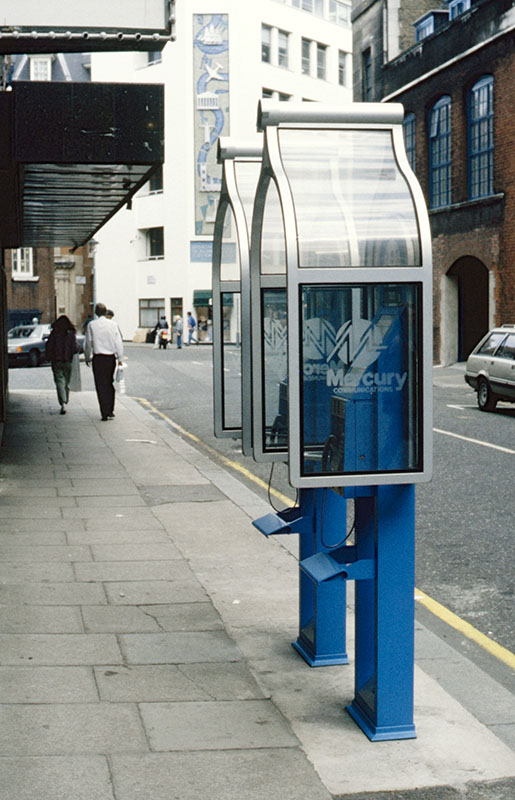
- Mercury public payphones were appearing in Britain by the late 1980s, including two photographed in central London in March 1989.
- IPM Communications acquired approximately 1,500 former Mercury payphone sites in 1995 and operated its British network as Interphone.
- New World’s public-phone rollout began in August 1996, although New World Payphones Limited had been incorporated in 1990.
Competing Kiosk Designs
- Mercury used distinctive kiosks, including the Machin design seen during the late 1980s and early 1990s.
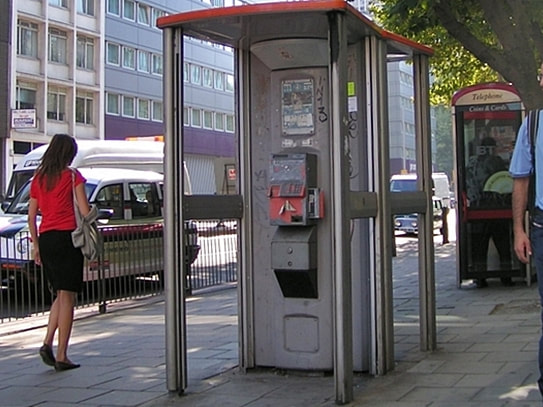
- Interphone installed grey-and-orange, glass-panelled kiosks with flat roofs.
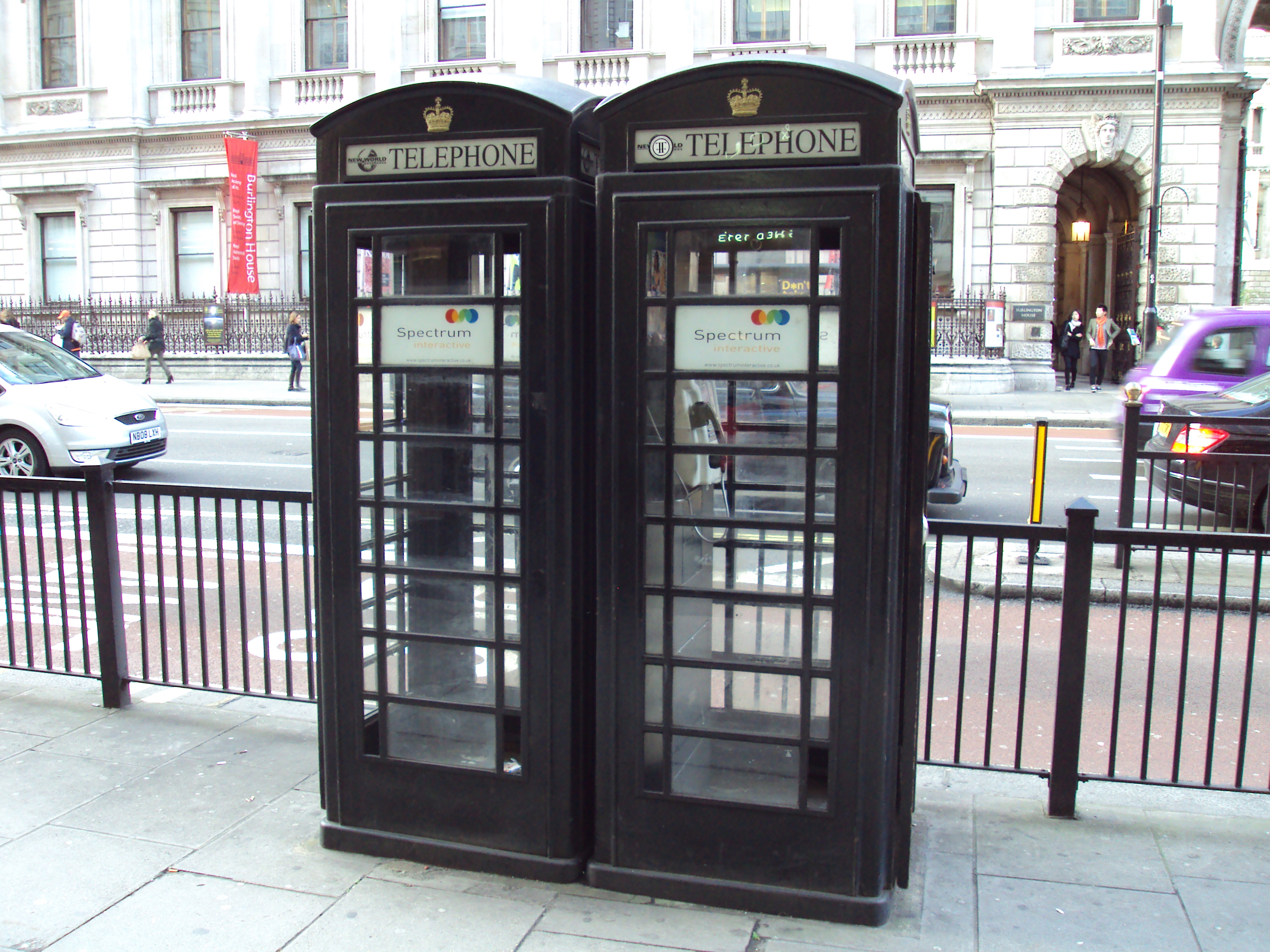
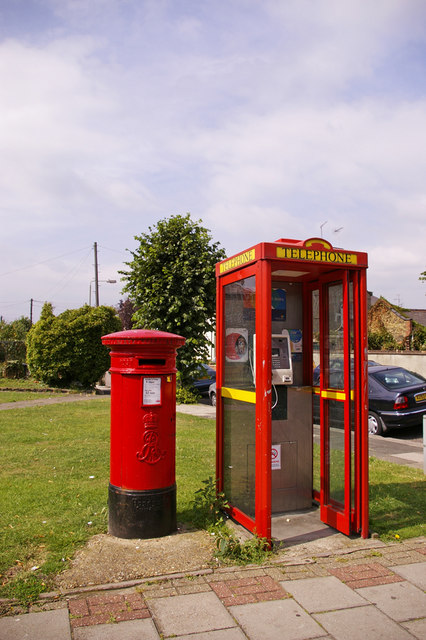
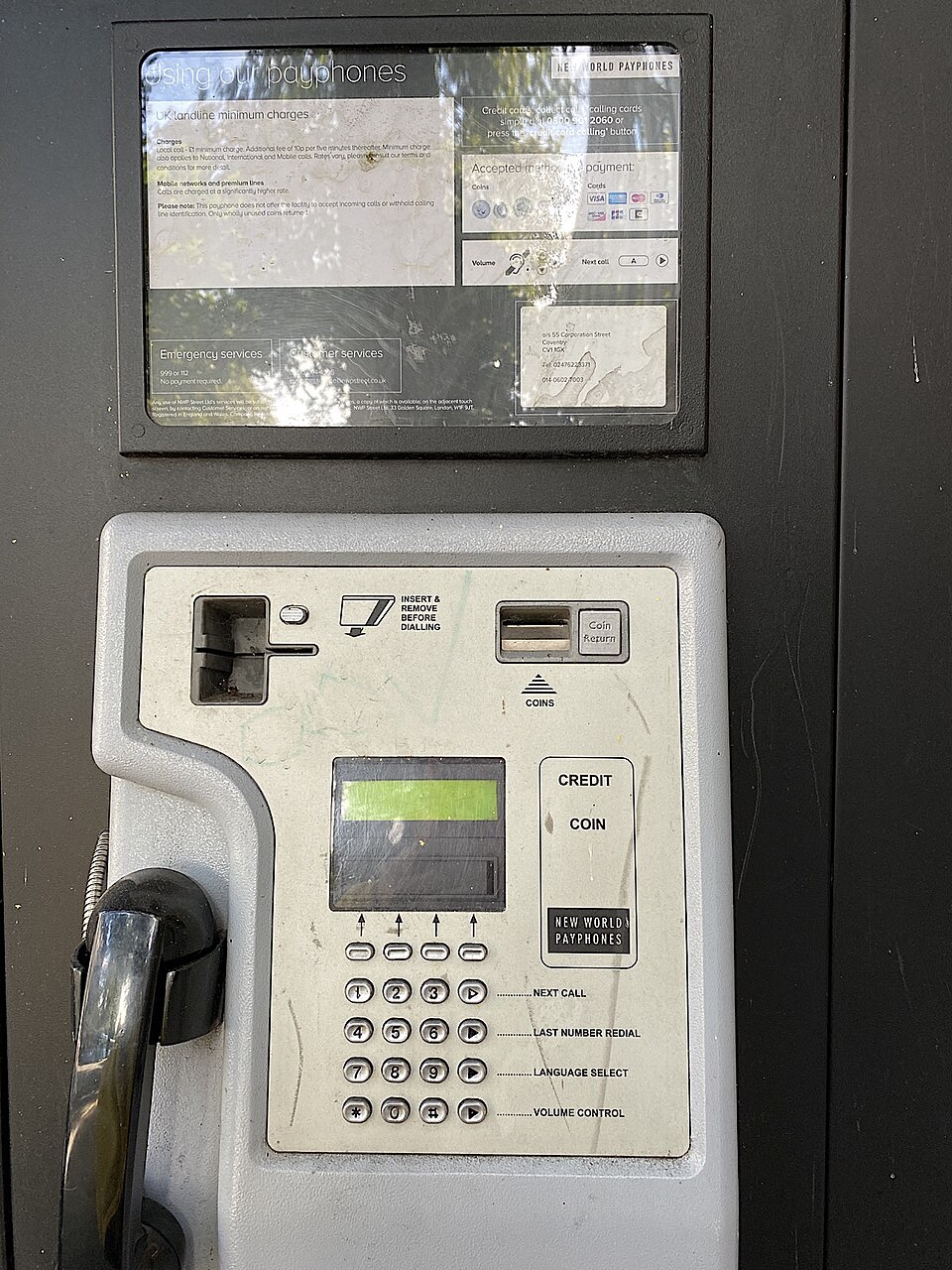
- New World used red-and-yellow MVM1000 kiosks alongside black and heritage-style variants in selected locations.
The Market in January 1999
- Reported local and national rates were 8p and 16p for New World, 8p and 15p for Interphone, and 8p and 14p for BT.
- New World accepted coins, major credit cards, Smartz cards, BT Chargecards and several international calling cards; Interphone accepted coins, credit cards and BT Chargecards.
- The reported box totals were operator figures captured at one point in time rather than a national census.
Sources & Records
- UK Parliament — telephone-box operators’ consultation responses, 2000 — Names IPM and New World Payphones alongside BT as public telephone-box operators.
- Companies House — New World Payphones company record — Identifies the operator’s legal company and its incorporation and dissolution history, separate from network rollout dates.
Gallery
Credit
Consallforge
Licence
Historical Ephemera
Displayed for commentary, criticism, research and historical documentation where permitted by applicable law. No permission for reuse is granted.
Caption
Mercury’s blue public-phone housing gave a competing telephone network a conspicuous presence on the street.
Credit
Derelict London
Licence
Historical Ephemera
Displayed for commentary, criticism, research and historical documentation where permitted by applicable law. No permission for reuse is granted.
Caption
A weathered public telephone preserves the everyday setting in which Mercury’s service competed with established phone boxes.
Credit
User Rept0n1x at Wikimedia Commons
Licence
Historical Ephemera
Displayed for commentary, criticism, research and historical documentation where permitted by applicable law. No permission for reuse is granted.
Caption
Later New World Telephone and Spectrum Interactive branding shows how public-phone infrastructure could outlive its original operator’s identity.
Credit
Christine Matthews / Geograph, via Wikimedia Commons; resized for display
Caption
A red telephone kiosk beside a post box on Friern Barnet Road preserves the older streetscape against which Britain's independent payphone operators competed.
Credit
Robin Stott / Geograph, via Wikimedia Commons; resized for display
Caption
The New World Payphones interface combined coins, cards and instructions, showing the practical hardware behind a rival public-telephone network.