National Record of Achievement (NRA)
A UK-Wide Portfolio for Skills and Next Steps
Forgotten Trends · 1991
Archived on
Region
England; Scotland; Wales; Northern Ireland
Associated With
Employment Department - launch portfolio publisher; Department of Education and Science - joint introducing department; Scottish Office - joint introducing department; Welsh Office - joint introducing department
Defining Feature
Standard summary pages combined with supporting evidence, self-assessment and action planning
Status
Superseded - replaced unevenly by Progress File on different national and institutional timetables
Overview
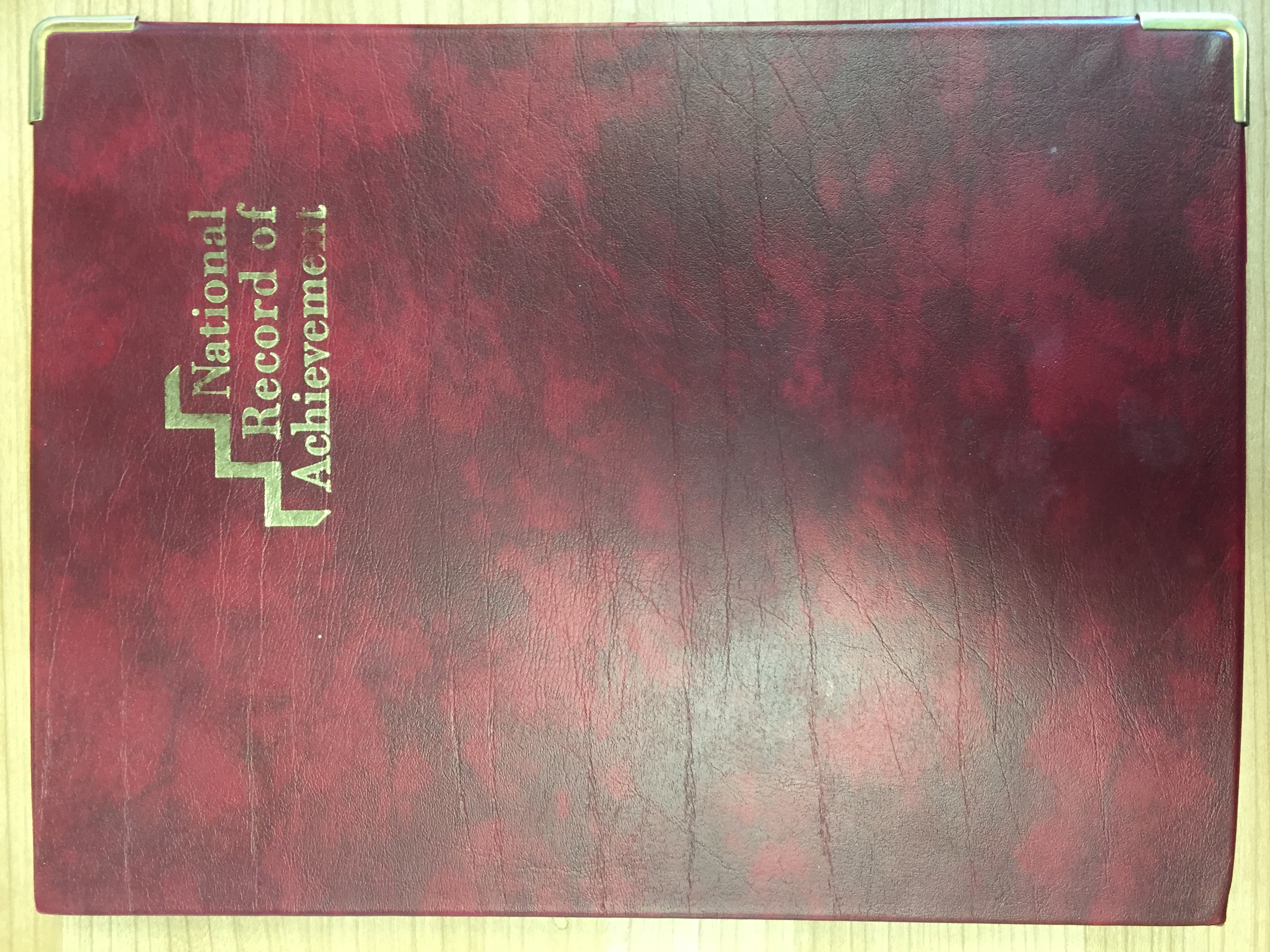
The National Record of Achievement gathered school qualifications, experience and plans in a personal folder.
Launched across the UK in 1991, it combined standard summary pages with certificates, reports and examples of work. Participants could record achievements beyond examinations, assess their strengths and plan their next steps in education, training or employment.
Schools adopted it widely, but employers and colleges did not all give it the same weight. Progress File later succeeded it on different timetables, so the familiar folder did not disappear everywhere at once.
Why It Mattered
A folder could make room for achievements that an examination certificate left out. Assembling it asked pupils to describe experience, assess strengths and plan a next step. Its uneven reception by employers and colleges exposed the limit of that exercise: making a fuller record did not guarantee that the next person would value it.
Launch, Governance and Reach
- The scheme was introduced jointly by the Employment Department, Department of Education and Science, Scottish Office and Welsh Office.
- By 11/06/1991, schools, colleges and employers had ordered more than 1.3 million copies.
- The Welsh name was “Cofnod Cenedlaethol o Gyrhaeddiad.”
Pages and Portfolio Evidence
- A 1996 Scottish evaluation described nine reorderable pages covering personal details, statements, qualifications, achievements, attendance, employment history, action planning and additional information.
- Certificates, reports, photographs and examples of work could accompany the standard pages.
- Schools could add their own worksheets and inserts, so folders varied.
Uptake, Recognition and Afterlife
- Sir Ron Dearing’s 1996 review reported use by more than 80 per cent of schools for Year 11 pupils, while only about half of employers knew of the NRA and roughly one quarter used it in some way.
- By 02/2001, Progress File was being tested in England as a successor for young people from age 13; Northern Ireland anticipated replacement from 2006.
- Department for Education apprenticeship guidance updated on 19/02/2026 permits an NRA containing verifiable qualification information from a regulated awarding organisation to be accepted as evidence.
Sources & Records
National Record of Achievement — Written Answer, 11/06/1991
Confirms the February 1991 launch and more than 1.3 million copies ordered by June.
Evaluation of the National Record of Achievement in Scotland, Interchange No. 44
Describes the folder’s pages, pupils’ reflection and planning, and its uneven recognition beyond school.
Review of Qualifications for 16–19 Year Olds
Assesses school and employer use and recommends review and relaunch of the achievement record.
Government Response on Key Stage 4 Education and Employment Policy
Confirms that Progress File was being tested as a successor for young people from age 13.
Gallery
Credit
BRFlint / Wikimedia Commons
Licence
Reuse and sharing, including commercial use, are allowed with attribution. Credit the creator, link the licence and identify any changes. ShareAlike applies to adaptations. Other rights may apply.
Caption
The burgundy folder was meant to bring qualifications, experience and personal achievements together. For many school-leavers, it became the physical record of preparing for life after school.
Credit
Ymlaen, issue 5 (Spring/Summer 1995), p. 10; hosted by Youth Work Wales; original publisher not established
Licence
Historical Ephemera
Displayed for commentary, criticism, research and historical documentation where permitted by applicable law. No permission for reuse is granted.
Caption
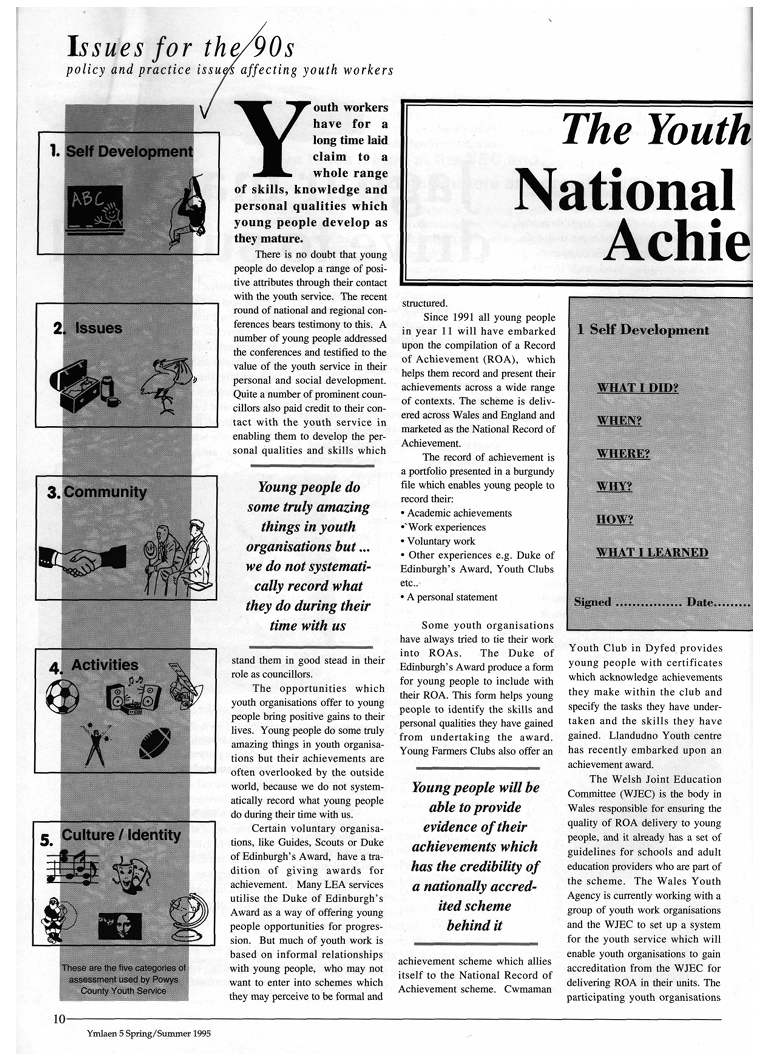
Page 10 of a Spring/Summer 1995 youth-work article explains Records of Achievement and illustrates five assessment categories and a sample entry form.
Credit
Ymlaen, issue 5 (Spring/Summer 1995), p. 11; hosted by Youth Work Wales; original publisher not established
Licence
Historical Ephemera
Displayed for commentary, criticism, research and historical documentation where permitted by applicable law. No permission for reuse is granted.
Caption
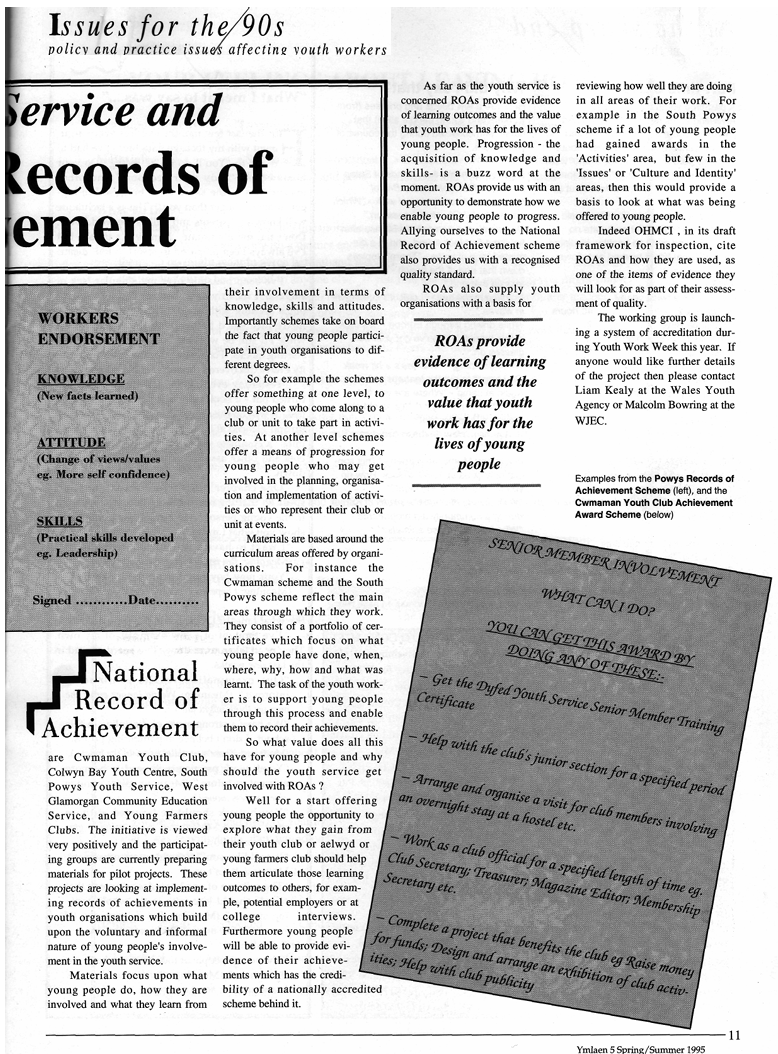
The continuation page sets out worker endorsement criteria and reproduces examples from Powys and Cwmaman youth achievement schemes.