Dog Licences
When Keeping a Dog Meant a Post Office Visit
Forgotten Miscellaneous · 1867–1988
Archived on
Region
England; Wales; Scotland
Associated With
UK Parliament - legislator; General Post Office - licence issuing in England and Wales; Customs and Excise - Scottish licensing administration
Defining Feature
A small paper licence recording the annual duty and the keeper’s details
Status
Discontinued - abolished in Great Britain in 1988
Overview
For generations, keeping a dog in Great Britain meant buying a small paper licence, often at the Post Office.
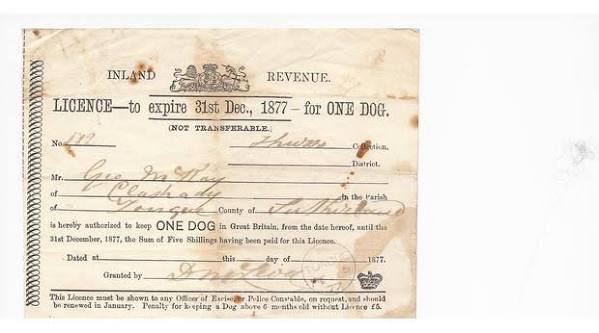
The flat-rate system began in 1867 at five shillings per dog. Licences recorded payment and registration, usually ran for twelve months and did not test either owner or animal.
The fee later became seven shillings and sixpence (37½p after decimalisation), eventually reduced to 37p. Costly collection and widespread evasion weakened the system, and Parliament abolished it in 1988. Northern Ireland retained a separate licensing regime.
Why It Mattered
Dog ownership became a small annual transaction at the Post Office, recorded on a paper form. By the 1980s, collection cost more than the duty raised, while concerns about identification, wardens and stray dogs remained. The licence’s long survival therefore tells a story about a familiar administrative routine whose usefulness had come into question.
From Dog Tax to Flat-Rate Licence
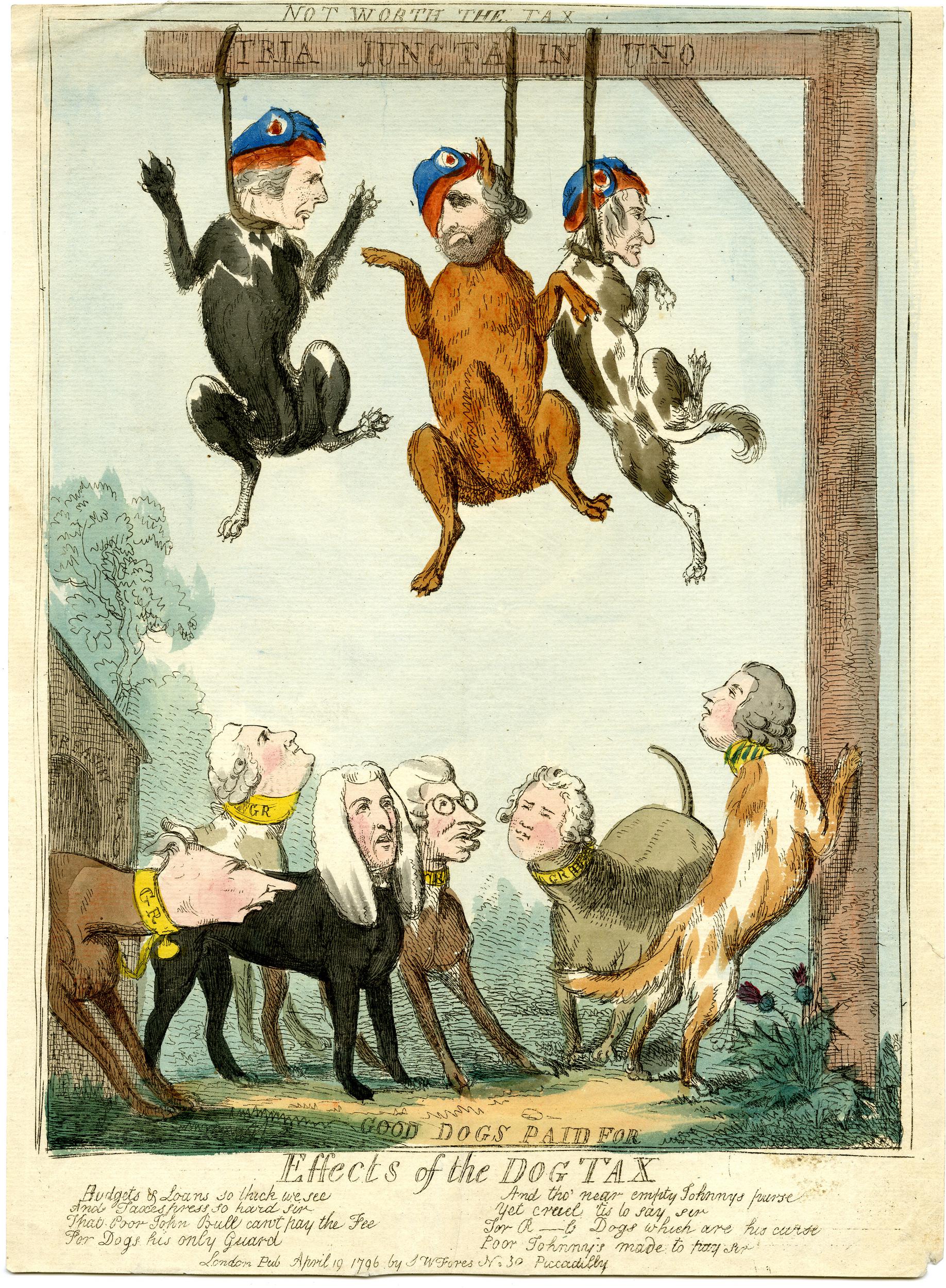
- Charges on keeping dogs existed from 1796, but the Dog Licences Act 1867 established the recognisable flat-rate excise licence.
- The 1867 annual duty was five shillings per dog; it increased to 7s 6d on 01/06/1878.
- The fee was recorded as 37½p in 06/1984 and 37p during the 1987–88 abolition debates.
Issuing, Validity and Exemptions
- In England and Wales, authorised Post Office officers issued licences at locations intended to be near owners’ homes; Scotland used separate Customs and Excise arrangements.
- A licence normally ran for twelve months from the first day of its month of issue, while registers recorded the keeper’s name, address and number of dogs.
- Specified exemptions included dogs under six months, guide dogs and narrowly defined farm or shepherd dogs used solely to tend sheep or cattle.
- For 1979–80, 2,703,677 licences were issued in England and Wales; a 1980 parliamentary answer attributed an estimate of one dog in two being licensed to a 1976 working party.
Cost, Abolition and Separate Regimes
- In 07/1986, the government reported annual collection costs of about £3.5 million against revenue of less than £1 million.
- The Local Government Act 1988 received Royal Assent on 24/03/1988 and abolished the Great Britain dog-licence duty.
- The relevant provisions took effect at the end of two months beginning with 24/03/1988; the statutory formula does not state an exact calendar day.
- The 1988 Act did not extend to Northern Ireland, where a separate dog-licensing system remains in force.
Sources & Records
Defines the annual fee, Post Office issue, validity and exemptions in Great Britain, excluding Northern Ireland.
Establishes the 1867 flat-rate licence, five-shilling duty and registration requirements.
Enacts abolition of the duty and related repeals in 1988, with the statutory commencement provisions.
Dog Licensing, House of Lords written answer, 24/07/1986
Records the government’s abolition proposal and its comparison of collection costs with revenue.
Gallery
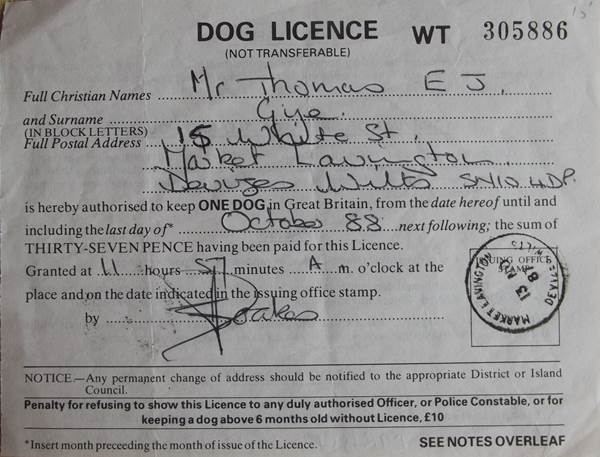
Credit
Market Lavington Museum collection, Thomas E. J. Gye dog licence; photograph creator not identified
Licence
Historical Ephemera
Displayed for commentary, criticism, research and historical documentation where permitted by applicable law. No permission for reuse is granted.
Caption
Thomas Gye’s 37p dog licence, issued at Market Lavington Post Office in November 1987 and marked to expire in October 1988. Held by Market Lavington Museum.
Credit
Isaac Cruikshank; S. W. Fores, 1796; British Museum 1868,0808.6518 / Wikimedia Commons
Licence
The source records this image as public domain. No copyright licence is required for the photograph; other rights may apply.
Caption
Effects of the dog tax, Isaac Cruikshank, published by S. W. Fores on 19 April 1796. Political satire about the earlier dog tax, before the 1867 licensing system; British Museum 1868,0808.6518.
Credit
Original Inland Revenue licence; photograph supplied by an unidentified contributor to BBC A History of the World
Licence
Historical Ephemera
Displayed for commentary, criticism, research and historical documentation where permitted by applicable law. No permission for reuse is granted.
Caption
An Inland Revenue licence for one dog, expiring 31 December 1877.