Nintendo Play Station
The CD Console Partnership That Fell Apart
Forgotten Games · 1991
Archived on
Region
Japan
Associated With
Sony and Nintendo - proposed console collaboration
Defining Feature
Super Nintendo-compatible cartridge hardware combined with a built-in CD-ROM drive
Status
Cancelled — never commercially released; a prototype survives.
Overview
The Nintendo Play Station was a proposed Sony–Nintendo console combining cartridges with a CD-ROM drive.
Announced in 1991, it was intended to run Nintendo’s 16-bit cartridges alongside software on Sony’s proprietary disc format. Nintendo’s separate agreement with Philips disrupted the collaboration, and the machine never reached commercial release.
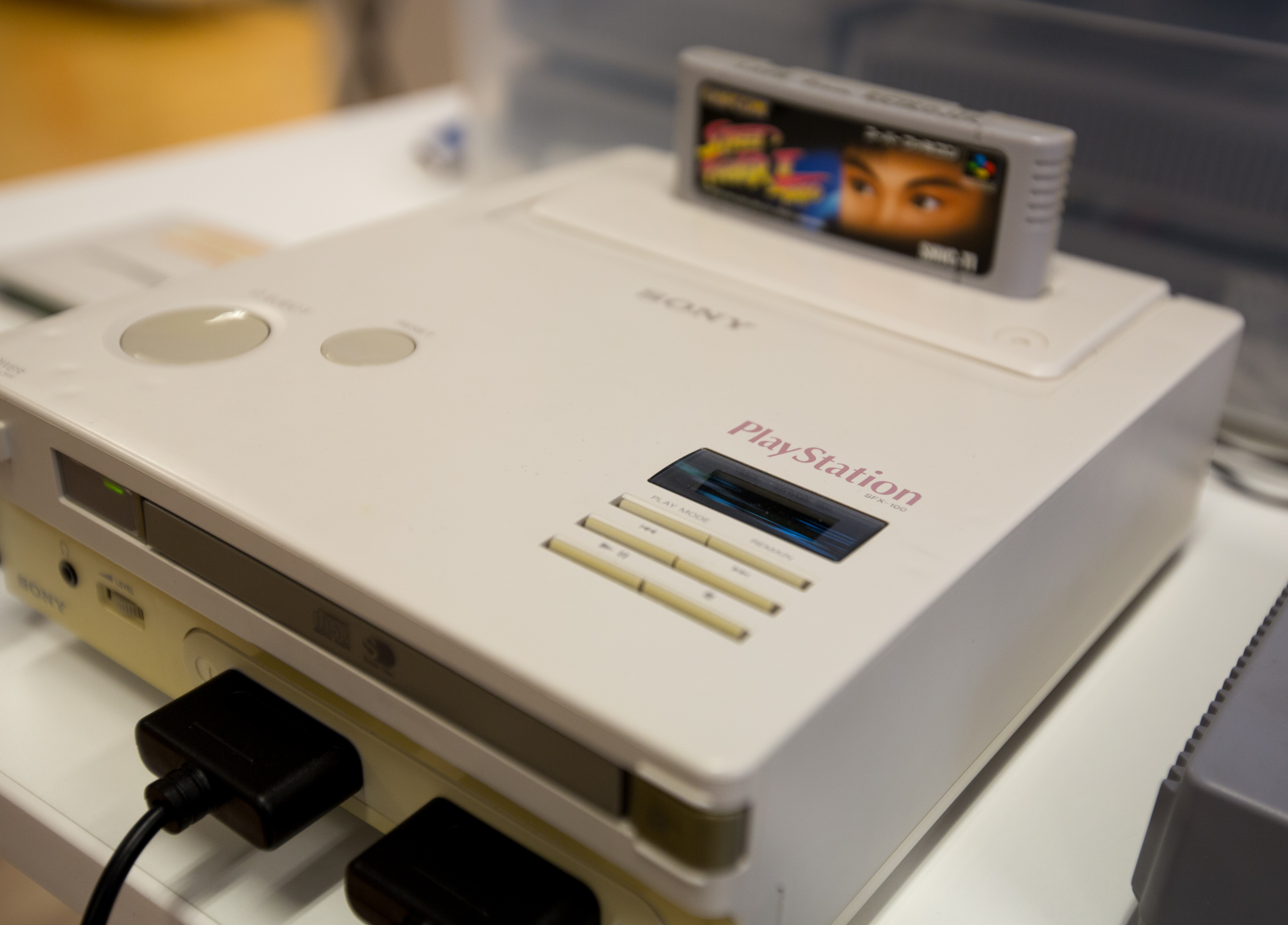
A surviving SFX-100 prototype shows one form the project took, with a cartridge slot, built-in optical drive and Super Nintendo-compatible hardware. It was a prototype, not an early retail version of Sony’s later PlayStation.
Why It Mattered
Before Nintendo and Sony became console rivals, they were working towards a machine that brought cartridges and CDs together. The partnership offered a different direction for home gaming—one built around combining Nintendo’s established hardware with Sony’s disc technology.
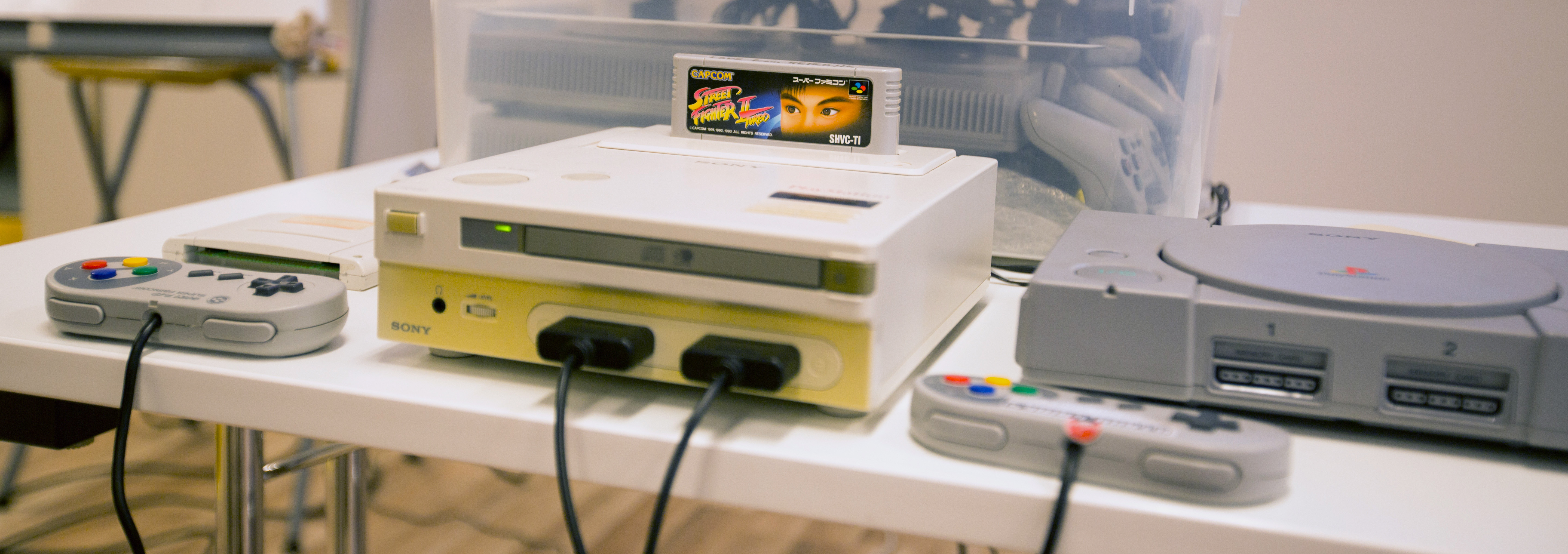
Seeing both companies’ names on the surviving prototype makes that abandoned plan unusually striking. Beside a later retail PlayStation, it shows how far Sony’s eventual console moved from the machine the two companies had originally envisaged.
The 1991 Proposal
- Sony and Nintendo signed the underlying licensing agreement in January 1990.
- Sony announced the Play Station on 31 May 1991, with proposed launches in Japan and the United States and plans for at least ten Sony CD titles.
- Nintendo announced a separate Philips arrangement on 1 June 1991. The collaboration was disrupted, although Billboard reported that discussions with Sony continued during the trade show.
Inside the SFX-100
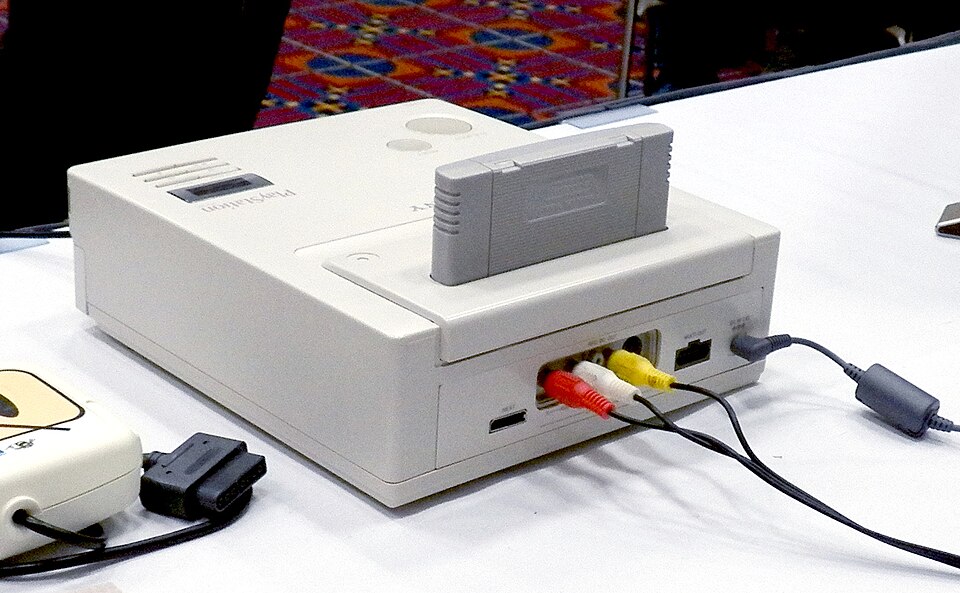
- The surviving SFX-100 combines Super Nintendo-compatible cartridge hardware with a Sony optical-disc subsystem.
- Its cartridge slot, front-loading drive and controller connections document one prototype configuration, not a final retail specification or an early PlayStation 1.
- Repair work enabled cartridges, audio functions and the homebrew CD program Magic Floor to run, but this does not establish that any planned commercial Super Disc game was completed.
Rediscovery and Distinct Hardware
- In 2009, Terry Diebold acquired the prototype among a boxed lot of miscellaneous items at Advanta Corporation’s liquidation auction.
- According to Heritage Auctions, former Sony executive Olaf Olafsson had left the machine at Advanta after working there. Dan and Terry Diebold revealed it publicly in 2015.
- The prototype sold to Greg McLemore on 6 March 2020 for a $300,000 hammer price plus a $60,000 buyer’s premium.
- The Sony MSF-1 acquired by the National Videogame Museum in 2026 is a separate development system, not another example of the all-in-one SFX-100.
Sources & Records
- Sony and Nintendo announce a joint game system — June 1991 report — Documents the contemporary plan to combine Nintendo gaming with Sony compact-disc technology.
- Billboard — Philips and Sony sign Nintendo video-game deals — Reports the January 1990 Sony–Nintendo licence and the separate Philips agreement announced at the 1991 trade show.
- Nintendo Play Station prototype — Heritage auction catalogue — Describes the surviving cartridge-and-CD prototype, its condition and reported provenance.
- Ben Heck — Nintendo Play Station prototype teardown — Examines the surviving console’s cartridge slot, CD-ROM drive and Super Nintendo-compatible circuitry.
- Nintendo Play Station — repair team's prototype documentation — Records the repair team's report that the hardware was working and provides close-up documentation.
- Heritage reports the Nintendo Play Station prototype sale, 2020 — Confirms the $360,000 auction result for the surviving prototype.
Gallery
Credit
Mats Lindh
Caption
Sony’s Play Station branding sits beside a Super Nintendo cartridge slot—a reminder of the partnership that never reached the shops.
Credit
Mats Lindh
Caption
The surviving Nintendo–Sony prototype beside Sony’s eventual retail console: a partnership project and the product that followed its collapse.
Credit
Grayfell
Caption
Cartridge and disc hardware share one prototype, preserving the hybrid approach Nintendo and Sony explored before going separate ways.