Farepak Christmas Consumer Prepayments
When Christmas Club Payments Were Not Savings
Forgotten History · 2006–2016
Archived on
Region
United Kingdom
Associated With
Farepak - Christmas-hamper and voucher retailer
Defining Feature
Year-round payments for Christmas hampers and retailer vouchers
Status
Closed - Farepak entered liquidation during the group collapse in October 2006
Overview
Farepak let British customers spread the cost of Christmas hampers and shopping vouchers across the year.
Payments were usually collected through agents, often friends, relatives or colleagues. Customers were paying ahead for goods and vouchers, so their money lacked the protections attached to regulated bank deposits.
Farepak entered administration on 13 October 2006, before fulfilling its Christmas orders, and went into liquidation the following year. More than 100,000 customers were affected, leaving families facing Christmas without the purchases they had budgeted for.
Why It Mattered
Farepak exposed a gap between how customers used a Christmas club and how their payments were treated in law. Putting money aside felt like saving, yet it left families exposed to a retailer’s failure. In 2007, an industry agreement sought to protect payments through ring-fenced trust accounts. In 2016, the Law Commission recommended regulation of Christmas and similar schemes, recognising the risks of holding substantial sums for consumers who could ill afford to lose them.
How the Christmas Club Worked
- Farepak sold Christmas hampers and retailer vouchers, with customers paying towards them across the year.
- These payments were consumer prepayments for goods or vouchers, rather than protected bank savings deposits.
- Farepak’s daily customer receipts were swept into accounts held by its parent group, European Home Retail.
Collapse and Proceedings
- The European Home Retail group collapsed in October 2006.
- Farepak entered liquidation, while other group companies entered administration.
- The remaining 2012 director-disqualification proceedings were discontinued; this was not a criminal trial ending in acquittal.
Later Safeguards and Recommendations
- A March 2007 ministerial statement recorded an industry agreement for independently controlled, ring-fenced trust accounts, intended to protect payments towards Christmas 2007.
- The announced arrangements were a planned voluntary safeguard, not statutory protection.
- In 2016, the Law Commission recommended regulation of Christmas and similar schemes that posed particular risks to vulnerable consumers.
Sources & Records
Farepak: Statement by the Judge
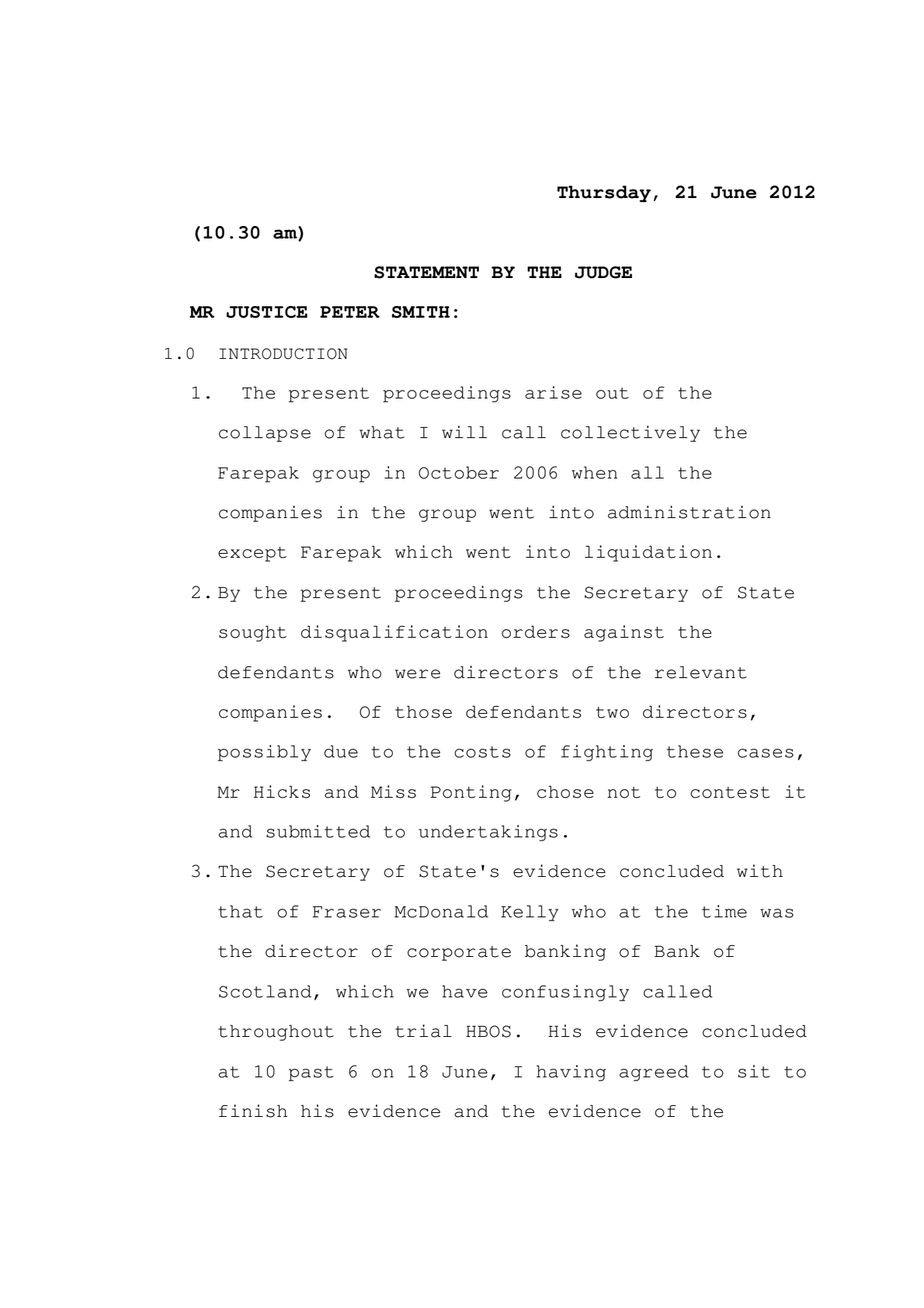
Mr Justice Peter Smith explains Farepak’s group cash arrangements, October 2006 insolvency position and discontinued director-disqualification proceedings. Printed/PDF pp. 1–5, 28; paras. 1–18, 76.
Consumer Prepayments on Retailer Insolvency
Law Commission project record summarising five recommendations and confirming that the final report was laid before Parliament on 13 July 2016.
Treasury Committee: Financial Inclusion Follow-up — Christmas Saving Schemes
Describes agent-collected Christmas prepayments, intended vouchers and hampers, and consumer protection concerns following Farepak’s collapse.
Christmas Hamper Savings Schemes — Ministerial Statement, 28 March 2007
Announces industry agreement to introduce independently controlled trust accounts for customer prepayments; records a voluntary industry response, not universal statutory protection.
Gallery

Credit
Guardian News & Media / photographer unresolved
Licence
Historical Ephemera
Displayed for commentary, criticism, research and historical documentation where permitted by applicable law. No permission for reuse is granted.
Caption
Opening page of Mr Justice Peter Smith’s Farepak statement, 21 June 2012. © Crown copyright; reproduced under the Open Government Licence v3.0. Full page, without editorial alteration.
Credit
© Crown copyright — Farepak: Statement by the Judge, Mr Justice Peter Smith, 21 June 2012; Open Government Licence v3.0
Caption
Opening page of Mr Justice Peter Smith’s Farepak statement, 21 June 2012. © Crown copyright; reproduced under the Open Government Licence v3.0. Full page, without editorial alteration.