The Silent Age
Two decades, one unfinished future
Forgotten Games · 2012–2016
Archived on
Region
Denmark
Associated With
House on Fire - developer
Defining Feature
A portable device linking 1972 with a depopulated 2012
Status
Active
Overview
In The Silent Age, janitor Joe crosses between 1972 and a depopulated 2012 with a portable time device.
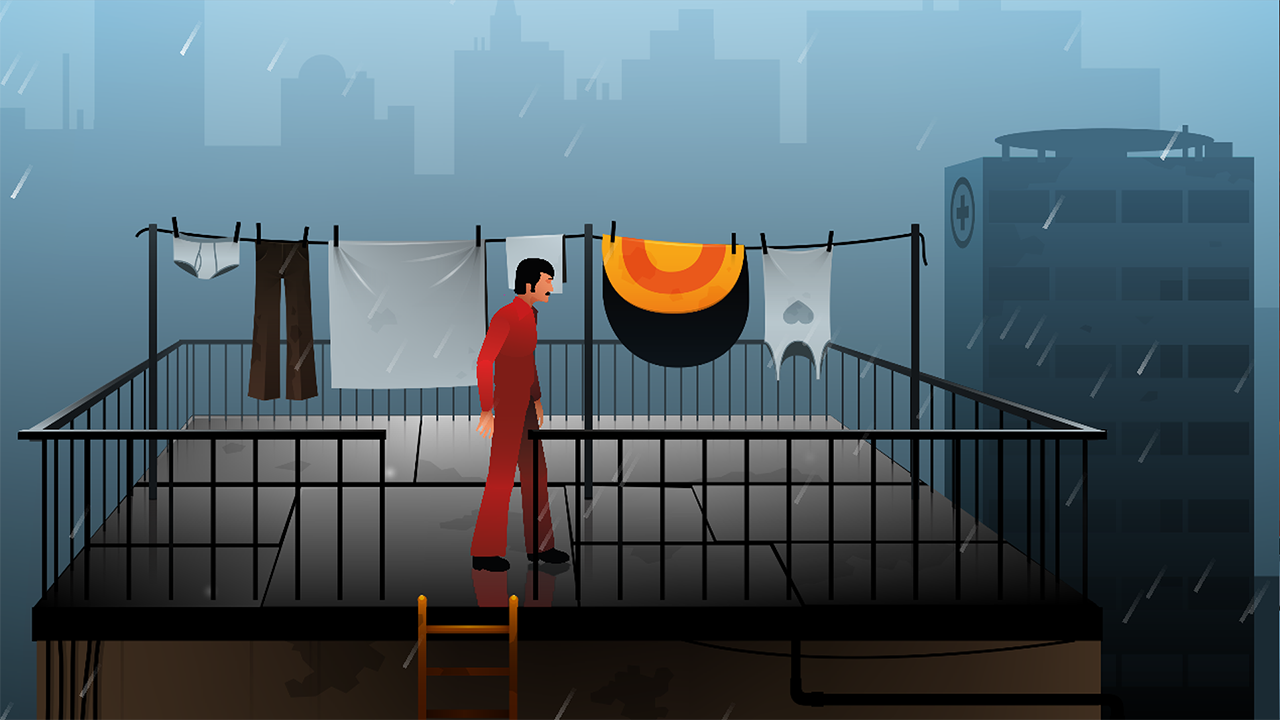
Copenhagen studio House on Fire built the point-and-click adventure around those two versions of the same world. Producer Uni Dahl later credited Thomas Ryder with the time-travel idea and flat, Illustrator-led visual style; the official credits identify Linda Randazzo as lead developer and Anders Petersen as writer.
Its release plan changed as the project grew. Episode One was offered free. Dahl said donations helped but did not cover the continuation, so outside investment supported a paid Episode Two. A redesigned PC edition followed on 29 May 2015 with voice acting and updated artwork.
Why It Mattered
The time device made the game’s central idea playable rather than decorative. A familiar room could become evidence of what had happened—or a route around what would happen—when Joe crossed between its two dates. The quiet spaces, restrained colour and ordinary protagonist gave that mechanism an unusual melancholy.
Its funding history matters too. A free opening chapter found an audience, but attention did not remove the cost of finishing the story. House on Fire changed the model, brought in investment and completed the second episode as a paid release. The later PC edition carried the work beyond its original touch-screen form without turning that difficult transition into a simple crowdfunding triumph or failure.
A Copenhagen adventure for touch screens
- House on Fire was founded in Copenhagen in 2011. Its press kit credits Uni Dahl as producer, Thomas Ryder as designer and composer, Linda Randazzo as lead developer and Anders Petersen as writer.
- Dahl said the studio saw touch screens as a natural home for point-and-click play and wanted a smoother puzzle flow than the difficult adventures its team remembered.
The second episode changed course
- Episode One was free, while donations were initially intended to support a free continuation.
- Dahl said the donations were substantial but insufficient. Outside investment helped fund Episode Two, which became a paid continuation rather than an abandoned chapter.
A second life on PC
- Steam records the PC edition as released on 29 May 2015, with House on Fire named as developer.
- The PC version added voice acting and redesigned artwork, extending the game beyond its original mobile presentation. The product remains listed on Steam.
Selected Sources
The Silent Age official press kit
2016 — Official studio record documenting the Copenhagen team, credited roles, game premise, features and platform history.
2016 — Creator interview covering the original concept, visual style, mobile design, donation shortfall, investment and PC redesign.
2015 — Platform record listing House on Fire as developer, the 29 May 2015 PC release and the continuing product listing.
Gallery
Credit
The Silent Age / House on Fire
Licence
Historical Ephemera
Displayed for commentary, criticism, research and historical documentation where permitted by applicable law. No permission for reuse is granted.
Caption
An official rooftop screenshot places Joe inside The Silent Age’s quiet, rain-soaked visual world.