Post Office telephone monopoly
How Exclusive Privilege Became Licensed Competition
Forgotten Technology · 1969–1984
Archived on
Region
United Kingdom
Associated With
Post Office and British Telecommunications - statutory operators
Defining Feature
An exclusive privilege replaced by licensed competition
Status
Ended
Overview
Britain’s telephone system once rested on a statutory privilege that kept core networks in public hands.
The Post Office Act 1969 put that privilege in the Post Office’s hands. Reform came in stages: the British Telecommunications Act 1981 separated the telecommunications undertaking from the Post Office, but kept a licence-based route for exceptions rather than creating an open market overnight.
By July 1982, the Government said Mercury had been licensed to build a competing network and private sales of telephone apparatus were opening. Parts II–IV of the Telecommunications Act 1984 took effect on 5 August 1984, establishing the replacement licensing framework.
Why It Mattered
The important shift was not from rules to no rules. It was from monopoly to licensing. A rival needed legal permission and, in practice, a workable connection into BT’s much larger network.
That distinction shaped what competition could actually deliver. Mercury’s arrival challenged exclusive provision, but interconnection terms still determined how far a licensed rival could reach. Liberalisation therefore created a new regulatory problem as it dismantled the old one.
The statutory baseline
- Section 24 of the Post Office Act 1969 gave the Post Office an exclusive privilege over core telecommunications systems, subject to the Act’s exceptions.
- The 1969 Act is this record’s legal baseline; state control of British telephony began earlier.
A phased opening
- The British Telecommunications Act 1981 transferred the undertaking from the Post Office to British Telecommunications.
- Government statements in 1980 and 1981 described staged changes for approved terminal equipment and third-party services.
- By July 1982, Mercury had been licensed to provide a competing network.
Licensing replaced privilege
- The appointed-day order brought Parts II–IV of the Telecommunications Act 1984 into force on 5 August 1984.
- Early competition remained a licensed structure, not unrestricted entry.
- Ofcom’s regulatory history records that interconnection between BT and Mercury later required regulatory intervention.
Selected Sources
Telecommunications Act 1984 (Appointed Day) (No. 2) Order 1984
1984 — Primary legislation. Article 3 appoints 5 August 1984 for Parts II–IV of the Telecommunications Act 1984, bringing the core replacement licensing provisions into force.
1969 — Primary legislation. Section 24 gives the Post Office an exclusive statutory privilege over core telecommunications systems, subject to the Act’s exceptions.
British Telecommunications Act 1981
1981 — Primary legislation. Transfers the telecommunications undertaking from the Post Office to British Telecommunications while retaining licensed exceptions to the statutory regime.
Gallery
Credit
Science Museum Group Collection / BT Heritage and Archives
Licence
Non-commercial reuse with attribution. ShareAlike applies to adaptations. Link the licence and identify changes.
Caption
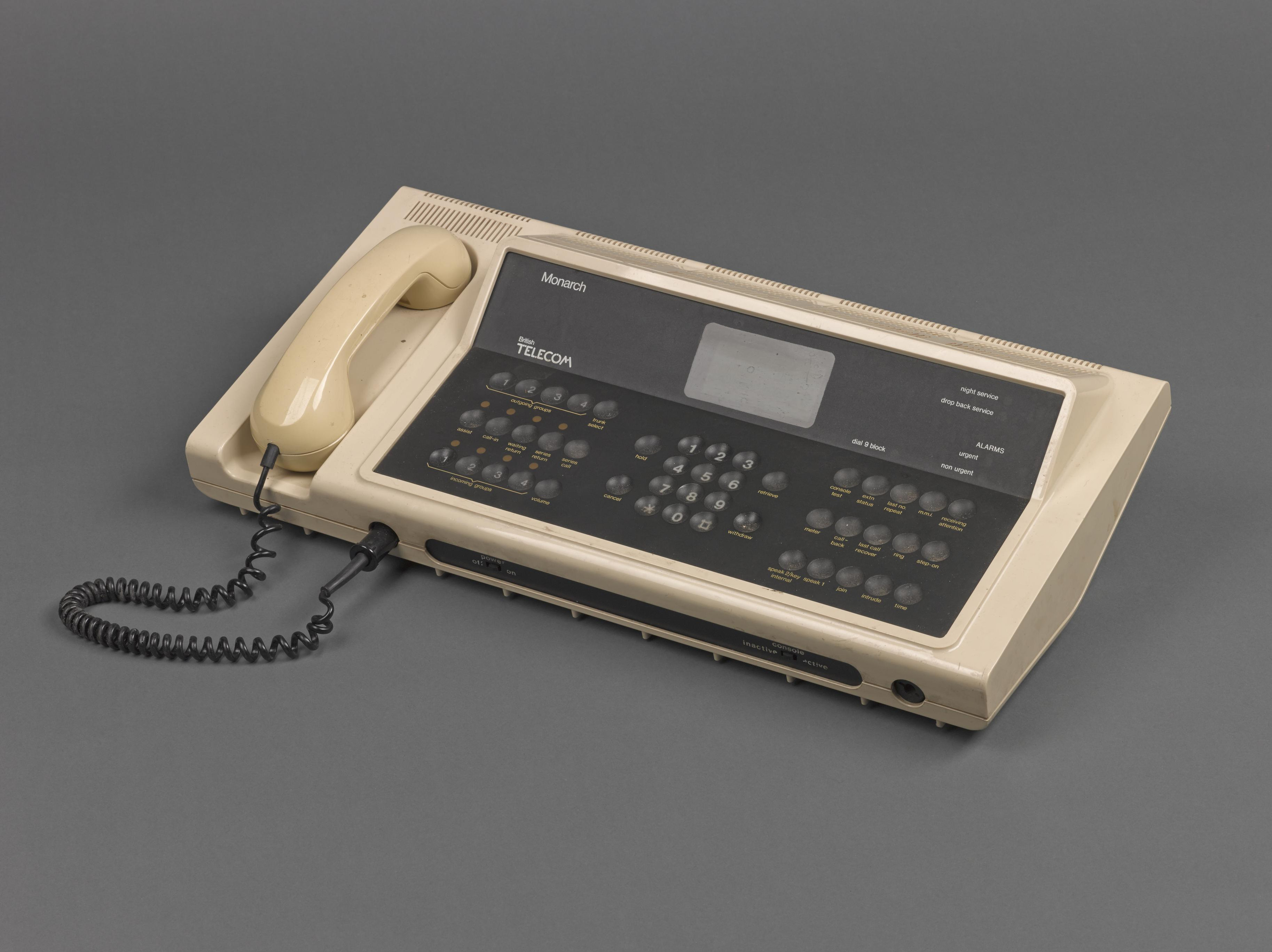
The British Post Office Monarch 120A operator console was introduced in 1980, just as policy began opening equipment and services beyond the old monopoly arrangements.