Kodak
Forgotten Companies · 1888
Published
George Eastman’s company introduced the Kodak camera in 1888 with film already loaded for 100 photographs. Once the roll was finished, the owner sent the entire camera back to Rochester, where the pictures were developed and printed before the camera returned with fresh film.
Why It Mattered
Kodak turned photography from a specialist process into a service ordinary people could use. The camera was only one part of the idea: simple controls, flexible roll film and factory processing moved the difficult work away from the person taking the picture.
The 1888 camera
- The camera was portable and hand-held, with film for 100 exposures.
- Kodak priced the camera at $25 and the processing-and-reload service at $10.
Roll-film mechanism
- Eastman's 1888 camera patent describes a light-tight box with a lens, cylindrical shutter and detachable roll holder.
- The roll holder used a supply spool, guide rollers, a platen and a winding roller.
Service model
- Customers returned the loaded camera rather than processing the film themselves.
- The factory developed the film, made prints, reloaded the camera and sent it back.
Associated With
George Eastman and the Eastman Dry Plate and Film Company - associated person, creator or operator
Defining Feature
A hand-held roll-film camera supplied for 100 exposures and returned for processing
Status
Active - The company continues; its original camera system is a preserved historical record
Primary Records
Image Sources
- All one image sources are not yet verified — editorial review required.
Rights Notice
Images are included for historical and archival reference.
Rights holders may contact Forgotten Archive through the publishing account to request a credit correction or removal.
Gallery
Credit
Kodak advertising artwork; scan contributor not identified
Licence
Historical Ephemera
Displayed for commentary and research. Fair dealing under the UK CDPA 1988 applies only where its conditions are met. No permission for reuse is granted.
Caption
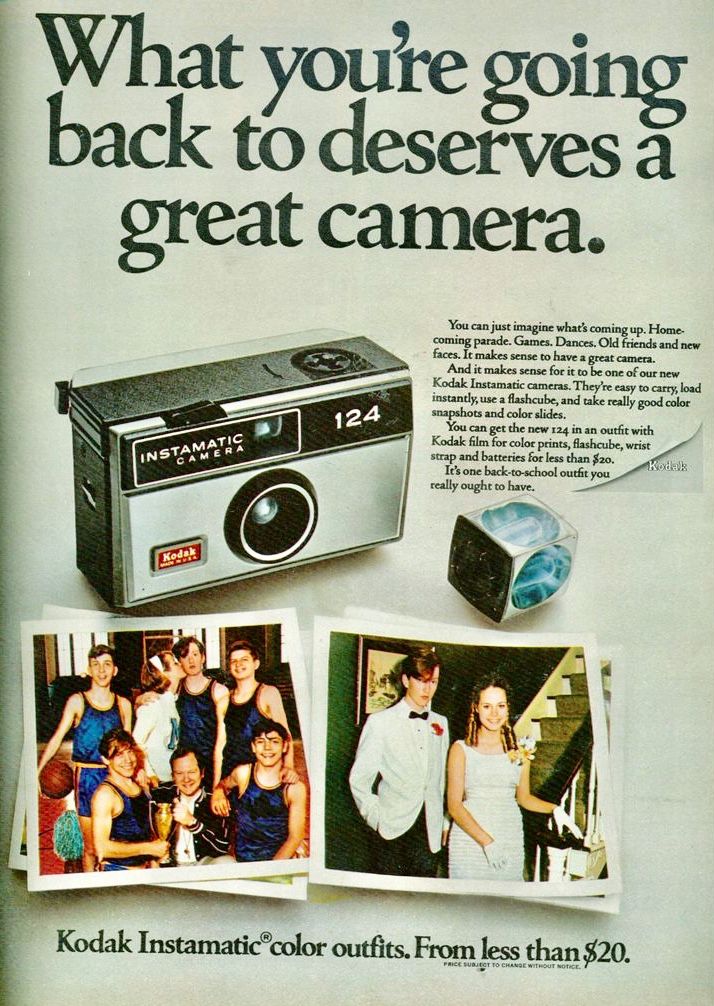
Kodak's Instamatic advertisement sells effortless family memories alongside the camera, presenting the cartridge-based system as a way to make photography less intimidating.