Habbo Hotel
Forgotten Internet · 2000
Published
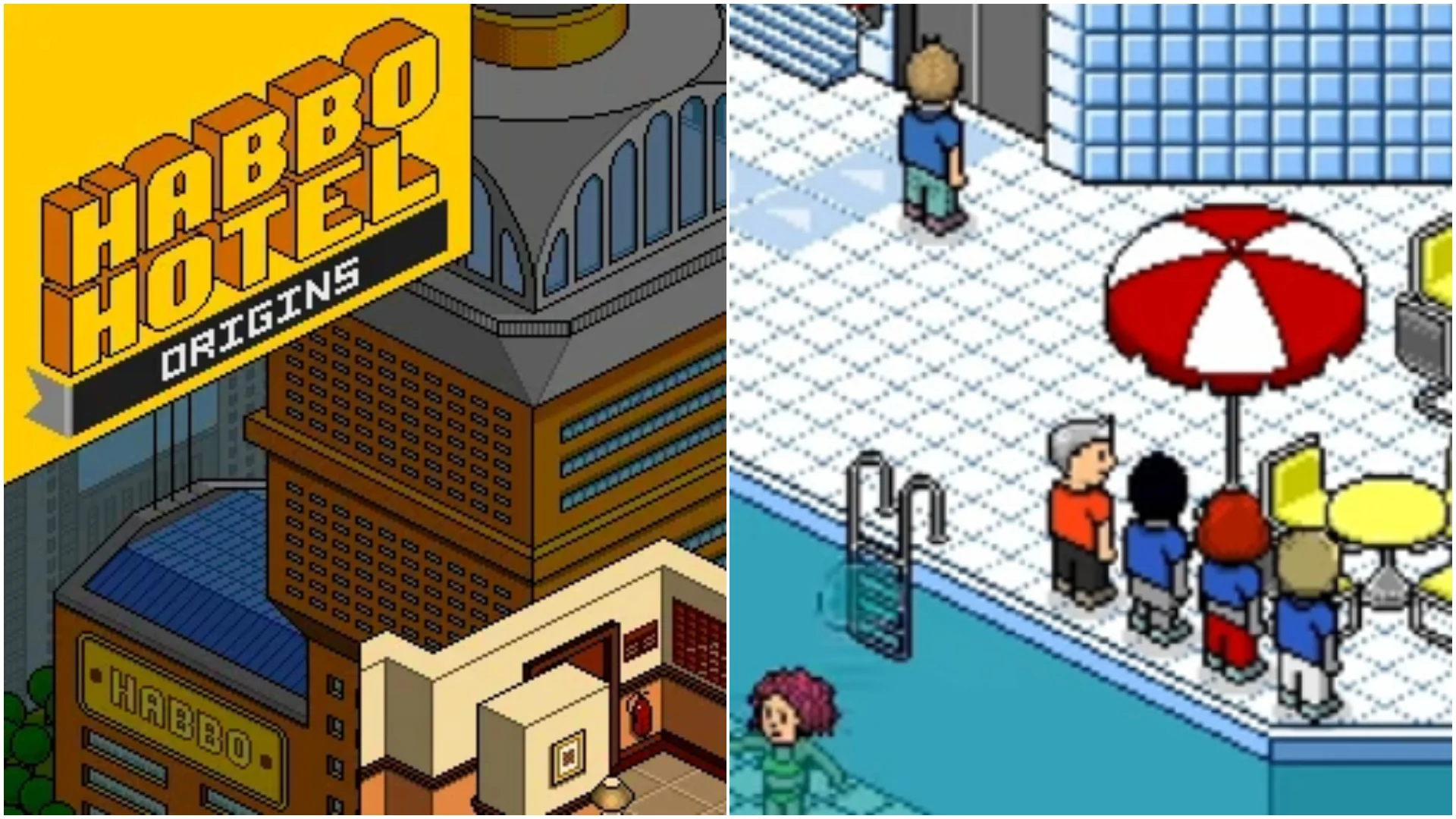
Habbo placed players inside a vast virtual hotel built from brightly coloured pixel-art rooms. Users created an avatar, met friends, chatted, role-played and decorated personal spaces with collectible furniture. Across its language communities, players created more than 120 million rooms of their own.
Why It Mattered
Habbo made online identity feel spatial: personality could be expressed through an avatar, a room and the objects placed inside it. Those persistent spaces turned chatting into somewhere people could visit, furnish and remember rather than just a stream of messages.
The virtual hotel
- Sulake calls Habbo a massively multiplayer virtual hotel.
- Sulake's company record dates its founding to 2000.
- Players appear as pixel-art avatars called Habbos.
Rooms made by users
- Users design rooms and can role-play, buy and sell furniture and other items.
- The official page reports more than 120 million user-generated rooms across nine language communities.
A continuing service
- Sulake says Habbo remained a worldwide social hangout after more than twenty years.
- The retained product page lists web, iOS and Android access.
Associated With
Sulake - creator or operator
Defining Feature
Pixel-art avatars moving through rooms created by users
Status
Active - as a cross-platform virtual hotel in nine language communities on the retained official page
Primary Records
Image Sources
- All one image sources are not yet verified — editorial review required.
Rights Notice
Images are included for historical and archival reference.
Rights holders may contact Forgotten Archive through the publishing account to request a credit correction or removal.
Gallery
Credit
Habbo game imagery; reposted by Hidden Heritage on Facebook
Licence
Historical Ephemera
Displayed for commentary and research. Fair dealing under the UK CDPA 1988 applies only where its conditions are met. No permission for reuse is granted.
Caption
Habbo's pixel-art hotel and communal spaces turned a chat service into a place users could inhabit, furnishing online social life with rooms, avatars and shared activities.