Commodore unveiled the Amiga CD32 at London’s Science Museum on 16 July 1993. Released in Europe that September, it repackaged the familiar Amiga experience as a compact CD-based console for the living room.
The idea was simple: connect it to a television, use a dedicated gamepad and play from CD without needing a keyboard or desk. Alongside its games, the CD32 could also serve as an audio-CD player.
Why It Mattered
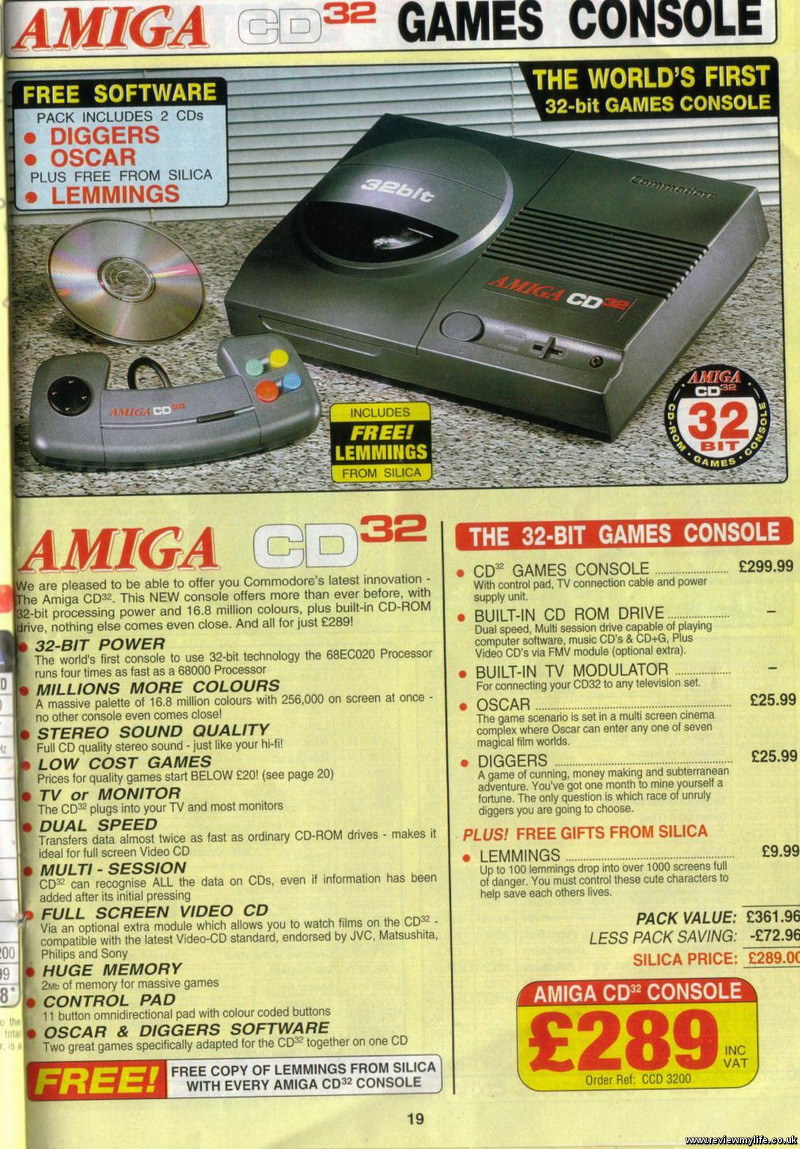
The CD32 was Commodore’s attempt to carry the established Amiga name into the growing console market. Its reported £299 UK package included games and controllers, presenting Amiga entertainment as a self-contained television system.
Its opportunity was brutally short. A patent dispute obstructed the planned American launch, while Commodore International’s financial collapse led to liquidation proceedings in April 1994. Production ended before the console could establish a mature international market or software library.
Launch & Release
- Commodore unveiled the Amiga CD32 at London’s Science Museum on 16 July 1993 and released it in Europe that September.
- The reported £299 UK package included games and controllers; later distribution reached Canada, Australia and Brazil.
- A planned $399 American launch was obstructed by a patent dispute that prevented Commodore from importing its CD32 stock.
Hardware & Multimedia
- Derived from the Amiga 1200, the CD32 used a 14 MHz Motorola 68EC020 processor, 2 MB of Chip RAM and Commodore’s AGA graphics architecture.
- Its Akiko chip supported additional functions, including chunky-to-planar graphics conversion.
- The console played CD32 games and audio CDs; an optional Full Motion Video module added MPEG-1 playback.
Software Library
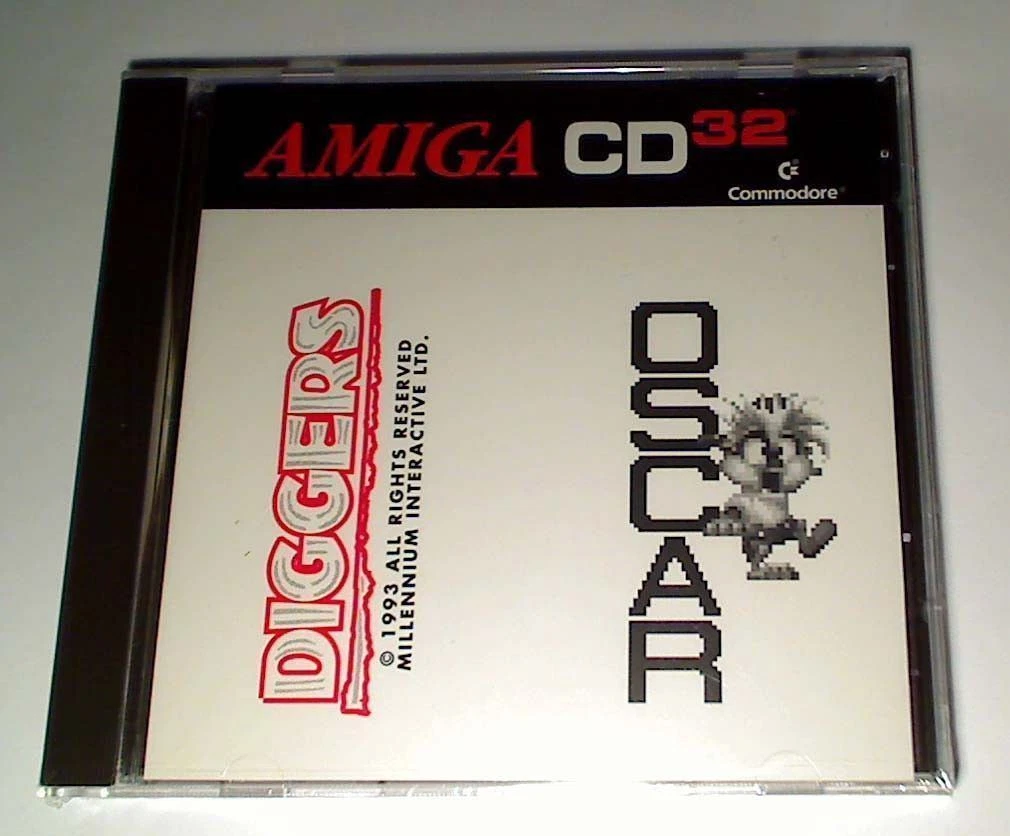
- Early releases included *Diggers* and *Oscar*.
- Much of the library consisted of games adapted from existing Amiga computers.
- Reviewers sometimes criticised conversions for making limited use of CD-ROM or adding little to their original versions.
Commodore’s Collapse
- Commodore transferred its assets to trustees on 29 April 1994, while Commodore Electronics entered voluntary liquidation.
- Production and development ended only months after the console’s European launch, although software appeared briefly afterward.
- The CD32 became Commodore’s final Amiga system and final games console.
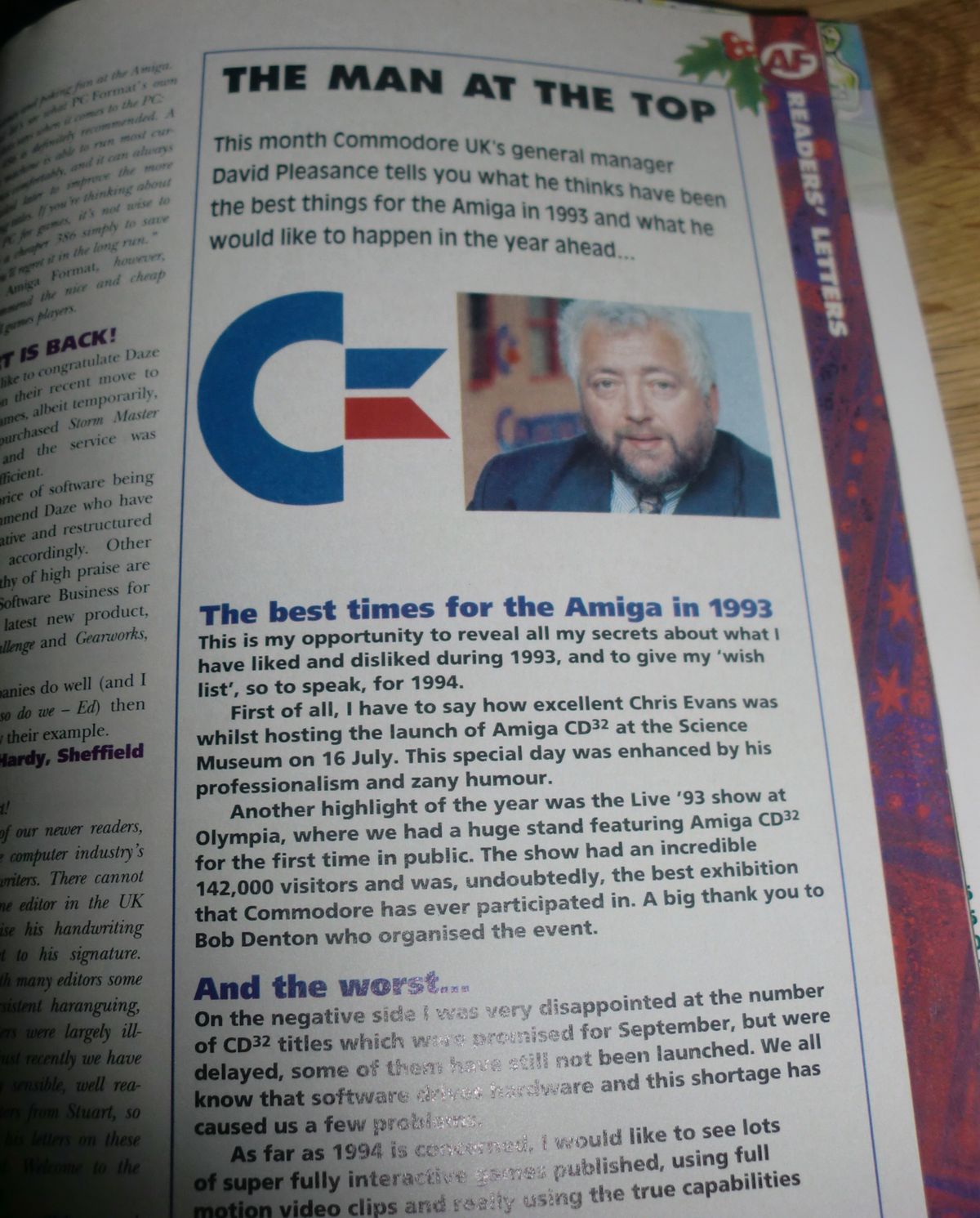
- Announced at London’s Science Museum on 16 July 1993, with Commodore UK figure David Pleasance identified at the event.
- The UK release was in September 1993.
- Sound On Sound reported a planned £299 price, two bundled games and twin controllers.
Console & Multimedia Design
- Built around Amiga technology as a keyboardless CD-ROM console.
- Documented hardware included 2 MB RAM, AGA graphics and a 14 MHz 68020-family processor.
- Its multimedia pitch covered game discs, audio CDs and optional MPEG-1 Full Motion Video capability.
Early Software & Short Window
- Diggers / Oscar was early CD32 software, with bundle contents varying between retailers.
- Amiga Power criticised Oscar for offering little beyond the existing Amiga game and making sparse use of the controller.
- On 29 April 1994, Commodore International transferred assets to trustees and Commodore Electronics Ltd. entered voluntary liquidation.
Associated With
Commodore - developer or publisher
Defining Feature
Amiga-derived 32-bit CD-ROM games console designed for use with a television
Images are included for historical and archival reference.
Rights holders may contact Forgotten Archive through the publishing account to request a credit correction or removal.
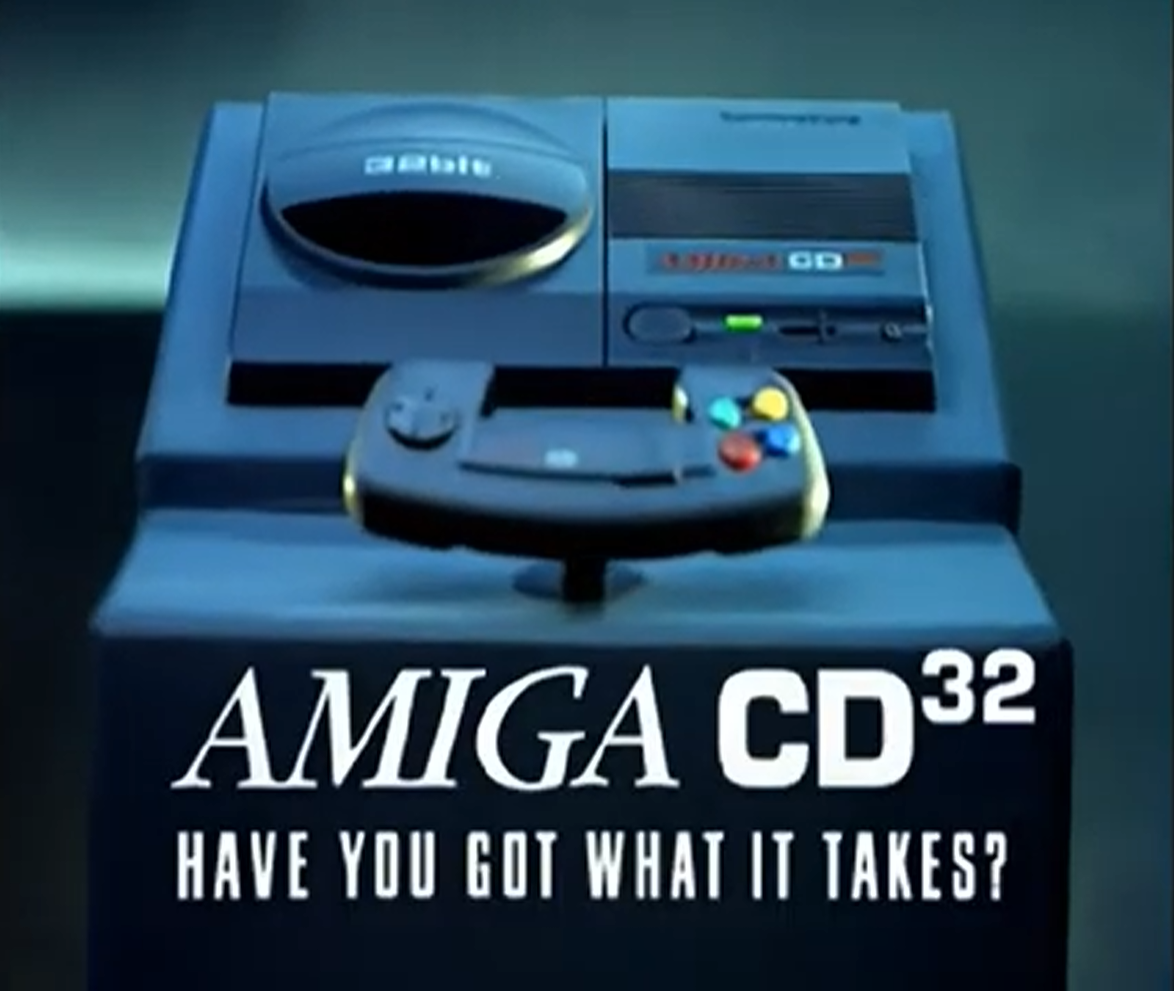
Commodore / Amiga CD32 advertising film; still from the supplied official advert
Licence
Historical Ephemera
Displayed for commentary and research. Fair dealing under the UK CDPA 1988 applies only where its conditions are met. No permission for reuse is granted.
Caption
The CD32 advert presented Commodore's disc-based console as a new games machine, with the controller and console replacing the computer keyboard in the sales pitch.
Silica mail-order catalogue advertising artwork; scan by reviewmylife
Licence
Historical Ephemera
Displayed for commentary and research. Fair dealing under the UK CDPA 1988 applies only where its conditions are met. No permission for reuse is granted.
Caption
Silica's catalogue offered the CD32 with bundled games for £289.99, placing Commodore's new console within the familiar world of British mail-order computing.
Displayed for commentary and research. Fair dealing under the UK CDPA 1988 applies only where its conditions are met. No permission for reuse is granted.
Caption
The Diggers and Oscar disc package shows how two games shared a CD32 release, making optical storage part of the console’s appeal.
Displayed for commentary and research. Fair dealing under the UK CDPA 1988 applies only where its conditions are met. No permission for reuse is granted.
Caption
A magazine profile of David Pleasance preserves the management voice surrounding Commodore’s Amiga business.
Displayed for commentary and research. Fair dealing under the UK CDPA 1988 applies only where its conditions are met. No permission for reuse is granted.
Caption
The Amiga CD32 logo above a compact disc makes the console’s move from floppy disks to optical media explicit.