BT Relate 2000 Videophone
BT’s First Videophone for Ordinary Telephone Lines
Forgotten Technology · 1993
Published
Associated With
BT - British marketer; GEC-Marconi - designer and manufacturer
Defining Feature
Digitally compressed colour video transmitted over an ordinary analogue telephone line
Status
Discontinued
Overview
BT’s Relate 2000 videophone brought colour video calls to ordinary British home telephone lines in 1993.
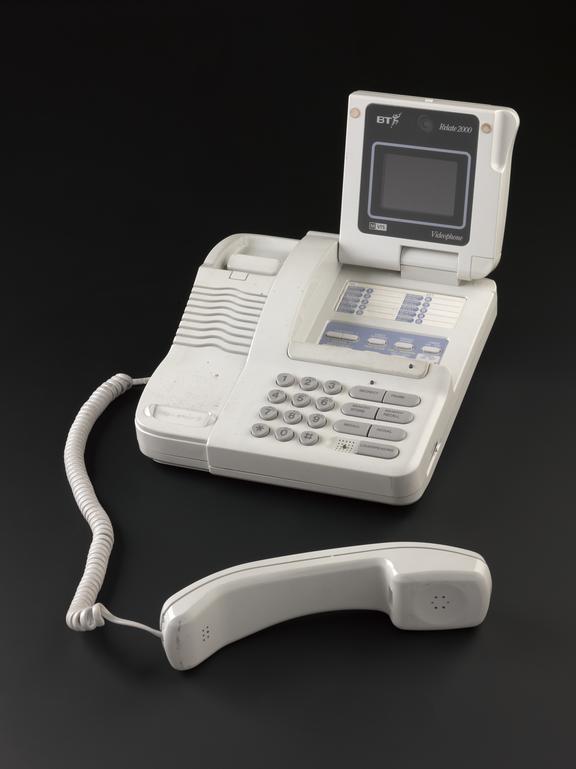
Designed and manufactured by GEC-Marconi, the desktop unit combined a corded telephone, integral camera and hinged colour LCD. It digitised and compressed pictures for transmission through the conventional analogue telephone network.
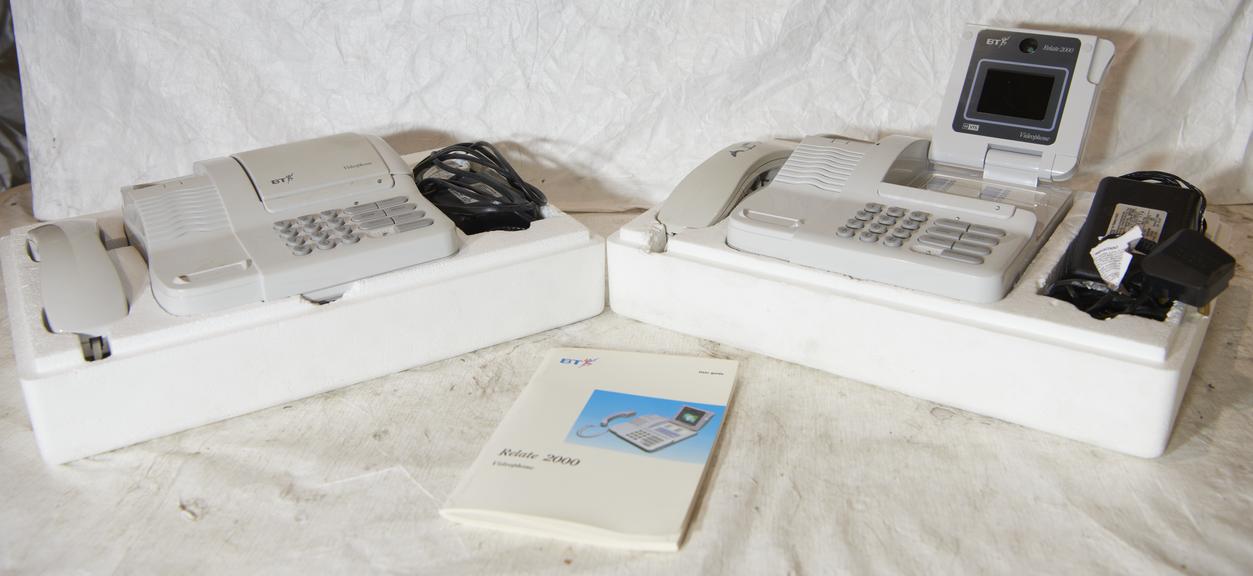
The Relate 2000 went on general sale in March 1993. It worked as a basic audio telephone when the other party lacked compatible video equipment, but video calling required mains power and another compatible videophone. BT sold each unit for £399 or offered a pair for £749.
Why It Mattered
It was BT’s first videophone and an early British attempt to bring colour video calling into the home without requiring a new telephone network.
For households, however, blurred or jerky pictures, restricted bandwidth, cost and the need for compatible equipment at both ends limited its practical appeal. Its reception exposed the technical and network-effect problems facing consumer video calling before broadband connections became commonplace.
Video over the Telephone Network
- The Relate 2000 digitised and compressed colour pictures for transmission through the conventional analogue public switched telephone network.
- Launch specifications described a 14.4 kbit/s moving-video mode with a stated maximum near ten frames per second and a 9.6 kbit/s still-image mode.
- Newspaper testing reported approximately five to eight images per second in practice, with blurred or jerky movement and less natural-sounding speech.
Hardware and Controls
- The desktop unit combined a corded telephone, integral camera and hinged colour LCD measuring approximately three inches or 7.5 cm.
- Functions included self-view, picture-in-picture, freeze-frame or still-image operation, and controls to refresh or disable outgoing video.
- Video calls used ordinary telephone connections, but video, loudspeaker and timer functions required mains power.
Price, Compatibility and Adoption
- BT sold each unit through BT phone shops and Dixons for £399, or offered a pair for £749.
- Compatible equipment was required at both ends for video, creating a network-effect problem despite the discounted two-unit price.
- Marconi’s M-VTS system was incompatible with AT&T’s competing analogue-videophone system, and the Relate 2000 did not achieve broad household adoption.
Primary Records
Gallery
Credit
Science Museum Group Collection; © The Board of Trustees of the Science Museum
Caption
BT’s Relate 2000 put a small video screen above a familiar telephone keypad, bringing the idea of face-to-face calling to the desk.
Credit
BT Relate 2000 Videophone User Guide, hosted by British Telephones
Licence
Historical Ephemera
Displayed for commentary, criticism, research and historical documentation where permitted by applicable law. No permission for reuse is granted.
Caption
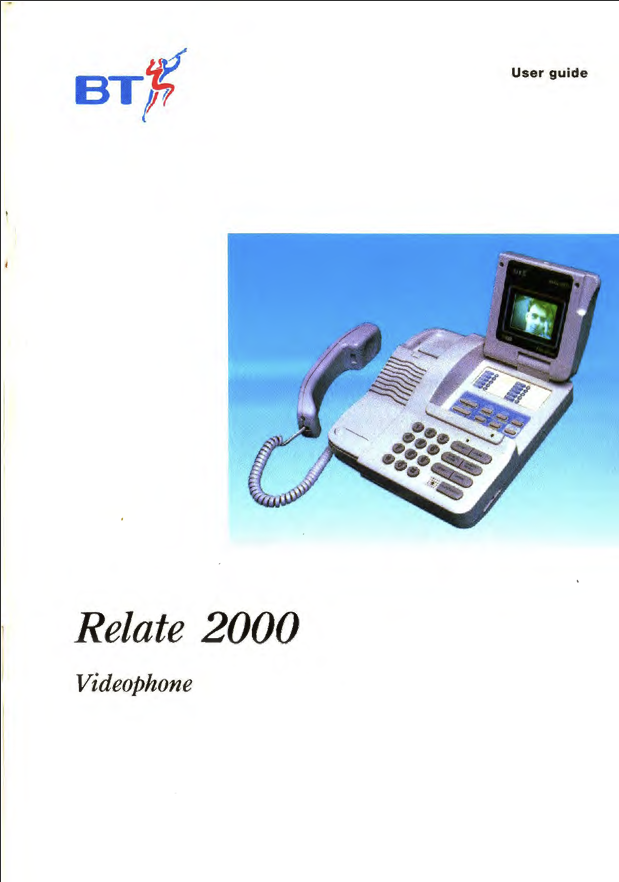
The cover of the BT Relate 2000 Videophone User Guide presents the product as a desktop telephone with a raised video screen.
Credit
Science Museum Group Collection; © The Board of Trustees of the Science Museum
Caption
A pair of Relate 2000 videophones in protective packaging, accompanied by handsets, cables, power adapters and an instruction booklet.