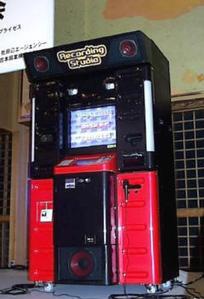
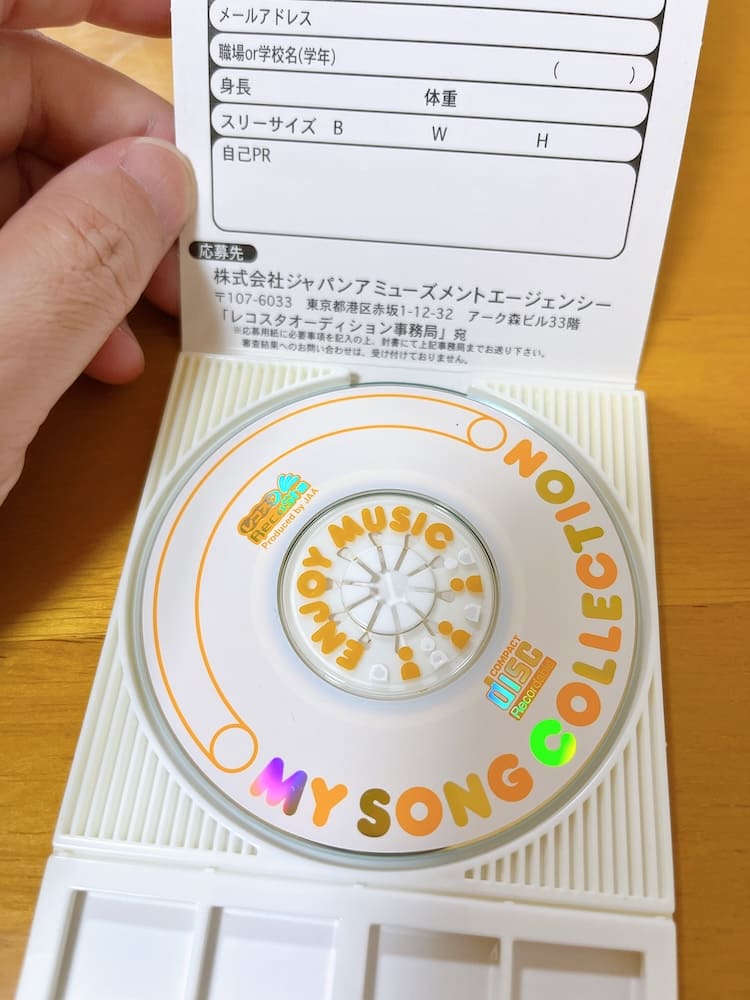
RECOSTA was a Japanese amusement booth that turned a karaoke performance into a personalised 8 cm CD.
Japan Amusement Agency unveiled it in Tokyo in May 2000, with a late-July release planned for Japanese game centres. Inside the booth, customers selected a song, sang into a microphone and posed for a photograph.
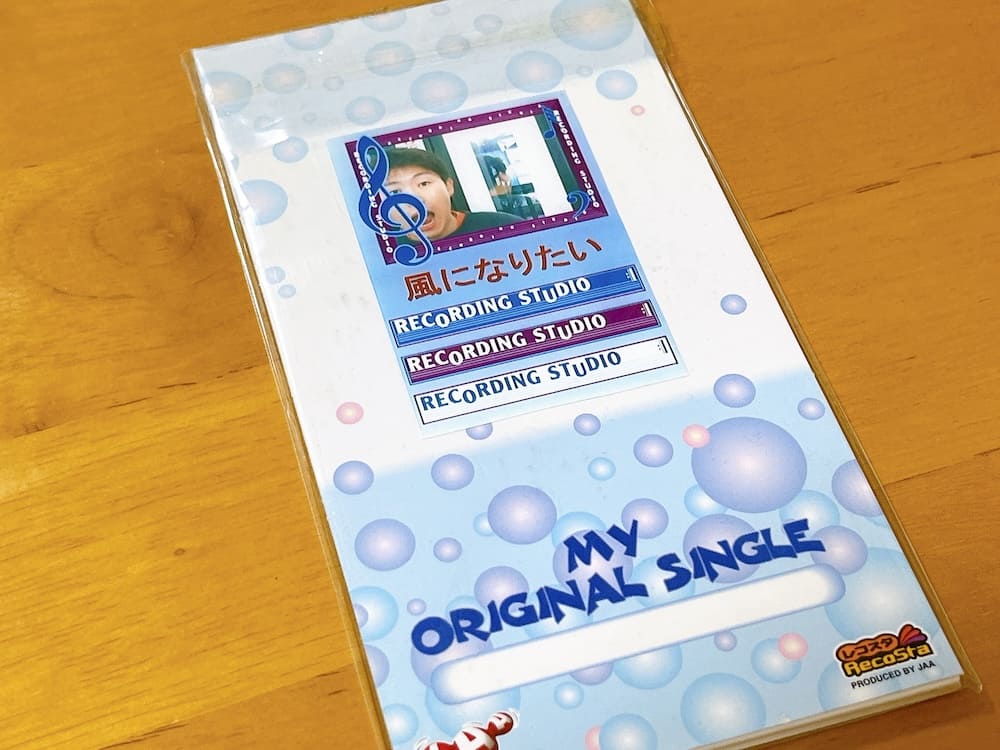
The machine printed a personalised jacket for the take-home disc. Customer-owned recordings show that some booths entered public use, although RECOSTA is now probably discontinued and its final operating date is unknown.
History
Japan Amusement Agency unveiled it in Tokyo in May 2000, with a late-July release planned for Japanese game centres. Inside the booth, customers selected a song, sang into a microphone and posed for a photograph.
History
The machine printed a personalised jacket for the take-home disc. Customer-owned recordings show that some booths entered public use, although RECOSTA is now probably discontinued and its final operating date is unknown.
Significance
RECOSTA made karaoke tangible: instead of leaving with only a memory of the session, a customer took home their voice, portrait and chosen presentation as a compact personal single. It combined automated recording and personalised packaging in one game-centre booth, with a networked music library forming part of the announced design.
Its use of an 8 cm disc also places it at a format turning point in Japan, as 12 cm CD singles were overtaking the smaller format. The reason RECOSTA disappeared, and when its last booth stopped operating, remains unknown.
Recording, Packaging and Cost
- At the May 2000 presentation, JAA quoted an operator price of ¥2.7 million per machine and a customer charge of ¥800 per session.
- Surviving outputs include 8 cm discs, portrait jackets, printed title labels and selectable sleeve designs.
- JAA announced and marketed RECOSTA, but the individual designer and cabinet manufacturer are not identified.
Networked Music Library
- JAA announced a library of about 16,000 MIDI karaoke tracks and about 1,000 original backing tracks.
- Music and jacket data were to be distributed from a dedicated server over ISDN.
- Machines were to be managed by serial number as part of the networked service.
Trademarks and Launch Plans
- Japan Amusement Agency filed Japanese trademark applications for RECOSTA and RECOSTAR on 12 April 2000; both were registered on 1 June 2001.
- The public product was called RECOSTA; RECOSTAR is documented only as a related trademark.
- The 3,000-machine figure was a shipment target for December 2000, not a reported shipment total.
- JAA proposed using RECOSTA recordings for a first audition produced by Tsunku; details were still undecided when announced.
Key facts
**Region:** Japan
**Associated With:** Japan Amusement Agency Co., Ltd. - announcing and marketing company
**Defining Feature:** Recorded a karaoke performance onto a personalised 8 cm CD with a photo jacket
**Status:** Discontinued - probable; final operating date unknown
Region
Japan
Associated With
Japan Amusement Agency Co., Ltd. - announcing and marketing company
Defining Feature
Recorded a karaoke performance onto a personalised 8 cm CD with a photo jacket
Status
Discontinued - probable; final operating date unknown
Images are included for historical and archival reference.
Rights holders may contact Forgotten Archive through the publishing account to request a credit correction or removal.