National’s MS-X1 was a Japanese home appliance that delivered oxygen-enriched air through a headset.
Launched in Japan on 10 March 2003, it drew in room air and used a membrane to produce air containing about 30% oxygen. A tube fed a small mouthpiece positioned close to the nose.
Marketed for short sessions after work, sport or study, it was explicitly not medical equipment. Panasonic lists production as ended but gives no discontinuation date.
History
Launched in Japan on 10 March 2003, it drew in room air and used a membrane to produce air containing about 30% oxygen. A tube fed a small mouthpiece positioned close to the nose.
History
Marketed for short sessions after work, sport or study, it was explicitly not medical equipment. Panasonic lists production as ended but gives no discontinuation date.
Significance
The MS-X1 brought oxygen enrichment into the home as an everyday wellness ritual. Its membrane system, wearable headset and timed sessions packaged a specialised air-separation process into an appliance marketed for use after work, exercise or study.
It reflected a period when Japanese manufacturers explored increasingly specialised personal-wellness products. Although National promoted oxygen-enriched air for refreshment and concentration, the MS-X1 was explicitly not medical equipment, and its advertised benefits should not be confused with clinically established oxygen therapy.
How the Enrichment System Worked
- Oxygen and nitrogen passed through the membrane at different rates, creating the enriched output stream.
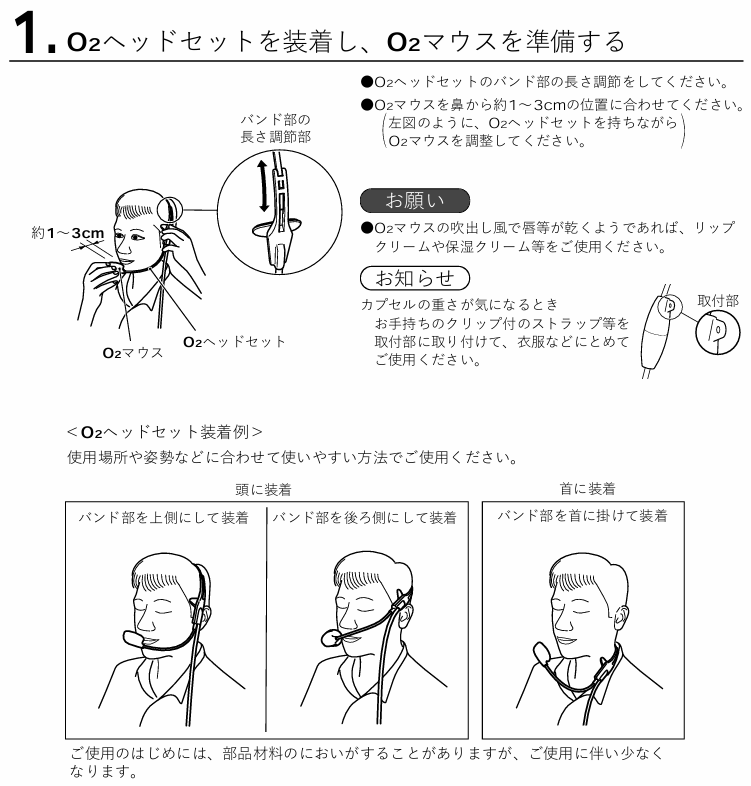
- Output was approximately 2 litres per minute through a 1.5-metre tube, with the mouthpiece positioned about 1–3 centimetres from the nose.
- The over-ear band and O2 mouthpiece formed one delivery assembly rather than separate output modes.
- The appliance weighed 3.8 kilograms.
Timed Use and Maintenance
- The controls offered 10-, 20- and 30-minute sessions; the manual suggested about ten minutes per day as a guide.
- After oxygen mode, the appliance paused briefly and ran approximately one minute of ordinary-air ventilation.
- A detachable capsule collected moisture, while the filter, tube and mouthpiece required cleaning; a separate post-use ventilation cycle cleared the system.
- By August 2003, the manual listed replacement headset, tube-set and O2-mouthpiece components separately.
Launch, Positioning and Production End
- A Reuters photograph records a Tokyo demonstration on 22 January 2003, ahead of the Japanese launch on 10 March.
- The manual suggested use after work, sport or long study sessions but explicitly stated that the MS-X1 was not medical equipment.
- Reuters metadata reported a planned price of ¥48,000, while Panasonic’s archive displays ¥52,800 including tax; these should not be treated as equivalent launch totals.
- Panasonic marks production as ended without giving a manufacturing-end or withdrawal date.
Key facts
**Region:** Japan
**Associated With:** Matsushita Electric Industrial Co., Ltd. - manufacturer
**Defining Feature:** Membrane-produced oxygen-enriched air delivered through a wearable headset
**Status:** Discontinued - production ended, date not stated
Region
Japan
Associated With
Matsushita Electric Industrial Co., Ltd. - manufacturer
Defining Feature
Membrane-produced oxygen-enriched air delivered through a wearable headset
Images are included for historical and archival reference.
Rights holders may contact Forgotten Archive through the publishing account to request a credit correction or removal.
Displayed for commentary and research. Fair dealing under the UK CDPA 1988 applies only where its conditions are met. No permission for reuse is granted.
Caption
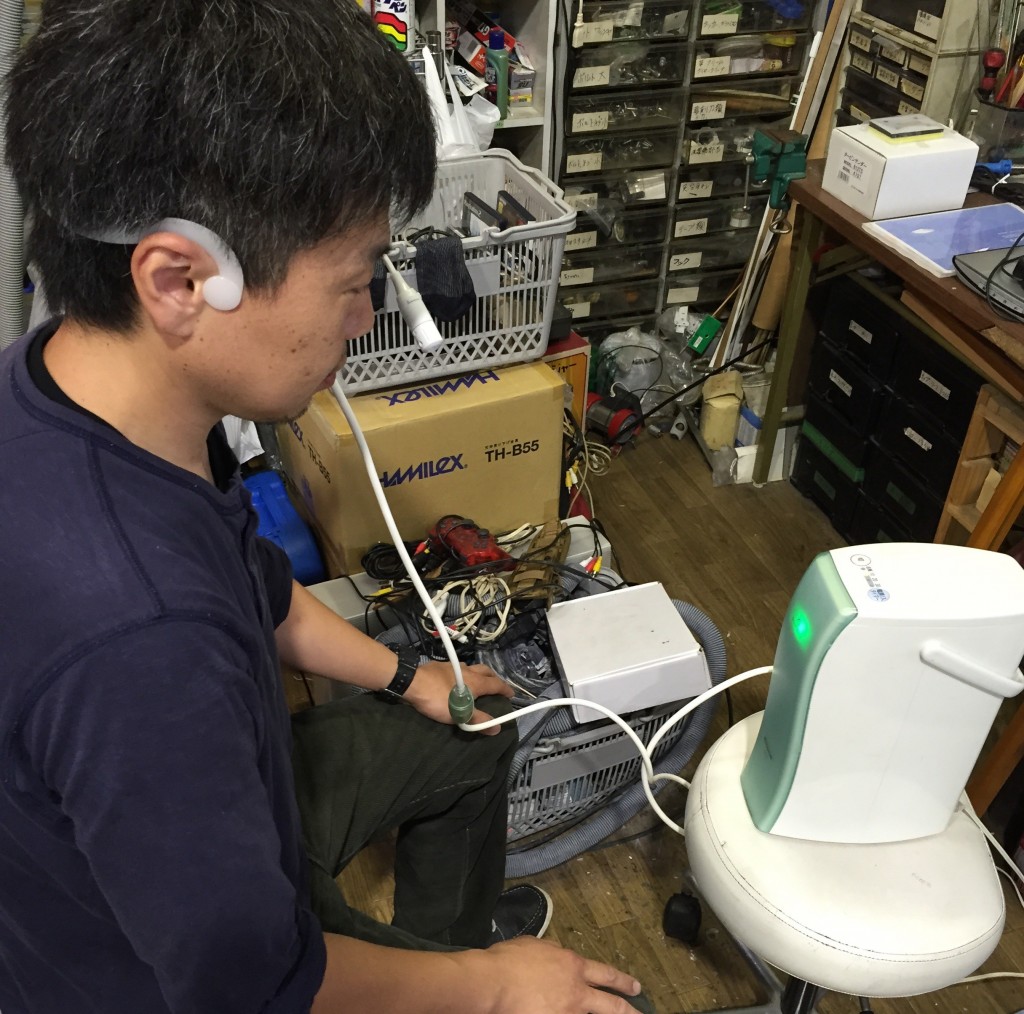
A surviving National MS-X1 demonstrated in March 2024, with its oxygen-delivery headset worn beside the operating appliance.
Displayed for commentary and research. Fair dealing under the UK CDPA 1988 applies only where its conditions are met. No permission for reuse is granted.
Caption
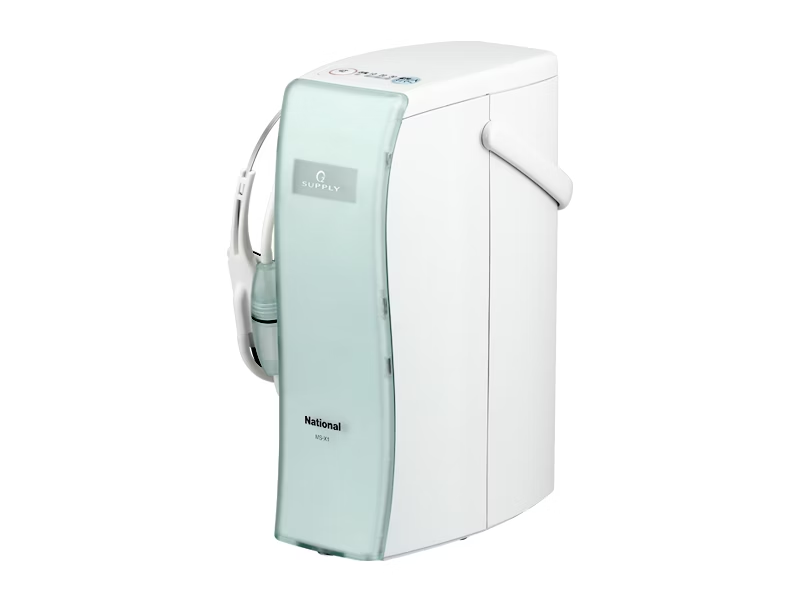
National MS-X1 oxygen air charger, introduced in Japan in 2003, with its oxygen-delivery headset and tubing stored along the side.
Displayed for commentary and research. Fair dealing under the UK CDPA 1988 applies only where its conditions are met. No permission for reuse is granted.
Caption
Illustrations from the original 2003 National MS-X1 instruction manual showing how to position the oxygen-delivery headset around the head or neck.