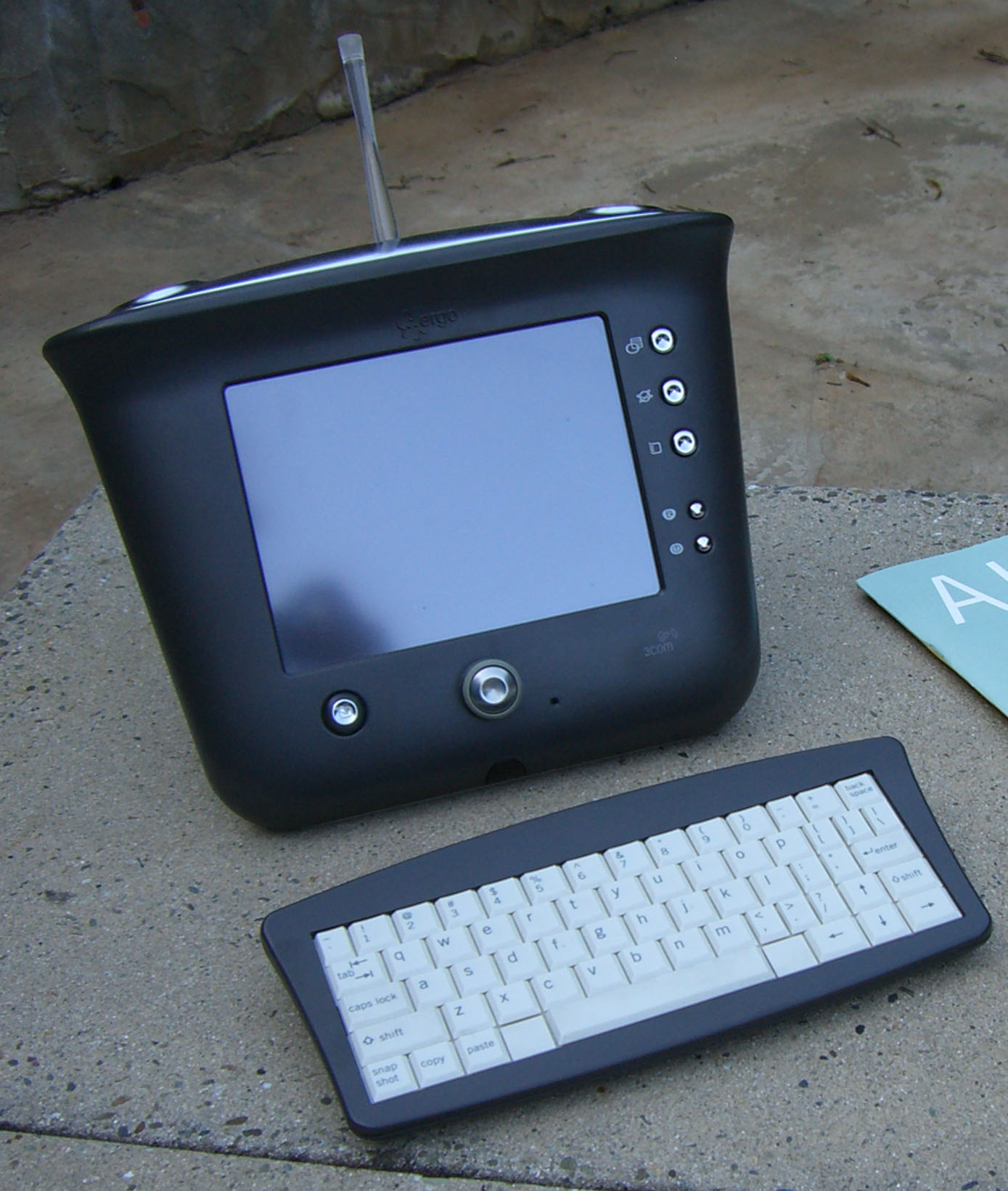
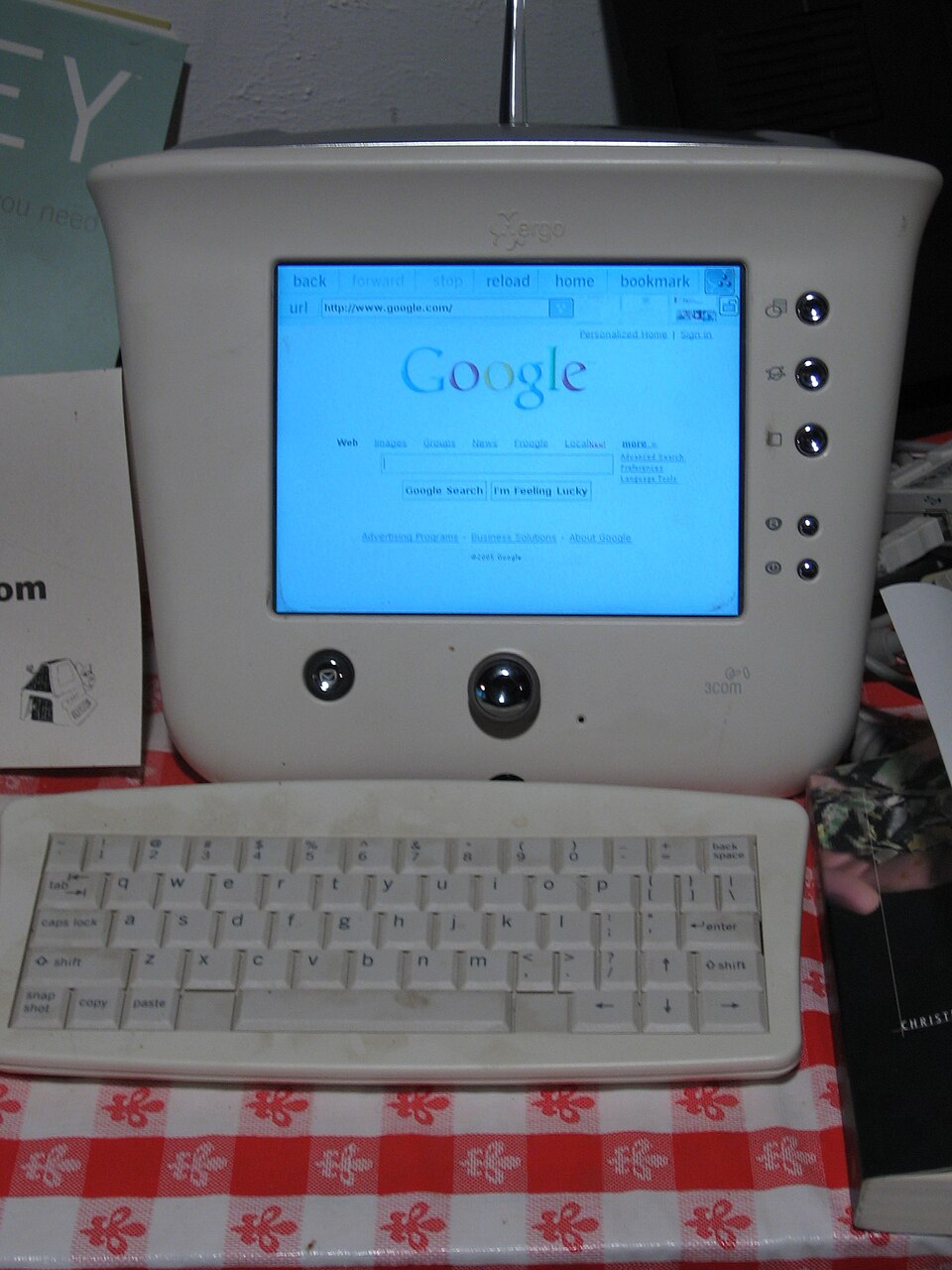
3Com Audrey was a $499 household internet appliance launched in the United States in October 2000.
Designed for a kitchen counter, it paired an eight-inch touchscreen and stylus with a detachable wireless keyboard and a dial for switching between preset web channels. It handled email, shared calendars, address books, messages and Palm synchronisation.
3Com announced Audrey’s withdrawal in March 2001, just five months after its launch. Marketing and operations were wound down in stages, bringing an abrupt end to its attempt to make the internet part of everyday household life.
History
Designed for a kitchen counter, it paired an eight-inch touchscreen and stylus with a detachable wireless keyboard and a dial for switching between preset web channels. It handled email, shared calendars, address books, messages and Palm synchronisation.
History
3Com announced Audrey’s withdrawal in March 2001, just five months after its launch. Marketing and operations were wound down in stages, bringing an abrupt end to its attempt to make the internet part of everyday household life.
Significance
Audrey treated internet access as a shared household utility rather than a task for the home office. Its family organiser, touchscreen, stylus and physical controls made it a distinctive early attempt to fit online services into communal spaces.
Its short commercial life also illustrates the difficulty of the early internet-appliance market. The $499 linen model competed with inexpensive PCs while offering narrower functions, before 3Com withdrew it amid wider restructuring and uncertainty about the category.
Inside Audrey’s Hardware
- Its National Semiconductor Geode GX1 processor ran a QNX-based platform incorporating Palm-related software.
- The Linen model cost $499; Meadow, Sunshine, Slate and Ocean versions cost $549.
- The compact keyboard stowed at the rear, while the stylus sat in an illuminated dock.
Audrey’s Launch and Market Reach
- 3Com unveiled Audrey in New York on 17 October 2000, with online ordering available immediately and wider retail availability expected later that month.
- Its completed commercial launch was in the United States.
- A 3Com official said Asian availability, including Hong Kong, was still at least a year away and depended on regional content and access agreements.
Audrey’s Staged Withdrawal and Afterlife
- On 22 March 2001, 3Com announced that it was ending Audrey and cancelling the unreleased Kerbango internet radio project.
- Industry reports gave 1 April for planned marketing suspension, June for discontinuation and 1 July for cessation of operations rather than one final endpoint.
- The Rhode Island Computer Museum says Audrey spent less than eight months on the market and became mostly unusable after discontinuation.
- Owners have repurposed surviving machines through QNX-based modifications, while later demonstrations record continued niche use.
Key facts
**Region:** United States
**Associated With:** 3Com - developer and manufacturer
**Defining Feature:** Eight-inch touchscreen with stylus, detachable keyboard and web-channel dial
**Status:** Discontinued - withdrawal announced on 22 March 2001, followed by staged planned marketing and operational endpoints
Region
United States
Associated With
3Com - developer and manufacturer
Defining Feature
Eight-inch touchscreen with stylus, detachable keyboard and web-channel dial
Status
Discontinued - withdrawal announced on 22 March 2001, followed by staged planned marketing and operational endpoints
Images are included for historical and archival reference.
Rights holders may contact Forgotten Archive through the publishing account to request a credit correction or removal.
Photographer unresolved; image published by DigiBarn Computer Museum.
Licence
Historical Ephemera
Displayed for commentary, criticism, research and historical documentation where permitted by applicable law. No permission for reuse is granted.
Caption
Long before smartphones made the internet portable, this compact web terminal offered a different vision of getting online without a conventional computer.
See the licence terms for attribution, reuse and any other conditions.
Caption
A glimpse of early-2000s internet browsing, when even a simple Google search could involve a dedicated terminal, a small screen and a physical keyboard.