Piazza Virtuale was Van Gogh TV’s temporary interactive television project at documenta IX in 1992.
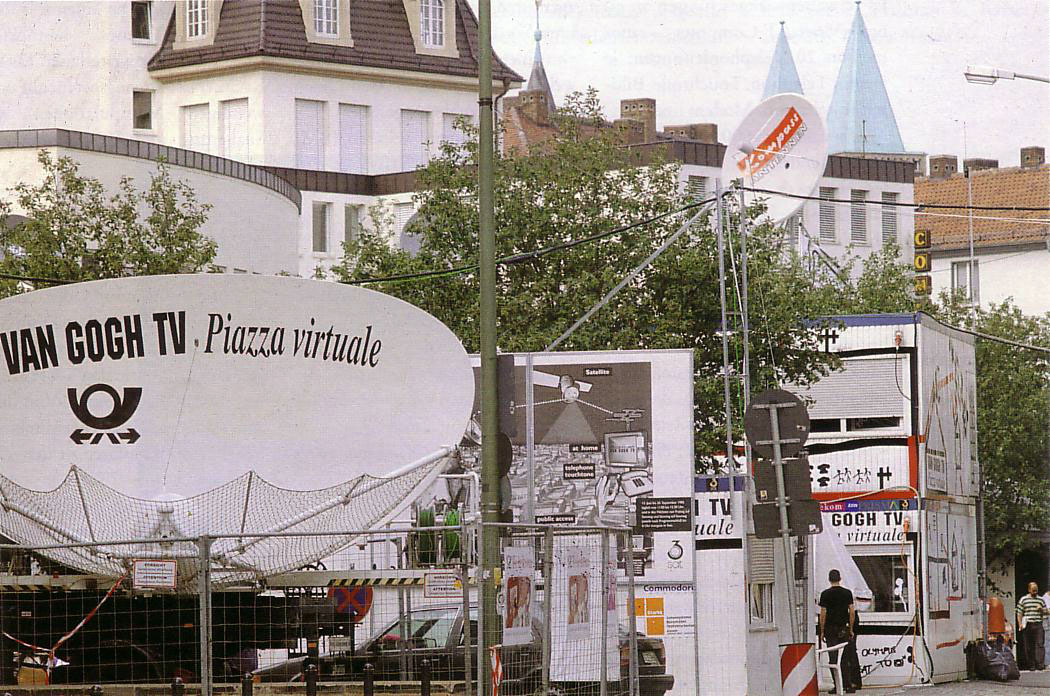
From a central container studio beside Kassel’s Fridericianum, it linked callers and remote studios by telephone, fax, modem, videophone and ISDN.
Participants could speak, write, draw, make music and alter parts of the live output. Broadcasts ran in scheduled blocks rather than as an uninterrupted 24-hour channel, and the planned 100-day project ended with documenta IX on 20 September 1992.
History
From a central container studio beside Kassel’s Fridericianum, it linked callers and remote studios by telephone, fax, modem, videophone and ISDN.
History
Participants could speak, write, draw, make music and alter parts of the live output. Broadcasts ran in scheduled blocks rather than as an uninterrupted 24-hour channel, and the planned 100-day project ended with documenta IX on 20 September 1992.
Significance
Piazza Virtuale challenged the traditional separation between broadcaster and audience, giving viewers the ability to influence a shared television programme in real time. Rather than choosing between predetermined outcomes, participants could contribute unpredictable material and help shape what appeared on screen.
The experiment anticipated aspects of livestreaming, online chat and participatory media years before those formats became widespread. Its surviving broadcasts and production records also preserve an unusually detailed example of early networked communication, although direct influence on later platforms has not been established.
How the Audience Joined
- Telephone callers could speak on air, while modem users sent text and fax users submitted material.
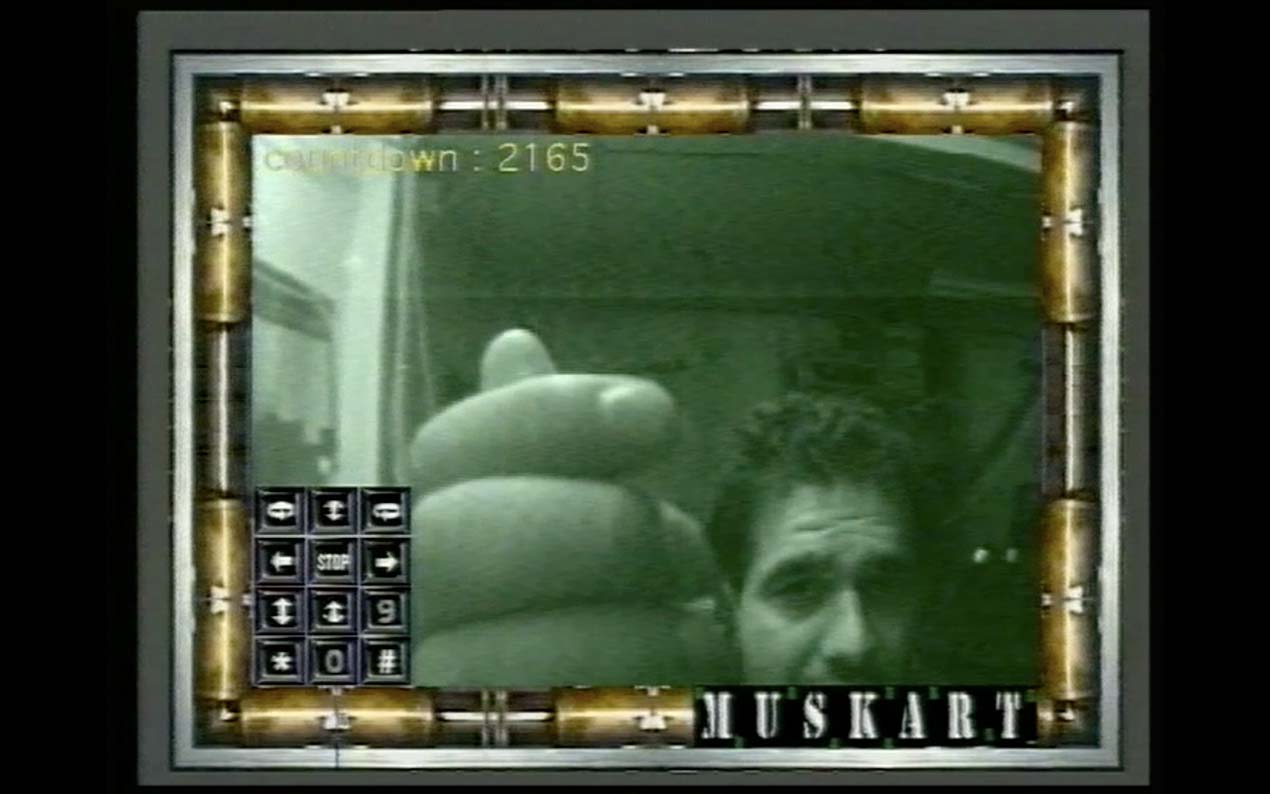
- Touch-tone keys could trigger graphics, sounds, instruments, painting functions and camera movement.
- Videophones and ISDN carried remote participants into the programme, with each access route offering different capabilities.
- The available participation methods varied between programme segments and locations.
The Kassel Network
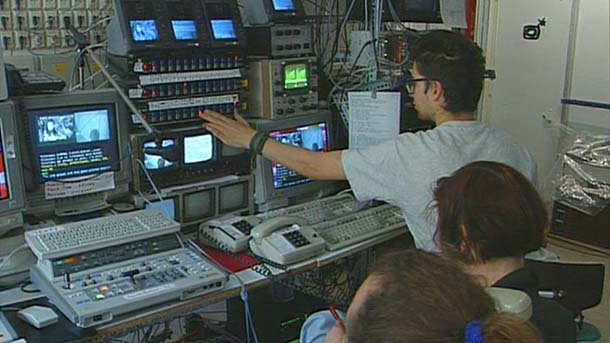
- The central studio used a computer-controlled mix of commercial and specially adapted equipment.
- Remote Piazzetta groups sent live material by videophone, ISDN and telephone and, in some cases, by satellite.
- Documented connections reached cities across Europe, with additional links involving Japan and the United States.
Broadcast and Preservation
- The first documented Piazza Virtuale television programme appeared in 3sat’s morning schedule on 13 June 1992, the opening day of documenta IX.
- Production sheets record morning 3sat programmes, evening Olympus satellite blocks and occasional overnight 3sat transmissions.
- Complete digitised programmes are retained for controlled scholarly access, but not all have been openly published.
**▶️ Watch Related Video**
Key facts
**Region:** Germany; Austria; Switzerland; France; Latvia; Japan; United States
**Associated With:** Van Gogh TV - project creator and coordinator
**Defining Feature:** Callers and computer users could shape the live television output
**Status:** Historical event - planned 100-day run completed on 20 September 1992
Region
Germany; Austria; Switzerland; France; Latvia; Japan; United States
Associated With
Van Gogh TV - project creator and coordinator
Defining Feature
Callers and computer users could shape the live television output
Status
Historical event - planned 100-day run completed on 20 September 1992
Images are included for historical and archival reference.
Rights holders may contact Forgotten Archive through the publishing account to request a credit correction or removal.
Van Gogh TV project archive, reproduced by Hochschule Mainz. Individual photographer not identified on the source page.
Licence
Historical Ephemera
Displayed for commentary, criticism, research and historical documentation where permitted by applicable law. No permission for reuse is granted.
Caption
For 100 days in 1992, this Kassel broadcasting base helped turn television into a meeting place. Piazza Virtuale invited the audience to make the programme together.
Van Gogh TV project archive, reproduced by Hochschule Mainz. Individual photographer not identified on the source page.
Licence
Historical Ephemera
Displayed for commentary, criticism, research and historical documentation where permitted by applicable law. No permission for reuse is granted.
Caption
Behind the open invitation to call in was a crowded control room. Broadcast equipment and computers connected the audience’s contributions to a live television programme.
Van Gogh TV project archive, reproduced by Hochschule Mainz. Individual photographer not identified on the source page.
Licence
Historical Ephemera
Displayed for commentary, criticism, research and historical documentation where permitted by applicable law. No permission for reuse is granted.
Caption
A caller could become part of the picture. Piazza Virtuale’s screen combined a remote participant with an interface that made television look unexpectedly like a shared computer space.