Concorde
The Anglo-French Mach 2 Passenger Aircraft
Forgotten Engineering · 1969
Archived on
Associated With
British Aircraft Corporation and Aérospatiale under a British–French government programme - developer
Defining Feature
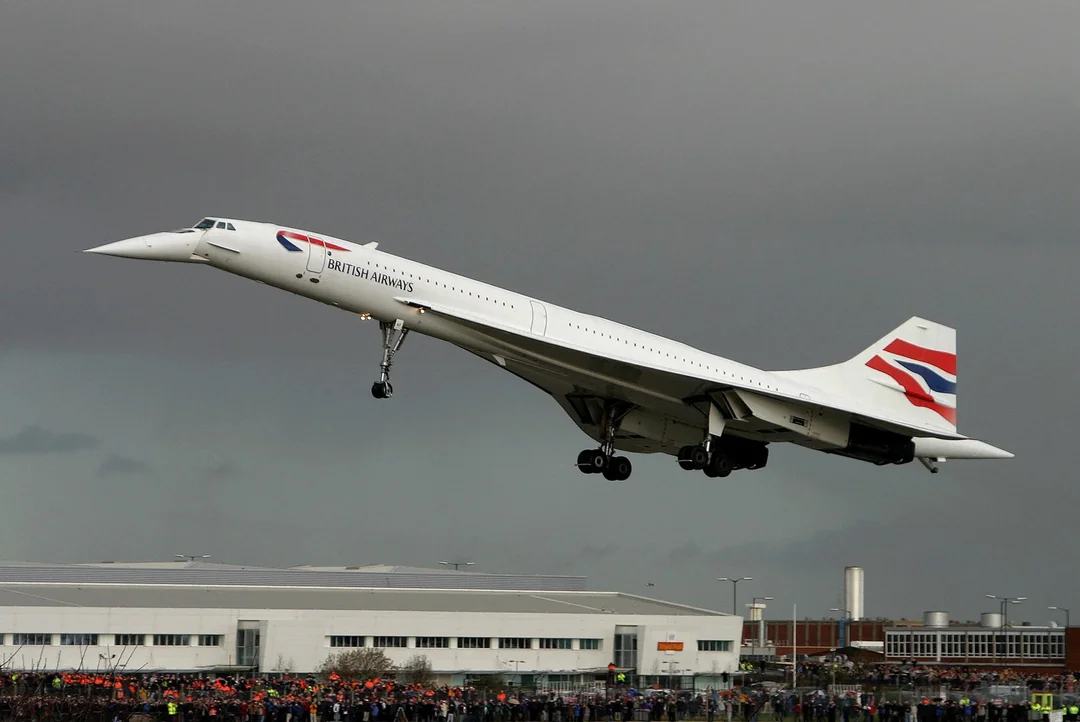
An ogee-delta-wing airliner designed for passenger flight at Mach 2 and 60,000 feet
Status
Preserved - British Airways withdrew Concorde on 24 October 2003; surviving airframes are preserved
Overview
Concorde carried paying passengers on scheduled routes at Mach 2.
Developed under a British–French agreement signed in 1962, British prototype 002 first flew from Filton on 09/04/1969. French prototype 001 broke the sound barrier in 10/1969.
Commercial service followed in 1976, turning Mach 2 flight into scheduled passenger transport. British Airways records a cruising speed of 1,350 mph at altitudes of up to 60,000 feet.
Why It Mattered
Concorde made supersonic travel a public experience rather than leaving it as an experimental achievement. It also demonstrated the demanding engineering and operating requirements involved in making Mach 2 flight a repeatable passenger service.
Joint Development Programme
- Britain and France signed a joint development agreement in 1962.
- British prototype 002 was built at Filton and first flew on 9 April 1969.
Ogee Wing Development
- Royal Aircraft Establishment wind-tunnel models tested the ogee shapes developed for Concorde's wing.
- The wing combined low drag at high speed with sufficient lift at low speed.
British Airways Service
- British Airways records a cruising speed of 1,350 mph, or Mach 2, at up to 60,000 feet.
- Its first commercial Concorde flight operated from Heathrow to Bahrain on 21 January 1976.
- British Airways operated its last commercial Concorde flight on 24 October 2003.
Sources & Records
- Celebrating Concorde — Records British Airways service dates, operating specifications and retirement.
- Concorde prototype aircraft — Documents the development programme, British prototype and wing requirements.
- Airbus — Concorde’s first flights — Confirms the 1962 agreement, prototype first flights and the French prototype’s October 1969 supersonic flight.
- Wind Tunnel ‘Ogee’ Sequence Shape Models — Identifies the preserved models used in ogee-wing development.
Gallery
Credit
Andrew Bromage, via JetPhotos
Caption
The airborne British Airways Concorde provides a full-scale counterpart to the prototype and wind-tunnel records discussed here.