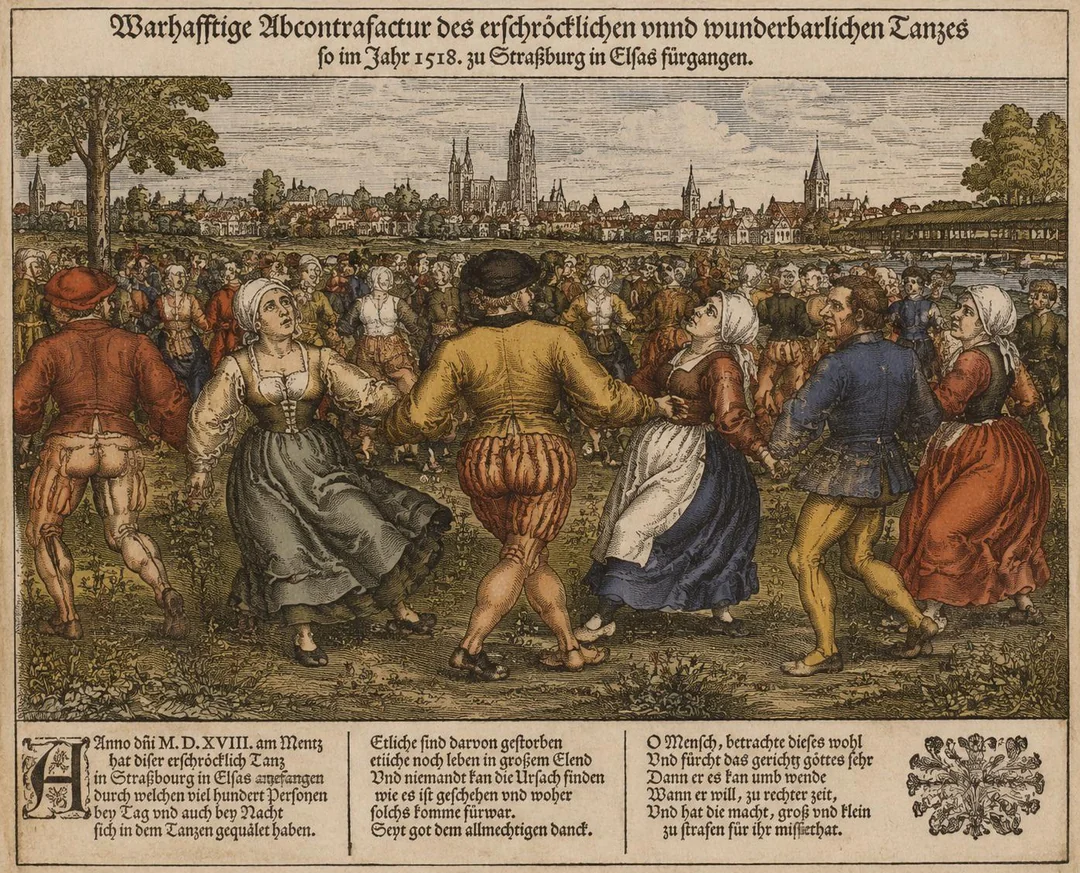
In July 1518, dozens of people began dancing in the streets of Strasbourg and continued over several weeks. The city questioned relatives, sought medical and religious explanations and sent some of those affected to Saverne. By 2 August, public dancing had been prohibited as the authorities struggled to contain an episode they did not understand.
Why It Mattered
The event remains unsettling because the dancing was real enough to force an official response, yet its cause is still unresolved. Medical theories, religious interpretations and later speculation surround it, but none fully explains why a collective outbreak took hold or why it ended.
Municipal evidence
- Archives de Strasbourg identifies surviving files under references 1 MR 3 and III 200/15.
- Dozens of people danced in Strasbourg in July 1518 over several weeks.
- The archive says relatives were questioned and some affected people were sent to Saverne.
Official response
- Confraternities were asked to help care for those affected.
- Municipal administrators, clergy and medical practitioners all attempted responses.
- A public-dance prohibition signed by Sebastian Brant was proclaimed on 2 August 1518.
- Preachers and municipal chroniclers also recorded the event.
What remains uncertain
- The municipal museum distinguishes source-based facts from later interpretations.
- The cause remains unexplained.
Associated With
Not applicable - historical event recorded by Strasbourg institutions
Defining Feature
Municipal records documenting official responses to weeks of public dancing
Status
Historical event - in Strasbourg's municipal record and chronicle tradition
- All one image sources are not yet verified — editorial review required.
Rights Notice
Images are included for historical and archival reference.
Rights holders may contact Forgotten Archive through the publishing account to request a credit correction or removal.
Gallery
Credit
Forgotten Archive — AI-generated using ChatGPT; origin supplied by the owner
Licence
Historical Ephemera
Displayed for commentary and research. Fair dealing under the UK CDPA 1988 applies only where its conditions are met. No permission for reuse is granted.
Caption
AI-generated illustration evoking Strasbourg's dancing plague of 1518. It accompanies the historical account and should not be read as a contemporary record of the event.