Nexopia
Canadian Youth-Oriented Social Network
Forgotten Internet · 2003
Archived on
Associated With
Nexopia.com Inc. - creator or operator, brand
Defining Feature
Publicly searchable profiles, blogs, forums, photo galleries and a paid Plus tier
Status
Unknown - Subject of a 2012 Canadian privacy finding; the regulator later confirmed implementation of all recommendations after a change of ownership
Overview
Nexopia launched in 2003 as a Canadian social network aimed mainly at teenagers and young adults.
Users built profiles, wrote blogs, joined forums and shared photographs, art, music, poetry and video. The service combined free advertising-supported membership with an optional paid Plus subscription.
Its open design made people and their content easy to discover beyond immediate friendship groups, including through Nexopia’s own search and external search engines.
Why It Mattered
Nexopia captured both the appeal and danger of making teenage social life highly visible online. A Canadian privacy investigation examined consent, default visibility, deletion and retention, turning the network into an important test of what platforms owed their young users.
Profiles and Membership
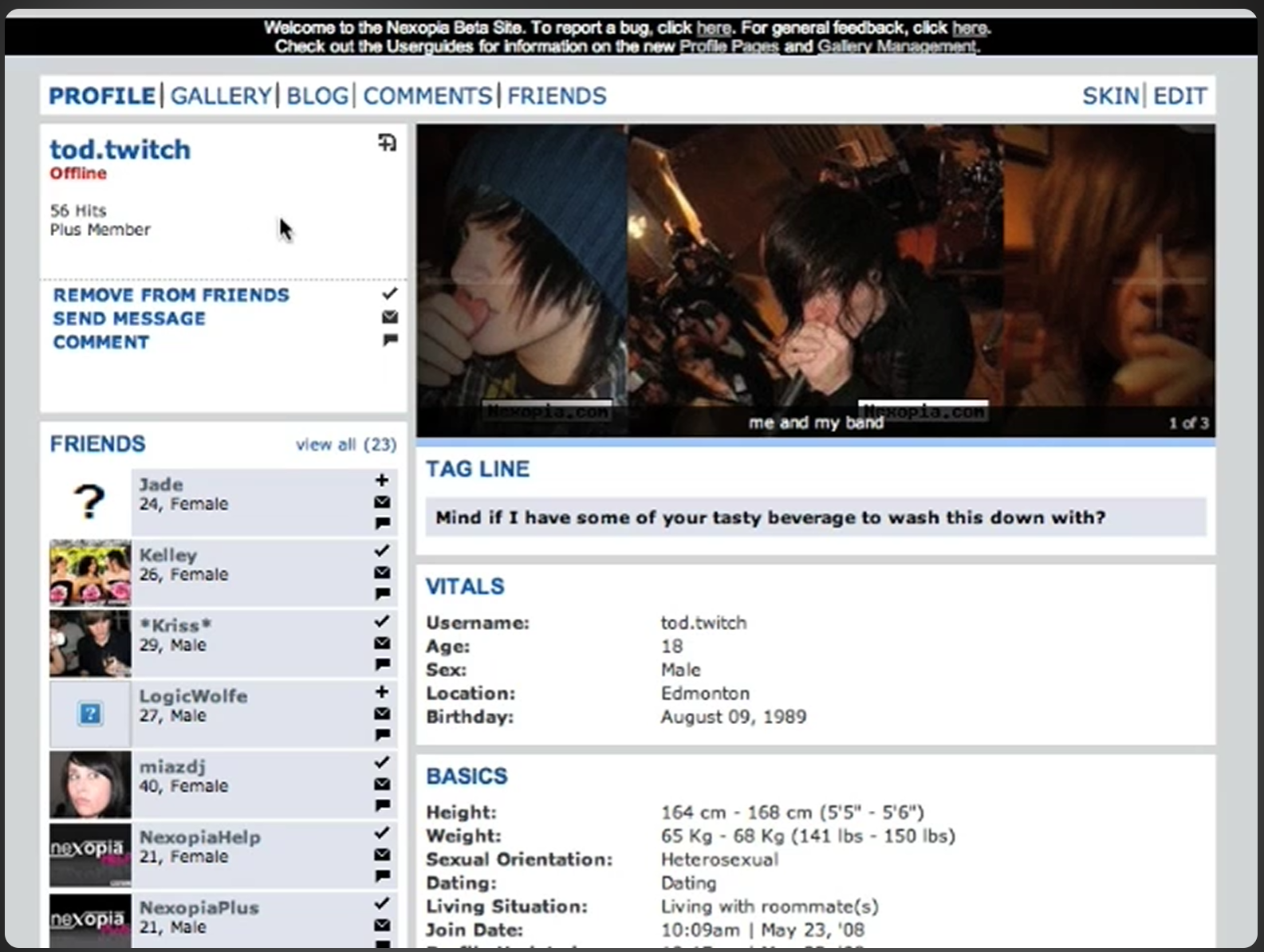
- Core profile information included username, gender, age and location.
- Nexopia offered free membership and an optional Plus subscription.
- The service described itself as an open network for meeting people and expressing oneself.
Open-Network Visibility
- The regulator found that external search engines and Nexopia’s own search could expose user profiles.
- Many information blocks defaulted to visibility for all users.
Privacy Investigation
- The Privacy Commissioner found contraventions involving public disclosure, defaults, consent, third-party sharing and retention.
- The 2012 findings made 24 recommendations, with four retention-related issues initially unresolved.
- An ownership change occurred on 30 September 2012.
- Nexopia later announced plans to implement every recommendation, and the regulator subsequently confirmed corrective measures.
Sources & Records
- Privacy Commissioner of Canada — Nexopia findings, 2012 — Documents the site’s features and the investigation’s findings on visibility, consent and retention.
- Canadian Parliament — Nexopia committee evidence — Records the new owner’s response to the privacy recommendations and questions about deletion.
Gallery
Credit
Nexopia interface; supplied Profiles 2.0 demonstration video
Licence
Historical Ephemera
Displayed for commentary, criticism, research and historical documentation where permitted by applicable law. No permission for reuse is granted.
Caption
Nexopia's profile page gave users space to assemble a public identity around photographs, messages and personal details, reflecting an earlier style of social networking.