Index
Littlewoods' Catalogue-Showroom Retailer
Forgotten Shops · 1985
Archived on
Associated With
Littlewoods - founder or retailer
Defining Feature
Seasonal general-merchandise catalogues used for ordering, payment and collection in shop
Status
Closed - Ceased trading as a retail chain during 2005
Overview
Index used seasonal catalogues and compact UK showrooms to sell and collect general merchandise.
Littlewoods began the format as The Catalogue Shop in October 1985 and formally introduced the Index name in 1987. Customers selected goods from Spring/Summer and Autumn/Winter catalogues, then used branches mainly for ordering, payment and collection.
The chain ceased trading in 2005. Proposals covered the acquisition of 33 standalone stores, the Index website, its order-line catalogue business and the brand, with the selected stores intended for conversion to Argos.
Why It Mattered
Index sat between traditional mail order and later online retail. Its catalogues offered a department-store range while compact branches handled transactions and collection instead of displaying every product.
Its closure also reflected the pressures facing the model. Littlewoods attributed its competitive difficulties to buying power and its location strategy.
Catalogue and Showroom Model
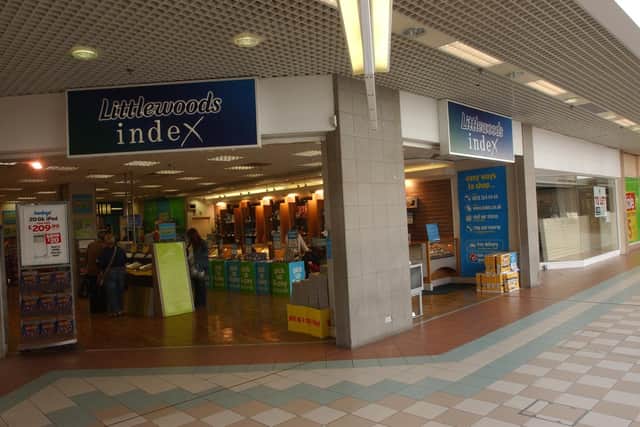
- Customers chose goods from catalogues, while shops principally handled ordering, payment and collection.
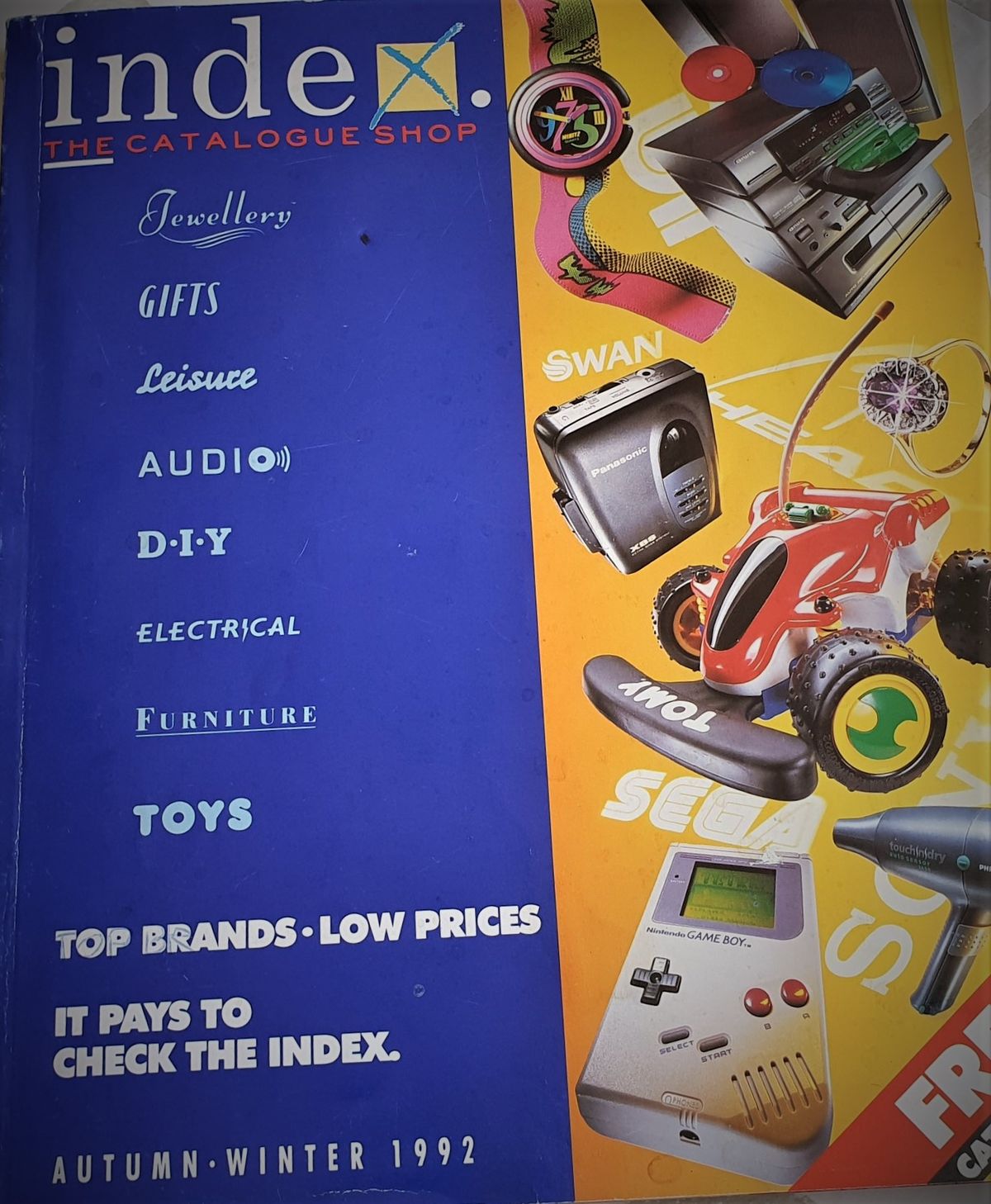
- Seasonal catalogues covered furniture, electricals, toys, jewellery, gifts, housewares, sport and DIY goods.
- Index and Littlewoods home shopping operated as separate Littlewoods retail channels.
Estate Changes
- A Competition Appeal Tribunal record described about 135 stores and approximately seven million catalogues per season.
- In 2000, Littlewoods announced that five standalone sites would close.
- The same plan moved 35 sites into Littlewoods stores as Littlewoods eXtra and rebranded 58 as Littlewoods Index.
Closure and Proposed Conversions
- In 2005, GUS proposed acquiring 33 standalone stores, the website, the order-line catalogue business and the Index brand.
- Eurofound recorded an April 2005 closure announcement involving 3,200 planned job losses and 126 store closures.
- The proposals included converting 33 stores to Argos.
Sources & Records
- Office of Fair Trading — proposed acquisition of Index, 2005 — Details the proposed purchase of 33 stores, the website, order-line business and brand, and the retail categories involved.
- Eurofound — Index closure announcement, 2005 — Reports the planned closure, store sale and intended conversion of acquired shops to Argos.
- Liverpool John Moores University — Littlewoods archive catalogue — Records surviving Index counter, catalogue and shop photographs within the Littlewoods collection.
Gallery
Credit
Wales Online
Licence
Historical Ephemera
Displayed for commentary, criticism, research and historical documentation where permitted by applicable law. No permission for reuse is granted.
Caption
The Index catalogue gathered household goods, gifts and toys into one paper shopping guide.
Credit
Wales Online
Licence
Historical Ephemera
Displayed for commentary, criticism, research and historical documentation where permitted by applicable law. No permission for reuse is granted.
Caption
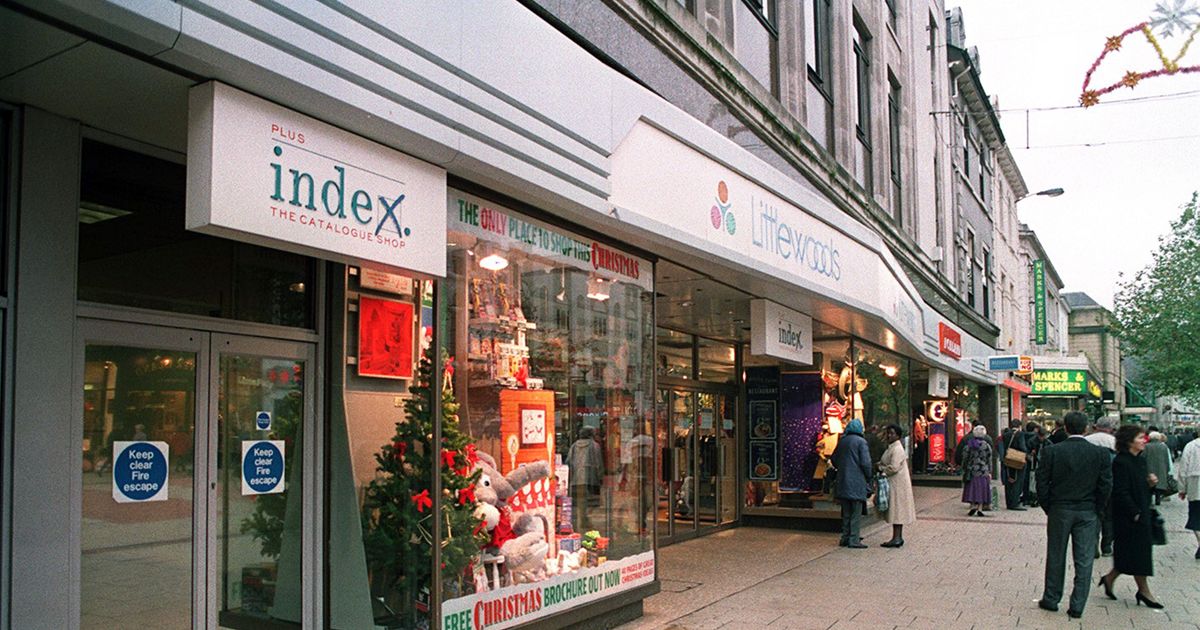
Index and Littlewoods branding share a high-street frontage, reflecting the catalogue retailer’s place within the wider shopping business.
Credit
Blackpool Gazette
Licence
Historical Ephemera
Displayed for commentary, criticism, research and historical documentation where permitted by applicable law. No permission for reuse is granted.
Caption
The shopping-centre branch brings catalogue ordering into a staffed retail setting rather than a conventional aisle of goods.
Credit
Wikipedia
Licence
Historical Ephemera
Displayed for commentary, criticism, research and historical documentation where permitted by applicable law. No permission for reuse is granted.
Caption
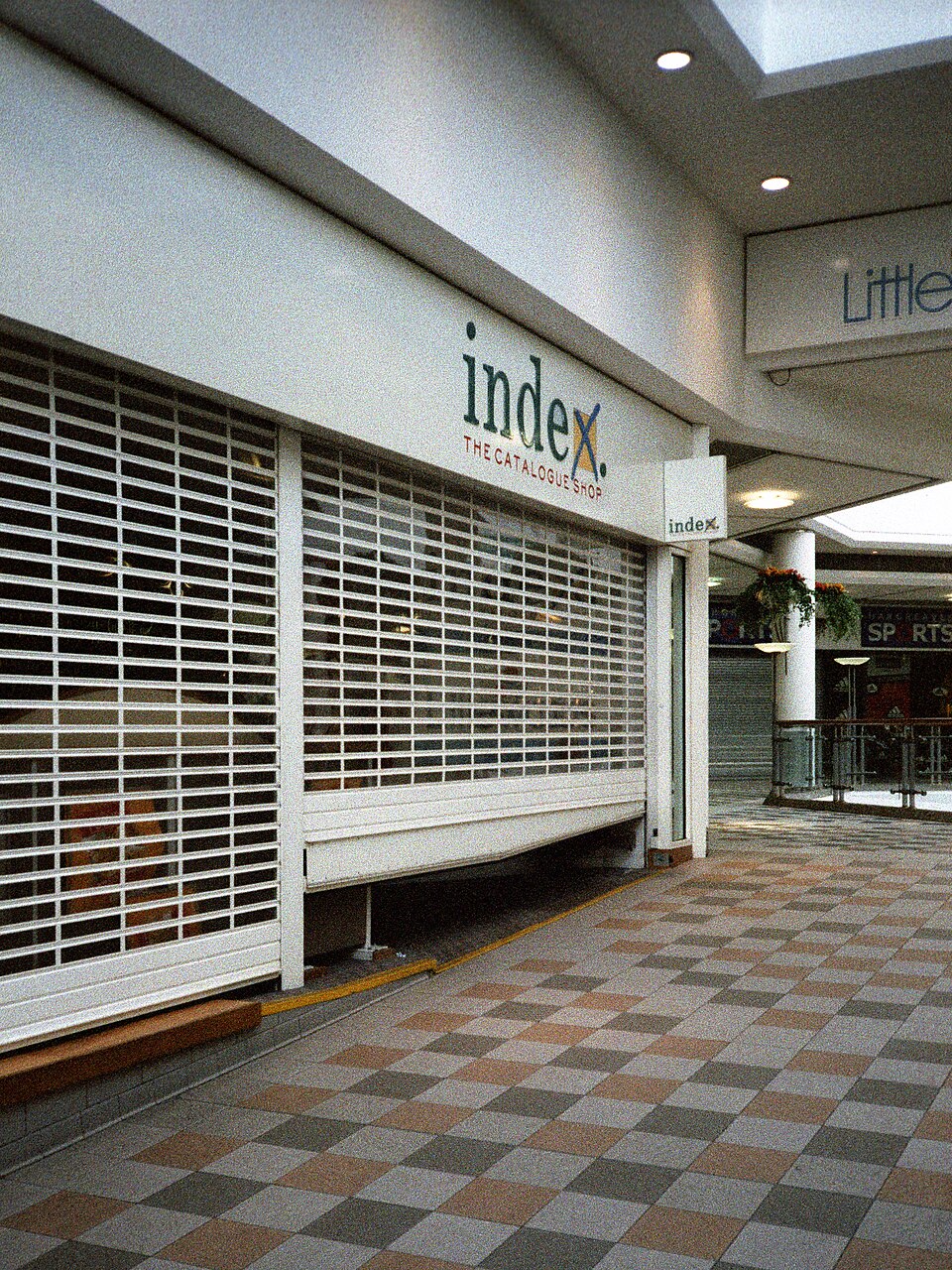
A shuttered Index frontage preserves the shop layout after the counters have closed.