Rumbelows
The Electrical Giant That Vanished from Britain’s High Streets
Forgotten Shops · 1949–1995
Archived on
Associated With
Sydney Rumbelow - founder; Thorn EMI - later owner and national operator
Defining Feature
Electrical retailing, television advertising and rental-to-ownership offers
Status
Defunct - chain closure was announced in February 1995, with branches scheduled to close by the end of April
Overview
Rumbelows grew into a national British electrical retailer with hundreds of high-street branches.
The business began with Sydney Rumbelow’s music-and-electrical shop in Hatfield in 1949. A Hatfield local-history account says Thorn adopted the Rumbelow name across its electrical outlets in 1969.
By 1983, a contemporary report described it as Britain’s second-largest electrical-goods chain, with around 370 stores. Television advertising and Rumbelows Cup sponsorship increased its public visibility before all 285 branches were scheduled to close by the end of April 1995.
Why It Mattered
Nationwide electrical retailing, television advertising and football sponsorship made Rumbelows a recognisable presence in British shopping and popular culture.
Its scheduled 1995 shutdown came amid intense competition facing established electrical retailers, including pressure from larger, better-stocked out-of-town superstores.
Origins and National Expansion
- Sydney Rumbelow opened a music-and-electrical shop at 5 The Parade, St Albans Road, Hatfield, in 1949.
- A Hatfield local-history account says the original business was absorbed into a larger group in the early 1960s.
- Thorn adopted the Rumbelow name for its electrical outlets in 1969.
Stores, Modernisation and Advertising
- Around 370 stores were reported nationwide in September 1983.
- A 1983 modernisation programme aimed to standardise store image and layout while advertising stressed high-technology products.
- A 1986–87 television commercial promoted Option 3 as an alternative to renting.
Football Sponsorship and Closure
- A 1990–91 football programme identifies the Wembley final of 21 April 1991 as the Rumbelows Cup Final.
- In January 1992, plans were reported to move 500 Rumbelows stores into Thorn EMI’s television-and-video rental division while retaining the name.
- On 8 February 1995, all 285 branches were reported as scheduled to close by the end of April.
Sources & Records
- History of Advertising Trust — Rumbelows Option 3 advert — Catalogues the 1986–1987 television commercial, client, agency and ownership-after-renting sales message.
- History of Advertising Trust — Rumbelows Banjoman 2 advert — Documents a second Rumbelows television campaign and its 1988–1989 production credits.
- Manchester United — Match programme, 23 March 1991 — Shows the Rumbelows Cup name in contemporary ticket information and the manager’s account of reaching the final.
Gallery
Credit
Behance
Licence
Historical Ephemera
Displayed for commentary, criticism, research and historical documentation where permitted by applicable law. No permission for reuse is granted.
Caption
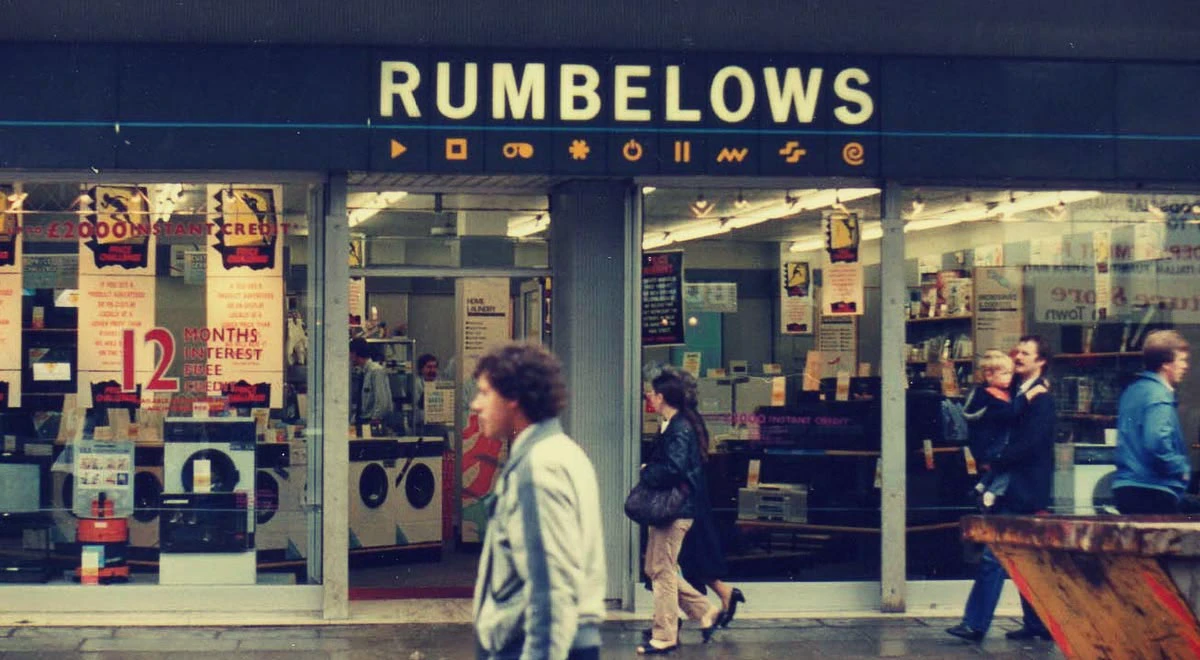
Rumbelows’ illuminated shopfront and window offers preserve the electronics retailer’s high-street sales pitch.
Credit
Rumbelows advertising artwork; scan preserved by Stereo2Go contributor not identified
Licence
Historical Ephemera
Displayed for commentary, criticism, research and historical documentation where permitted by applicable law. No permission for reuse is granted.
Caption
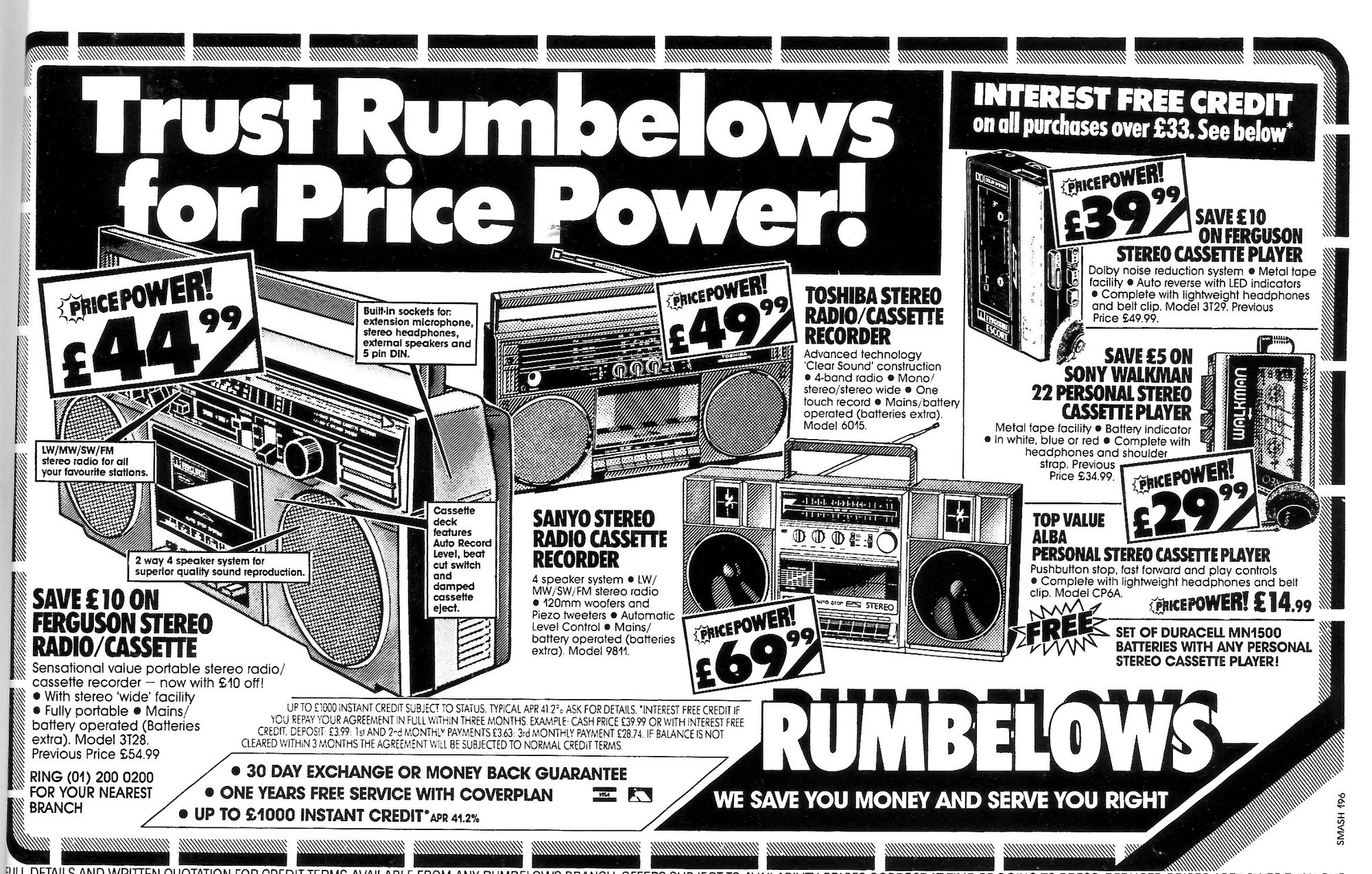
Rumbelows' Price Power advert brought cassette players, credit offers and large prices together, reflecting the competitive language of high-street electronics retail.
Credit
Our Stevenage
Licence
Historical Ephemera
Displayed for commentary, criticism, research and historical documentation where permitted by applicable law. No permission for reuse is granted.
Caption
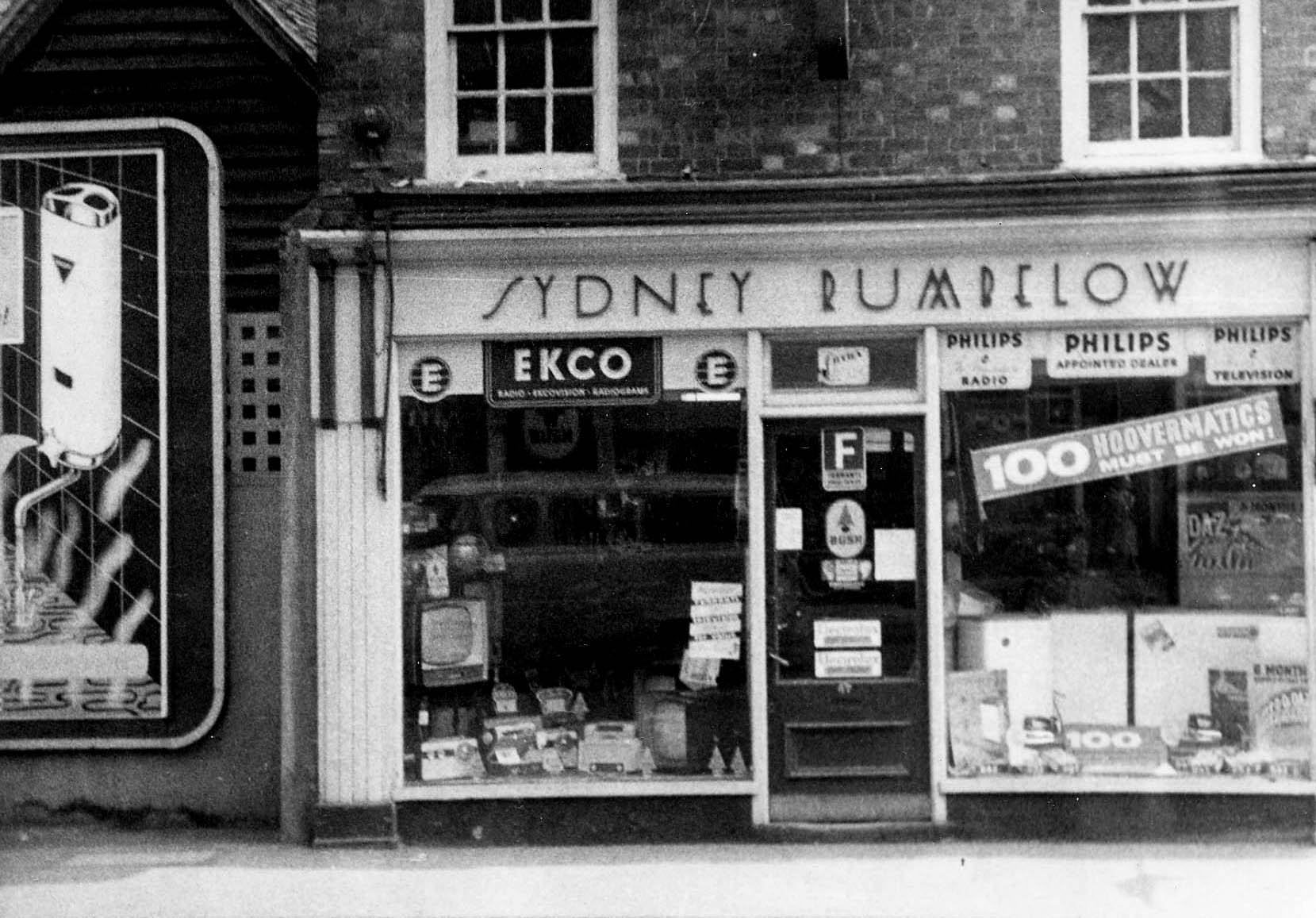
The Sydney Rumbelow shopfront records the earlier family name before it became the national Rumbelows brand.