Pager
Britain's Early Hospital Bleep System
Forgotten Technology · 1954
Archived on
Associated With
Peter Styles of St Thomas’ Hospital Electronics Department, working with Multitone Electronics - inventor, developer or manufacturer
Defining Feature
Portable selective-call receiver; early St Thomas’ system used a magnetic induction loop and direct speech messaging
Status
Active - Later radio paging declined from general use but remains supplied for specialist critical communications
Overview
Britain's early hospital bleep system let staff carry compact receivers for selective calls at work.
St Thomas’ Hospital attributes its 1954 “first bleep” system to Peter Styles working with Multitone Electronics. Multitone dates installation of its closed-loop paging system at the London hospital to 1956.
The approach made mobile staff reachable without relying on a telephone or public announcement. Later dedicated radio networks expanded paging to numeric and alphanumeric messages.
Why It Mattered
Paging made mobile staff reachable without tying them to a telephone or public announcement. Although general use later declined, the simple and resilient technology remained valuable for specialist critical communications.
Hospital Bleep System Development
- St Thomas’ attributes its 1954 “first bleep” system to Peter Styles working with Multitone; this claim concerns the British hospital system.
- Multitone dates installation of its closed-loop paging system at St Thomas’ Hospital to 1956.
- A 1956 advertisement described a magnetic induction loop, pocket receivers, selective calling and direct speech messaging.
From Selective Calls to Radio Messages
- A 1957 Multitone advertisement said St Thomas’ had 70 receivers activated through push-button calling.
- Later dedicated radio networks supported numeric and alphanumeric messages.
- POCSAG variants operated at 512, 1,200 and 2,400 bit/s.
- The Science Museum Group places radio pagers in professional use from the mid-1970s and describes the 1980s as their heyday.
Specialist Critical Use
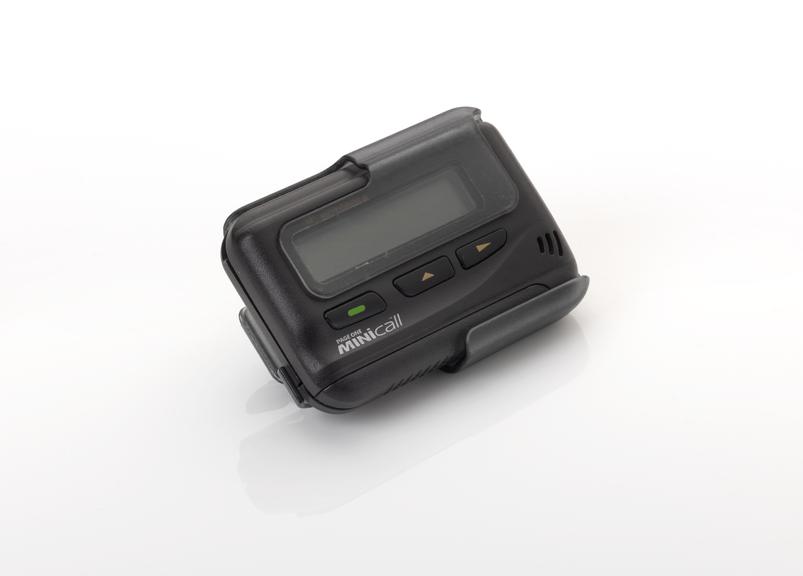
- A 2000–02 Motorola Pager One Minicall in the Science Museum Group collection was supplied to London Ambulance Service cycle responders.
- In 2019, the Department of Health and Social Care told NHS trusts to phase out pagers for non-emergency communications by the end of 2021.
- The policy allowed pagers to be retained in some emergency circumstances.
Sources & Records
- Multitone staff location advertisement — Wireless World, October 1956 — Describes the induction loop, pocket receiver, selective call signal and direct speech messaging.
- Guy’s and St Thomas’ — hospital innovations — Attributes the hospital’s 1954 bleep system to Peter Styles working with Multitone.
- Multitone — hospital paging history — Dates its closed-loop paging installation at St Thomas’ Hospital to 1956.
- Multitone Personal Call advertisement — Wireless World, June 1957 — States that St Thomas’ used 70 receivers and describes push-button calling.
Gallery
Credit
Science Museum Group Collection
Licence
Historical Ephemera
Displayed for commentary, criticism, research and historical documentation where permitted by applicable law. No permission for reuse is granted.
Caption
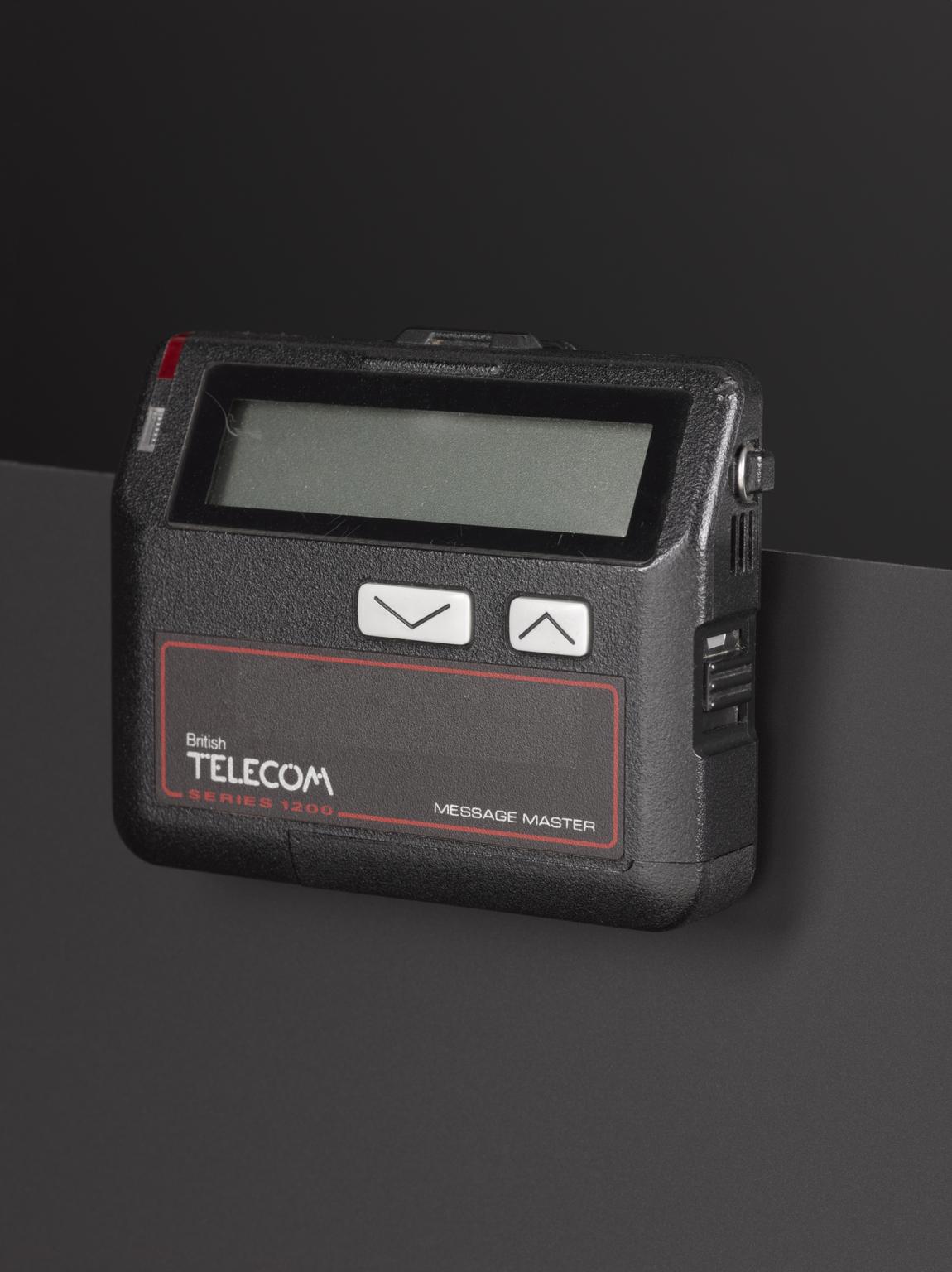
BT’s MessageMaster put incoming text on a small portable screen, offering a way to receive messages without carrying a mobile telephone.
Credit
Science Museum Group Collection
Licence
Historical Ephemera
Displayed for commentary, criticism, research and historical documentation where permitted by applicable law. No permission for reuse is granted.
Caption
The Motorola Pager One shows the compact, clipped-on hardware associated with one-way personal paging.
Credit
Argos Superstore 1999 Spring/Summer by Retromash - Issuu
Licence
Historical Ephemera
Displayed for commentary, criticism, research and historical documentation where permitted by applicable law. No permission for reuse is granted.
Caption
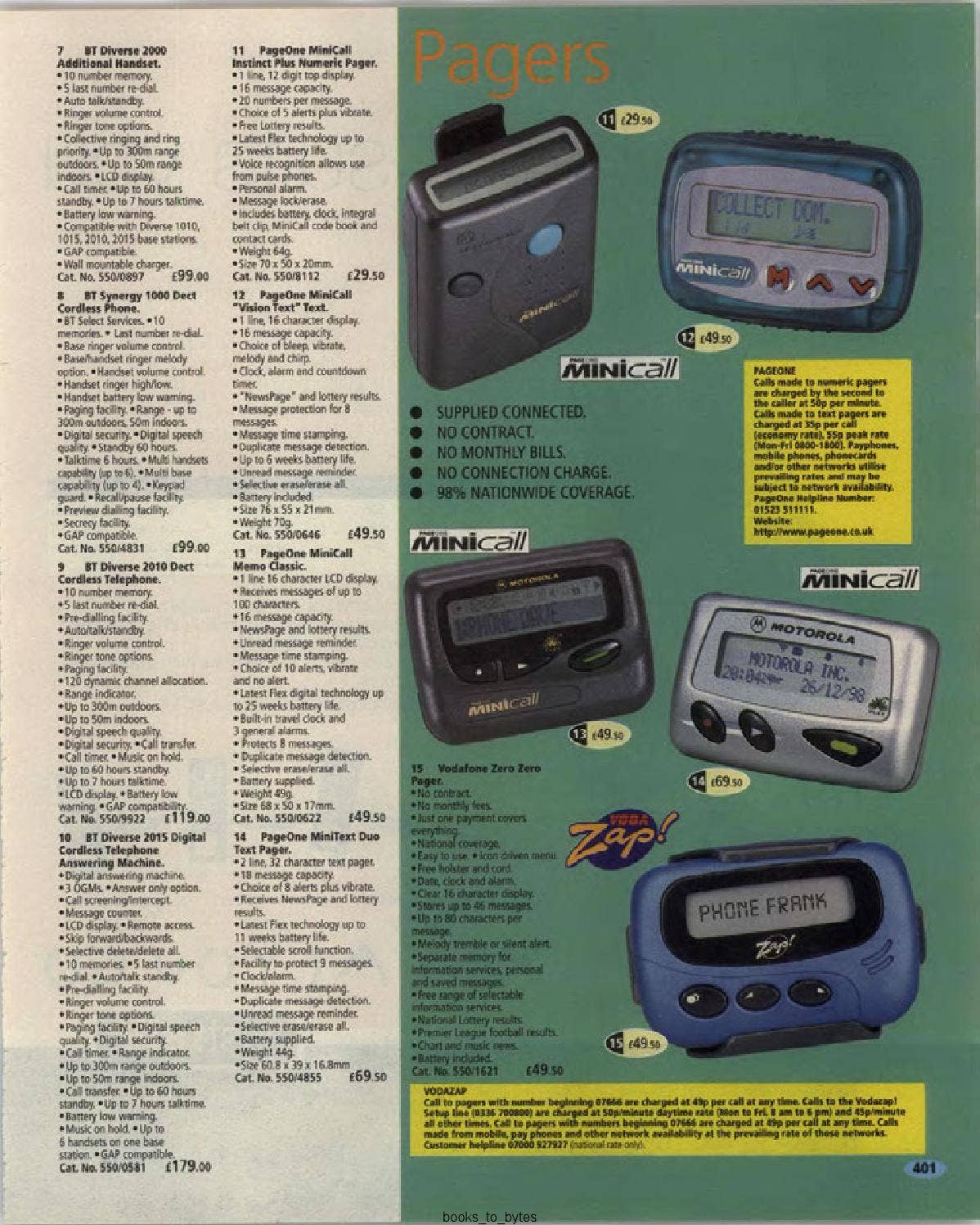
A catalogue comparison presents pager models and network offers side by side, preserving how the service was sold to buyers.
Credit
YUMPU
Licence
Historical Ephemera
Displayed for commentary, criticism, research and historical documentation where permitted by applicable law. No permission for reuse is granted.
Caption
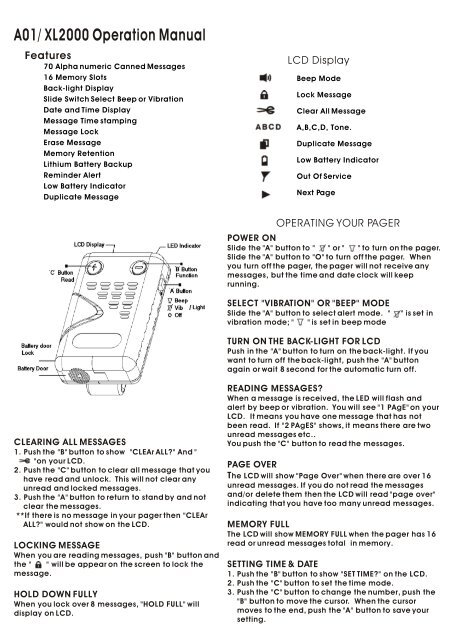
The A01/XL2000 manual explains alerts and display controls, revealing the everyday operation behind a pager’s simple exterior.
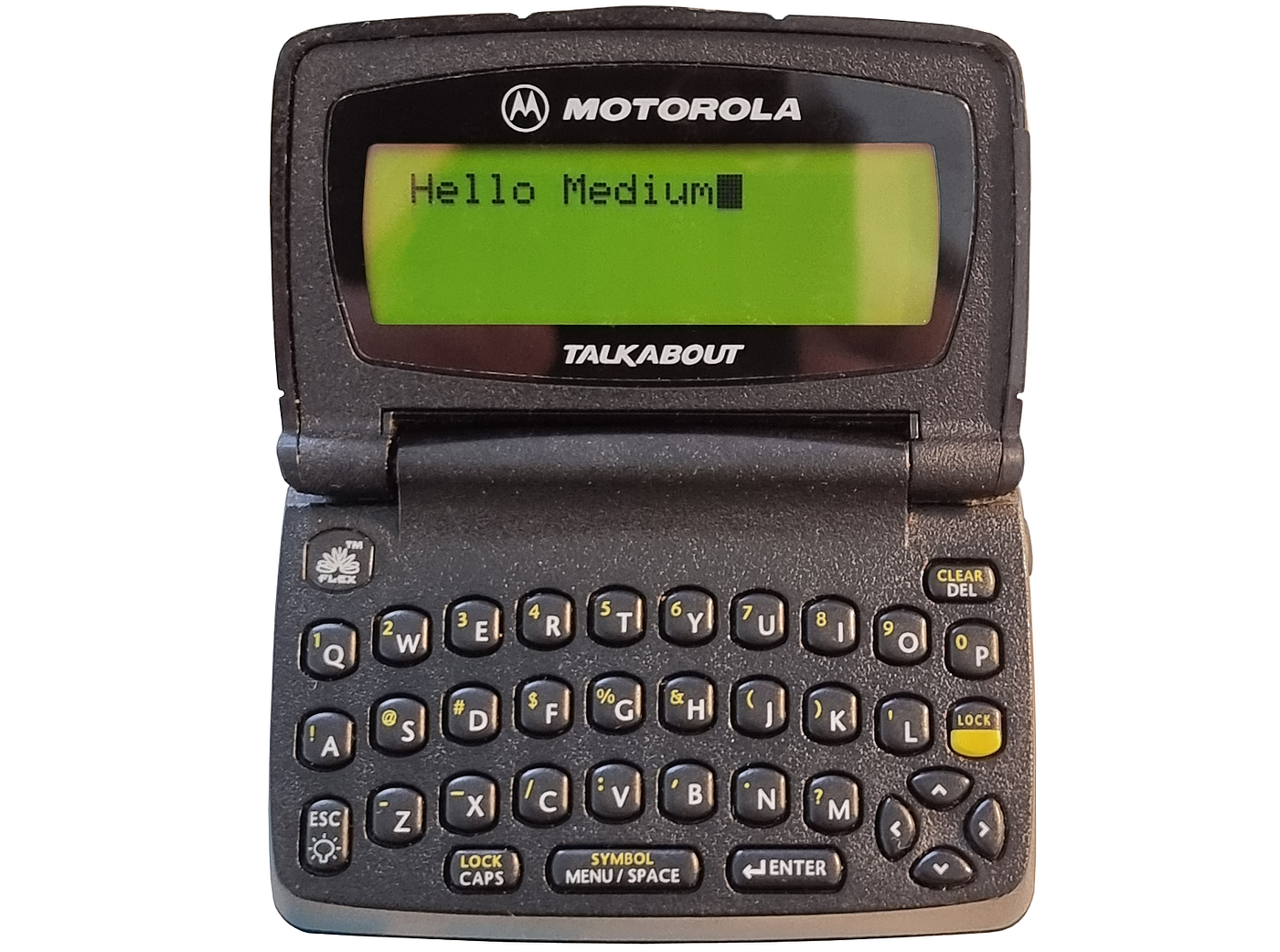
Credit
Debugger - Medium
Licence
Historical Ephemera
Displayed for commentary, criticism, research and historical documentation where permitted by applicable law. No permission for reuse is granted.
Caption
Motorola’s Talkabout keyboard shows the move from receiving short messages to composing replies on a two-way pager.