WAP Phone
Text-Led Mobile Internet Before Smartphones
Forgotten Technology · 1999–2000s
Archived on
Region
Germany; France; United States; United Kingdom
Associated With
Ericsson, Motorola, Nokia and Unwired Planet - protocol initiative partners
Defining Feature
Specially prepared internet services accessed through small handset browsers and text-led menus
Status
Superseded - as a British consumer handset label
Overview
A WAP phone used the Wireless Application Protocol to put specially prepared internet services on a handset.
In Britain, the term became a familiar consumer label around 1999–2001. Small browsers and text-led menus offered services such as news, weather, email, flight information and banking.
Early circuit-switched access could be slow and charged by connection time. GPRS, 3G and more capable browsers progressively superseded this consumer experience, although WAP specifications and related components did not all disappear at once.
Why It Mattered
WAP helped establish mobile internet as a mainstream consumer ambition before smartphones made it practical. Network operators and handset manufacturers began selling access to online information as a reason to buy a new phone, changing expectations of what a mobile could do.
Its shortcomings also exposed the gap between the promise of the internet in your pocket and the reality of early mobile networks. WAP's brief prominence marked a transitional period in which connectivity became a selling point, even before the technology could deliver a satisfying browsing experience.
How WAP Worked
- The WAP Forum announced WAP 1.1 on 30 June 1999 as ready for commercial products and designed for limited-bandwidth networks, including circuit-switched connections.
- The Nokia 7110 manual documented a Services menu, bookmarks and WAP services including news, weather, flight times and dictionaries.
- Early circuit-switched WAP access could run at up to about 9.6 Kbit/s and be charged by connection time.
The British WAP Phone Experience
- Nokia unveiled the WAP-based Nokia 7110 at the GSM World Congress in Cannes on 23 February 1999; that date does not establish when it reached British shops.
- A December 2000 London study gave 20 users Nokia 7110e and Ericsson R320s handsets to complete everyday mobile internet tasks.
- After one week, 70 per cent of those 20 participants did not expect to be using WAP a year later; this was a small usability study, not a national poll.
- Oftel research reported that seven per cent of UK residential consumers owned a WAP mobile phone.
How the Original Experience Faded
- Oftel described early UK GPRS services as offering rates of up to 40 Kbit/s, illustrating the move from circuit-switched access towards packet data.
- T-Mobile UK planned to disconnect its remaining circuit-switched WAP subscribers on 9 July 2008 and direct them towards GPRS; the advance report does not independently confirm that the shutdown occurred that day.
- Ofcom later described WAP as an earlier mobile-access technology replaced by 3G, while WAP specifications and related components remained preserved and did not all end together.
Sources & Records
- WAP Forum announces version 1.1, June 1999 — Dates the commercial specification release and explains its purpose for constrained mobile devices.
- Nokia announces the 7110 WAP phone, February 1999 — Describes the handset and proposed mobile news, email, banking and information services.
- Nokia 7110 user guide — Documents accessing WAP services and saving service addresses through the handset's menus.
- Founding companies announce the WAP initiative, June 1997 — Identifies the original partners and their aim of a common mobile application protocol.
Gallery
Credit
Virgin Mobile / Motorola; photograph: eBay seller ac_uvx
Licence
Historical Ephemera
Displayed for commentary, criticism, research and historical documentation where permitted by applicable law. No permission for reuse is granted.
Caption
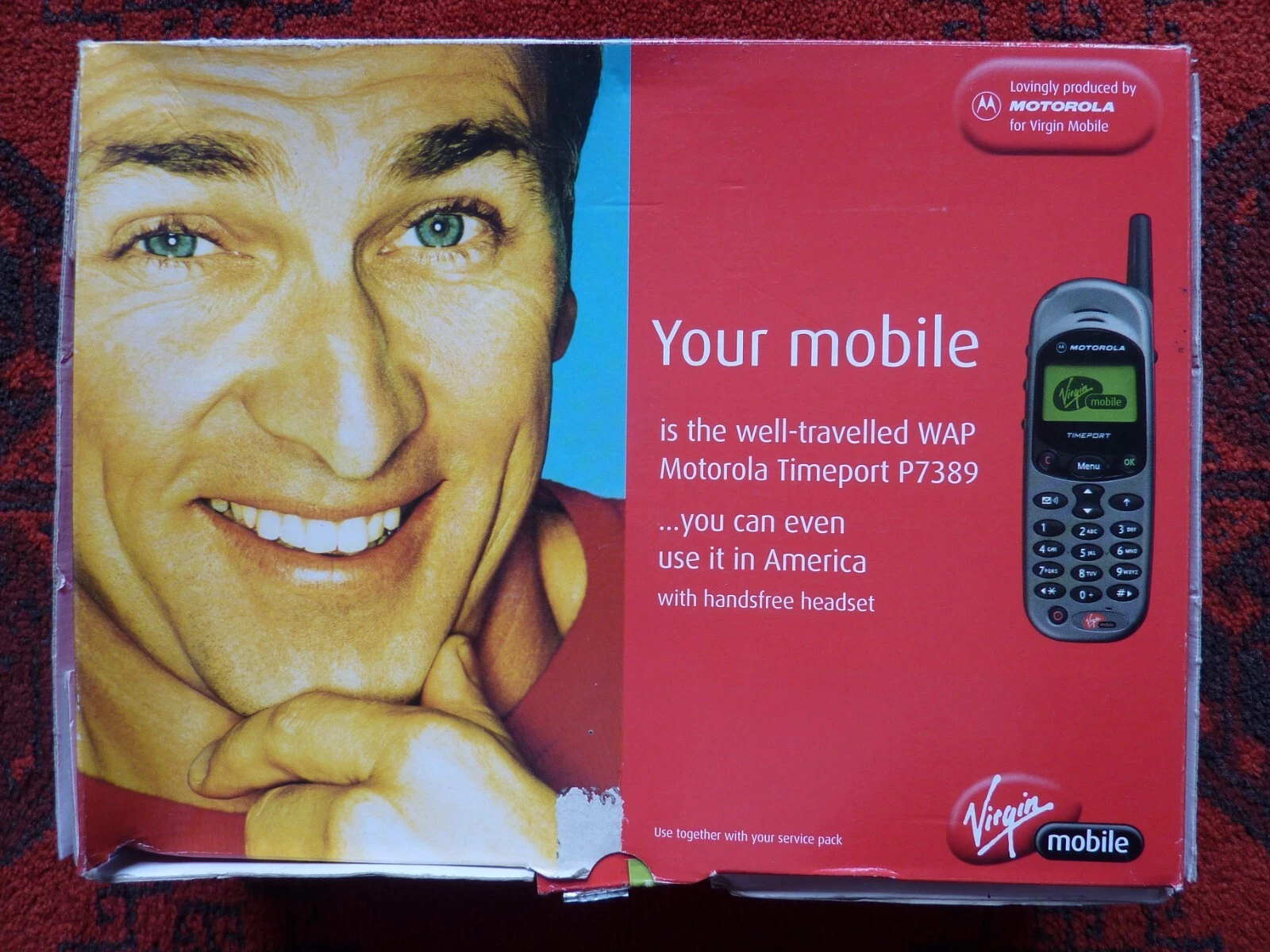
Virgin Mobile's WAP-branded Motorola Timeport P7389 packaging, circa 2000, captures the moment mobile internet became a selling point on Britain's high street.
Credit
Ericsson
Licence
Historical Ephemera
Displayed for commentary, criticism, research and historical documentation where permitted by applicable law. No permission for reuse is granted.
Caption
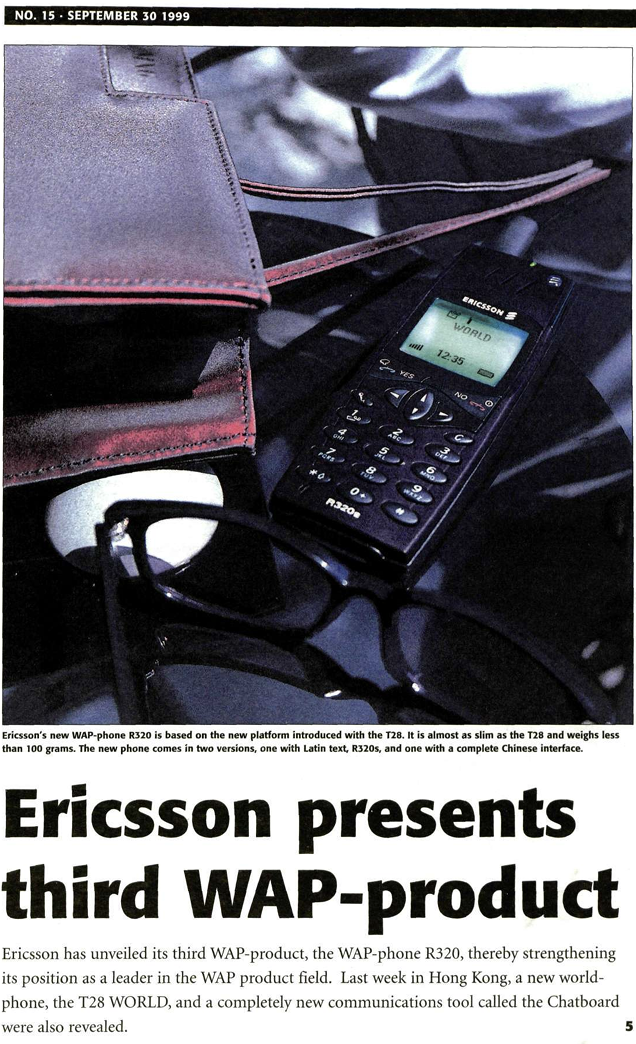
Ericsson’s R320 promotion presents WAP access as a new handset feature, before full web browsing became routine on phones.
Credit
Motorola; published in PoS-MAIL (July 2000)
Licence
Historical Ephemera
Displayed for commentary, criticism, research and historical documentation where permitted by applicable law. No permission for reuse is granted.
Caption
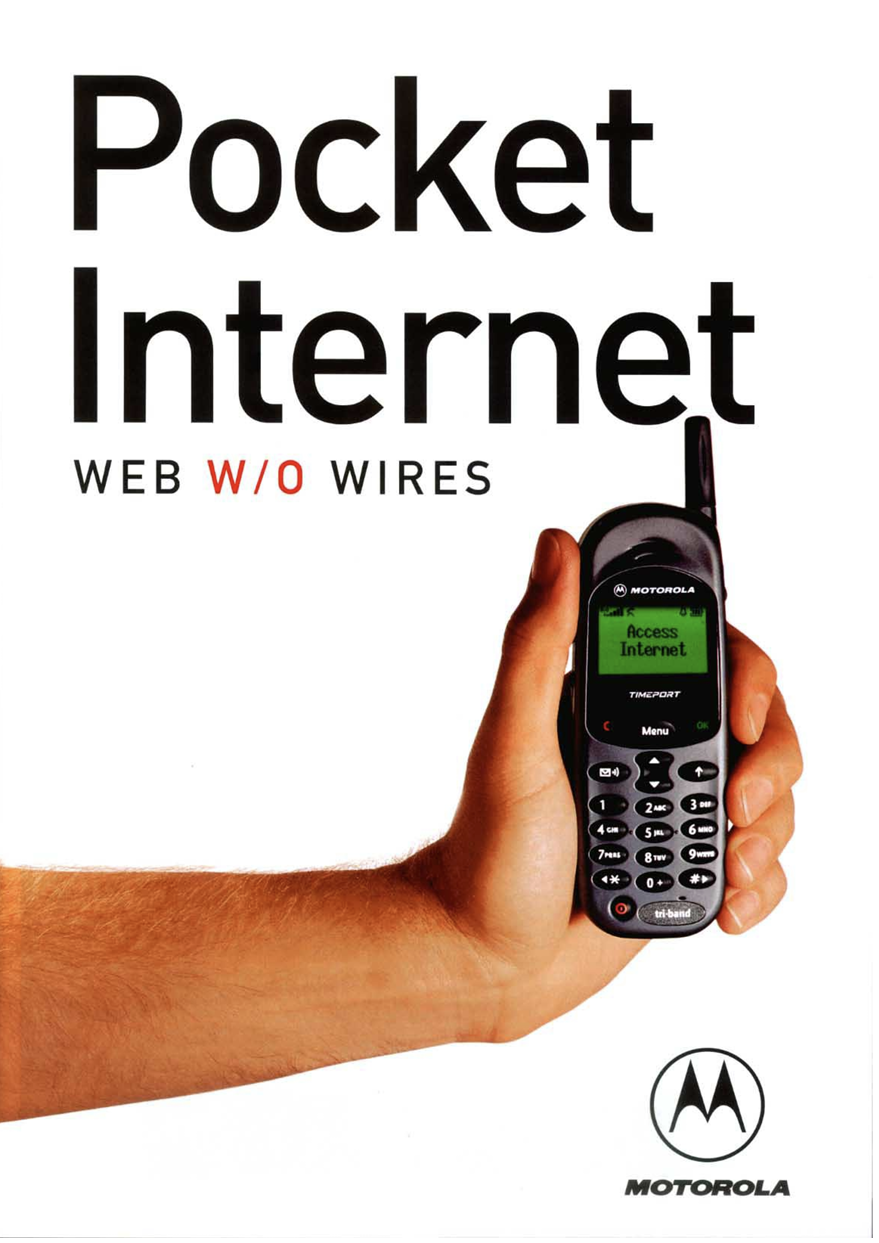
Motorola’s “Pocket Internet” advert captures the promise of a web connection small enough to carry in one hand.