Freeserve
Subscription-Free Dial-Up Internet
Forgotten Internet · 1998–2004
Archived on
Associated With
Dixons Group plc - creator or operator
Defining Feature
Subscription-free dial-up access via retail-distributed setup CD-ROMs
Status
Superseded - Public brand replaced by Wanadoo in the UK in 2004
Overview
Freeserve let UK users go online without a registration fee or monthly charge for basic access.
Dixons Group launched the service on 22 September 1998. Setup CD-ROMs distributed through Dixons, Currys, PC World and The Link connected users through a local-call 0845 number, with customers paying the metered telephone charge.
Launch features included email, personal web pages and news headlines, while technical support could cost extra. Wanadoo offered for all Freeserve shares in December 2000, and the UK public brand was replaced by Wanadoo in 2004.
Why It Mattered
Freeserve lowered the visible cost of starting to use the internet in Britain by removing registration and monthly subscription charges from its basic service. Its retail distribution put setup discs before customers already shopping for computers and electronics.
The model increased competition among internet providers before Freeserve became part of Wanadoo and its public brand disappeared.
Dial-Up Charging Model
- The basic service had no registration fee or monthly subscription charge.
- Users paid the metered local telephone-call charge while connected.
- Freeserve used a local-call 0845 number.
Retail Distribution and Services
- Setup CD-ROMs were distributed through Dixons, Currys, PC World and The Link.
- The service targeted home and small-business users.
- Launch services included email, personal web pages and news headlines; technical support could incur a premium charge.
Acquisition and Rebranding
- Wanadoo offered for all Freeserve shares in December 2000.
- France Télécom recorded the March 2001 acquisition at €2.078 billion.
- The UK public Freeserve brand was replaced by Wanadoo in 2004.
Sources & Records
- OECD — internet access and the free ISP model, 1999 — Explains Freeserve’s free basic service, retail setup discs, 0845 call charges and premium-rate support.
- France Télécom — Freeserve acquisition disclosure — Records the December 2000 offer, March 2001 acquisition and €2.078 billion purchase price.
Gallery

Credit
Freeserve promotional artwork; object photograph by the Centre for Computing History, photographer not identified
Licence
Historical Ephemera
Displayed for commentary, criticism, research and historical documentation where permitted by applicable law. No permission for reuse is granted.
Caption
A Freeserve installation CD offered a physical route onto the internet, combining access software with promises about the cost of getting connected.
Credit
Frank Baron / The Guardian
Licence
Historical Ephemera
Displayed for commentary, criticism, research and historical documentation where permitted by applicable law. No permission for reuse is granted.
Caption
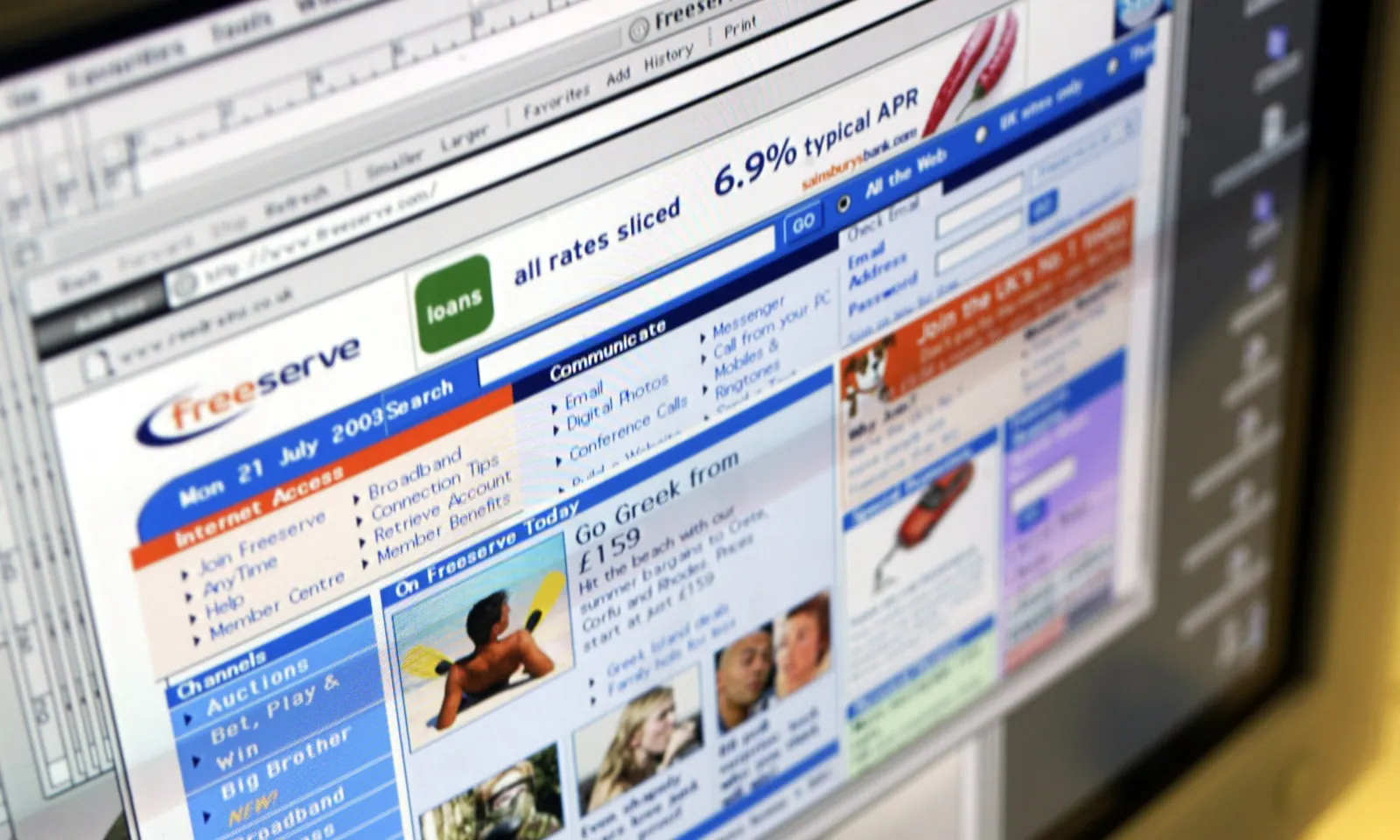
The Freeserve website in 2003 reflects the portal era, when an internet provider's home page bundled news, services and shopping into the start of a browsing session.

Credit
Internet Archive
Licence
Historical Ephemera
Displayed for commentary, criticism, research and historical documentation where permitted by applicable law. No permission for reuse is granted.
Caption
Freeserve’s Internet Starter Pack made joining the service look like a retail purchase that could be taken home and installed.
Credit
Internet Archive
Licence
Historical Ephemera
Displayed for commentary, criticism, research and historical documentation where permitted by applicable law. No permission for reuse is granted.
Caption
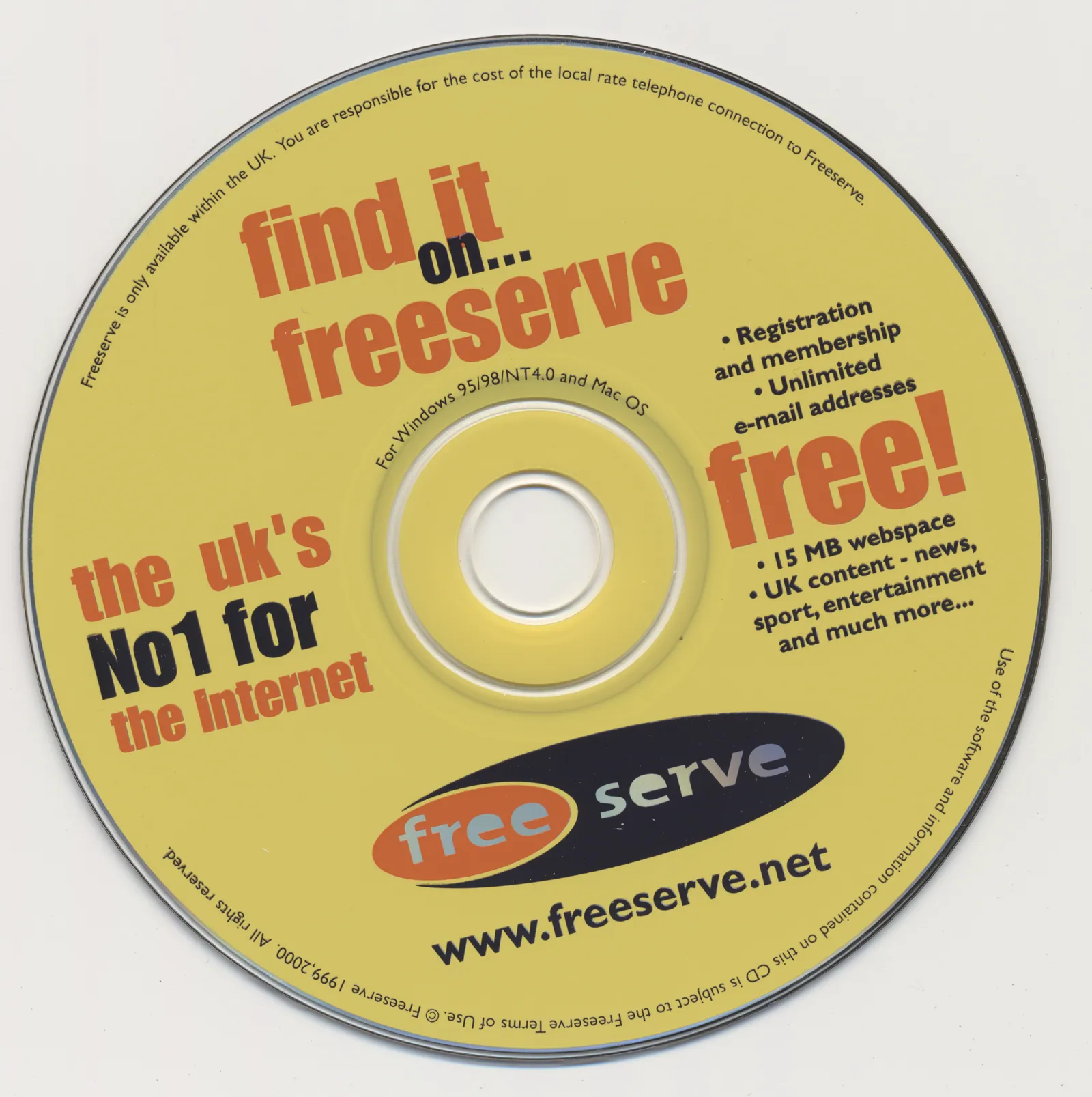
The yellow Freeserve disc advertised free membership and web space, with the software distributed on a physical CD.

Credit
Internet Archive
Licence
Historical Ephemera
Displayed for commentary, criticism, research and historical documentation where permitted by applicable law. No permission for reuse is granted.
Caption
An Index-branded Freeserve disc promotes a monthly access offer, documenting a later variation on the service’s original proposition.