Sony Rolly SEP-10BT
The Dancing Music Player
Forgotten Technology · 2007
Archived on
Region
Japan
Associated With
Sony - manufacturer
Defining Feature
A music player combining sound, light and programmable movement
Status
Discontinued — original SEP-10BT no longer marketed; exact production and withdrawal dates unconfirmed.
Overview
Sony’s Rolly Sound Entertainment Player (SEP-10BT) combined sound, light and movement in one device.
Announced on 10 September 2007 for a planned 29 September release in Japan, the egg-shaped player used stereo speakers at opposite ends, built-in flash storage and a battery. Moving or rotating the unit controlled playback.
Sony later offered a paid upgrade service, which ended on 30 June 2009. The end dates for hardware production and sales are unknown.
Why It Mattered
The Rolly challenged the idea that a portable music player should simply reproduce sound. Its synchronised movement, lighting and stereo speakers turned music into a small physical performance, while Motion Editor allowed owners to create their own choreography.
Sony also proposed sharing these routines through Motion Park, extending the concept beyond the device itself. The SEP-10BT represents an unusual branch of late-2000s consumer electronics, when manufacturers were experimenting with new ways to experience digital music beyond headphones and conventional speakers.
Gesture Controls
- Sony’s launch illustration shows the player rolled sideways on a table to change tracks and its lower wheel turned while held upright to adjust volume.
Model and Geographic Scope
- This record concerns the Japanese SEP-10BT and does not cover the later SEP-30BT or SEP-50BT variants.
- Japan is documented as the launch market; the design location, manufacturing country and production site are not established.
Release and Upgrade Record
- Sony announced the SEP-10BT on 10 September 2007 and scheduled its Japanese release for 29 September; no separate first-sale record confirms that exact date.
- Sony announced a paid upgrade service on 2 December 2008. Its notice does not establish that every change was implemented solely through firmware.
- The paid upgrade service ended on 30 June 2009; this does not establish when hardware production or sales ended.
Sources & Records
- Sony announces the Rolly sound entertainment player — Sony announces the SEP-10BT, its 29 September 2007 release, stereo speakers, lights and programmable motion.
- Sony Japan announces the Rolly SEP-10BT — Original Japanese launch notice corroborating the model, Japanese release and motion features.
- Sony Design gallery: SEP-10BT Rolly — Sony describes the egg-shaped design and controls that make the player respond to movement.
- Sony Japan: Rolly SEP-10BT paid upgrade notice — The paid upgrade service ended on 30 June 2009; this does not establish when hardware sales ended.
Gallery
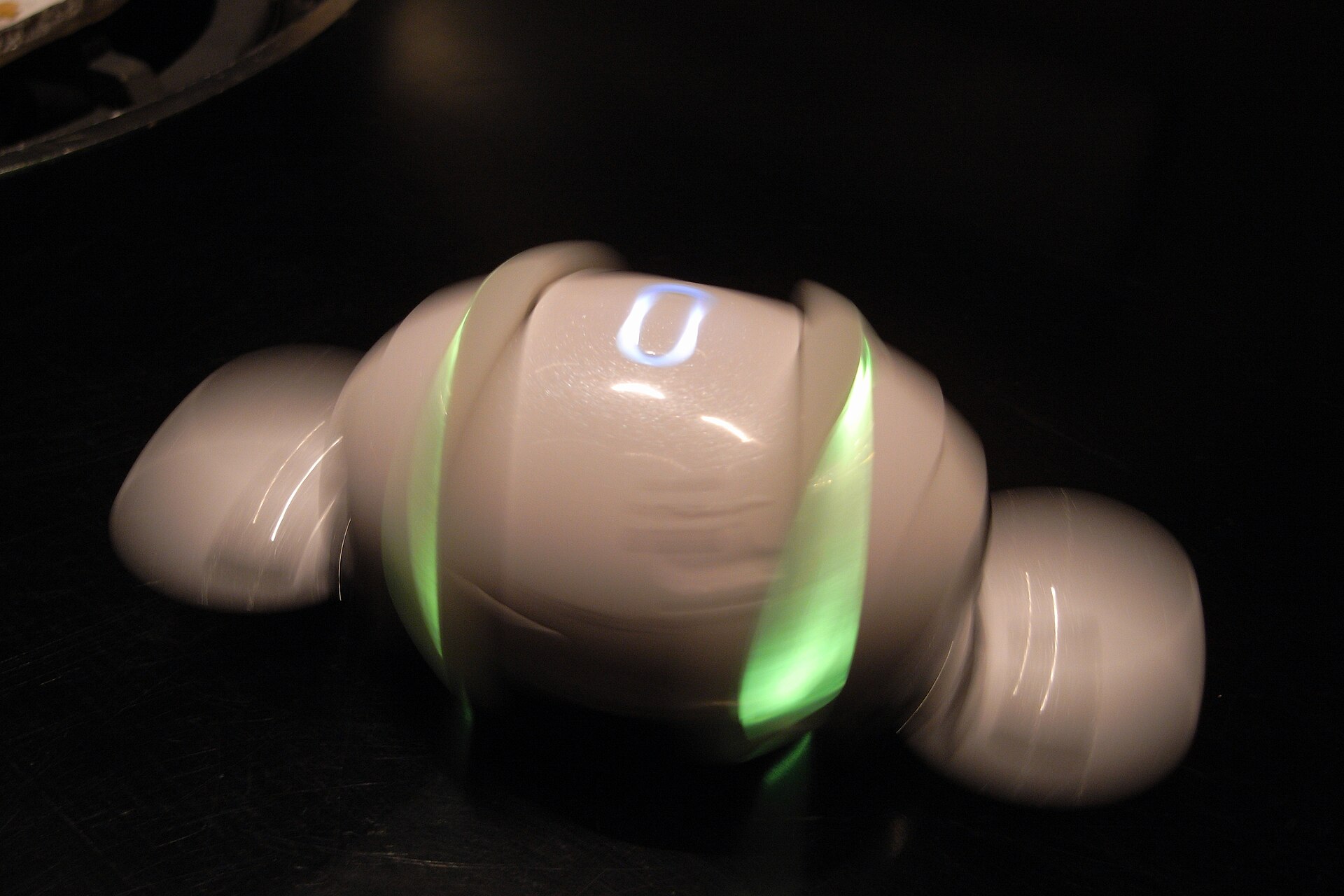
Credit
Yukiko Yamamoto, 5 October 2007, via Wikimedia Commons. CC BY 2.0. No additional changes.
Caption
Rolly made the music player itself part of the performance. Yukiko Yamamoto’s October 2007 photograph catches the illuminated body in motion during the original Japanese model’s launch year.

Credit
Sony, Rolly SEP-10BT launch press image, 10 September 2007; individual photographer uncredited
Licence
Historical Ephemera
Displayed for commentary, criticism, research and historical documentation where permitted by applicable law. No permission for reuse is granted.
Caption
Rolly made the music player part of the performance. Sony’s original Japanese launch image presents the SEP-10BT, whose moving body and lights accompanied playback in 2007.
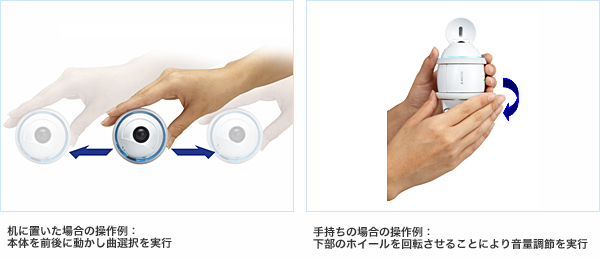
Credit
Sony Corporation — 10 September 2007 SEP-10BT press release
Licence
Historical Ephemera
Displayed for commentary, criticism, research and historical documentation where permitted by applicable law. No permission for reuse is granted.
Caption
Rolly made the player itself a control surface: rolling it on a table changed tracks, while turning a wheel adjusted volume. Sony’s launch illustration shows the gestures behind its deliberately screen-free design.