Game Genie
The Cheat Cartridge and the $15 Million Injunction Bond
Forgotten Games · 1990–1994
Archived on
Region
United States; United Kingdom; Taiwan
Associated With
Lewis Galoob Toys, Inc. - US seller
Defining Feature
Temporary game changes without altering the original cartridge data
Status
Unknown - formal discontinuation date not established
Overview
Game Genie for the NES let players change how games behaved without altering the original cartridge’s data.
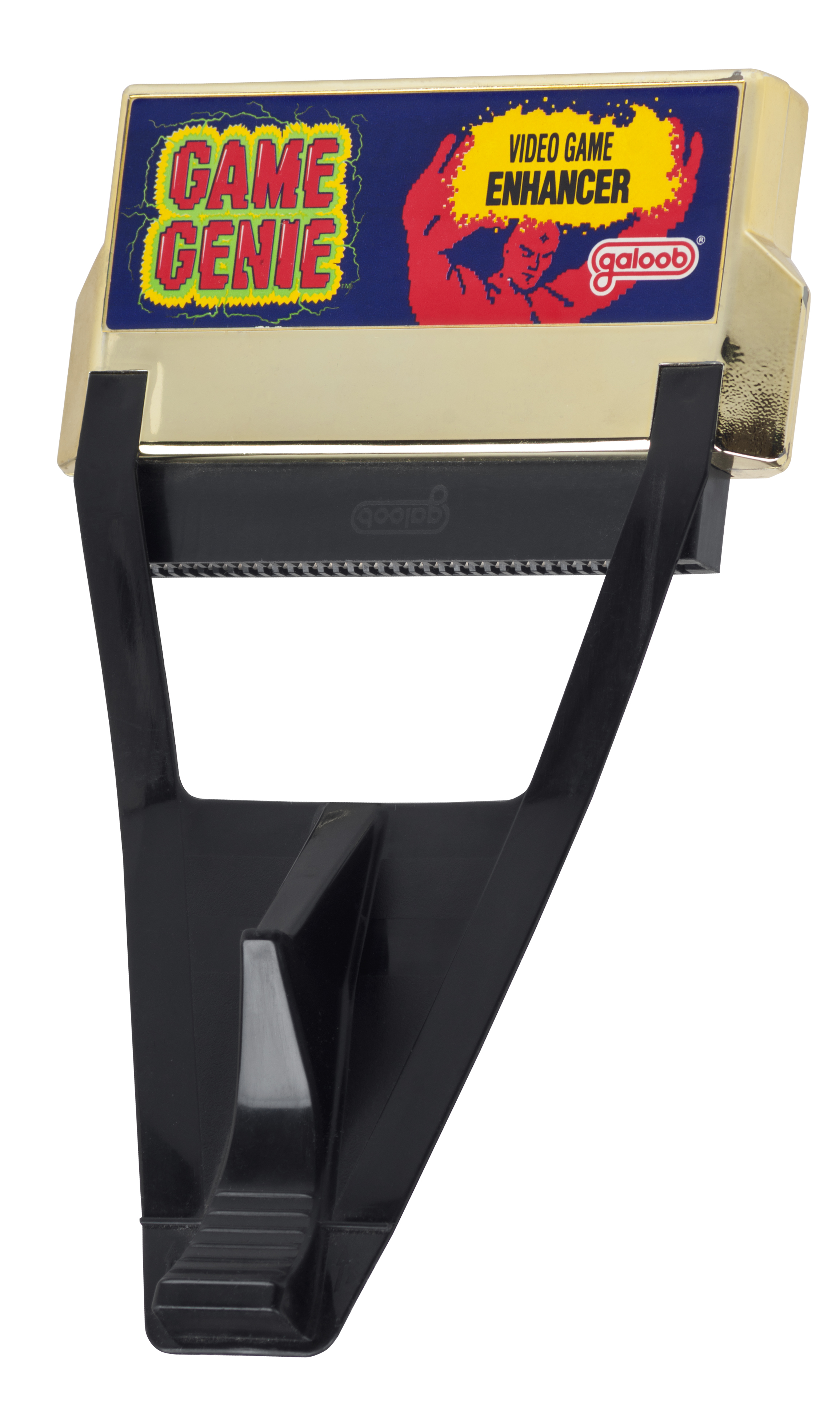
Galoob’s US edition fitted between the console and game cartridge. Players entered codes to alter up to three features, such as lives, movement speed or jumping ability. The effects were temporary, and the device still needed the original game to work.
An injunction obtained by Nintendo blocked US sales for roughly a year. After Galoob won at trial, sales began in August 1991. The Ninth Circuit upheld the copyright ruling in 1992, and a separate 1994 appeal upheld Galoob’s recovery of the $15 million injunction bond as compensation for losses caused by the sales ban.
Why It Mattered
Game Genie gave players a way to bend a game’s rules using cartridges they already owned. The resulting dispute tested how far a publisher’s copyright could reach into that experience. On the facts before it, the Ninth Circuit held that the device’s altered displays were not derivative works and also upheld fair use. The decision became a notable example of the legal space for accessories that changed how people experienced an existing game.
How the Cartridge Interface Worked
- The Galoob Game Genie sat between a Nintendo Entertainment System console and an original game cartridge.
- It could alter up to three game features during play without changing data stored on the original cartridge.
- The underlying interface patent describes substituting user-selected data as the console reads the game medium.
Injunction and Ninth Circuit Rulings
- Galoob announced plans to sell the device in May 1990; Nintendo obtained a preliminary injunction about a month later.
- After the injunction was vacated in July 1991, Galoob began US sales in August 1991.
- In 1992, the Ninth Circuit held that the device’s temporary altered audiovisual displays were not infringing derivative works on the facts of this case.
What the $15 Million Represented
- Nintendo posted a $15 million bond in connection with the preliminary injunction.
- The district court found Galoob’s compensable losses exceeded the bond; the 1994 Ninth Circuit decision affirmed recovery of the full bond.
- This was compensation for the injunction’s effects, rather than a punitive fine or a measure of every loss Nintendo incurred.
Codebooks, Orders and Later Support
- The Henry Ford’s preserved 1990–1991 set includes packaging advertising a codebook for more than 290 games.
- The 1994 damages ruling records more than 550,000 orders and accepts a finding of at least 1.6 million sales lost during the injunction; these were litigation-record estimates, not audited lifetime sales.
- Game Genie Code Update publications ran from 1991 to 1995, documenting codebook support rather than a formal end date for the NES hardware.
Sources & Records
Lewis Galoob Toys, Inc. v. Nintendo of America, Inc., 964 F.2d 965
Ninth Circuit decision explaining the Game Genie’s operation and affirming the derivative-work ruling. Decided 21 May 1992; printed pp. 965–972.
Nintendo of America, Inc. v. Lewis Galoob Toys, Inc., 16 F.3d 1032
Ninth Circuit decision recording US sales chronology, order and lost-sales findings, and execution of Nintendo’s $15 million injunction bond. Decided 17 February 1994; printed pp. 1032–1036.
US5112051A — Interfacing Device for a Computer Games System
Patent record naming the interface inventors and describing address comparison and user-selected data substitution between console and game cartridge. Published 12 May 1992.
Gallery
Credit
Evan-Amos / Wikimedia Commons — public domain
Licence
The source records this image as public domain. No copyright licence is required for the photograph; other rights may apply.
Caption
Galoob Game Genie for the NES. Photograph by Evan-Amos, 28 February 2011; public domain. This is a later object photograph, not a period advertisement.