Shredded Wheat
The Name and Shape Case
Forgotten Food & Drinks · 1893–1938
Archived on
Region
United States
Associated With
Henry D. Perky - inventor
Defining Feature
A cereal name and pillow-shaped biscuit form contested in court
Status
Historical event - 1938 Supreme Court ruling
Overview
Shredded Wheat became the centre of a 1938 Supreme Court fight over a cereal name and biscuit shape.
Introduced in 1893 by Henry D. Perky, the cereal was made from cooked whole wheat drawn into fine shreds and baked into pillow-shaped biscuits.
In Kellogg Co. v. National Biscuit Co., the Court held that competitors could use the generic name and, after patent expiry, the familiar shape. Kellogg still had to take reasonable steps to prevent confusion over the maker, which the Court found its distinctive packaging accomplished.
Why It Mattered
A familiar product could outlast the exclusive rights that helped establish it. The decision prevented National Biscuit from using the cereal’s name and functional shape to prolong that exclusivity. Competitors could benefit from an established market while remaining responsible for making clear whose product buyers were getting.
From Wheat Threads to Biscuits
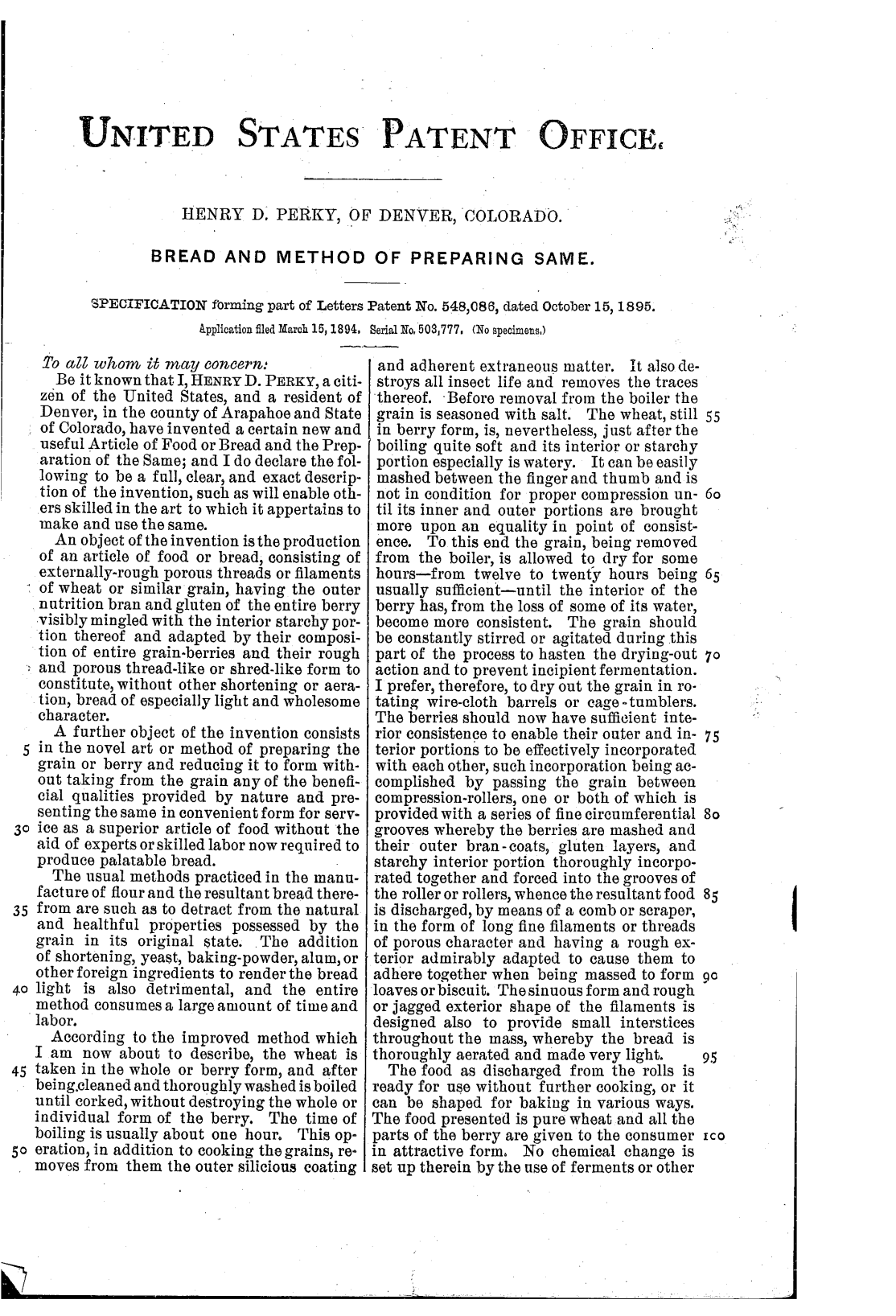
- Henry D. Perky’s US Patent 548,086 was granted on 15 October 1895 for “Bread and Method of Preparing Same”.
- The specification describes cooked whole wheat, partly dried and pressed through grooved rollers into long, fine porous threads.
- Those threads could be formed into articles of food including loaves or biscuits.
The Businesses Behind the Biscuit
- The Supreme Court recorded that Perky introduced the article in 1893, separately from the patent’s 1895 grant.
- It also recorded that the Natural Food Company built a large factory at Niagara Falls, New York, in 1901.
- National Biscuit Company had acquired the Natural Food Company’s business and goodwill by 1930, according to the Court.
The 1938 Supreme Court Decision
- The Court held that “Shredded Wheat” was a generic term whose use passed to the public when the relevant patents expired.
- It reached the same conclusion about the pillow-shaped biscuit form, while not permitting one company to pass its goods off as another’s.
- Kellogg’s cartons were found distinctive enough to identify its own biscuits; on 14 November 1938, the Court reversed the decrees against Kellogg and ordered dismissal of National Biscuit Company’s bill.
Sources & Records
United States Patent No. 548,086: “Bread and Method of Preparing Same”
Patent facsimile identifying Perky, its 15 October 1895 grant and the thread-forming wheat process. PDF p. 1.
Kellogg Co. v. National Biscuit Co., 305 U.S. 111 (1938)
Official United States Reports opinion covering the product history, generic-name and shape holdings, source-identification duty and final disposition. Printed pp. 114–123; PDF pp. 3–12.
Shredded Wheat (1908) (ADVERT 453)
File record for a 5 September 1908 Shredded Wheat Company advertisement from the Early Advertising of the West Collection; supports date and provenance, not uninspected visual detail.
National Biscuit Co. v. Kellogg Co. — Third Circuit decision, 12 April 1937
Records the appellate ruling against Kellogg on the Shredded Wheat name and product presentation; this earlier ruling was reversed by the Supreme Court in 1938.
Gallery
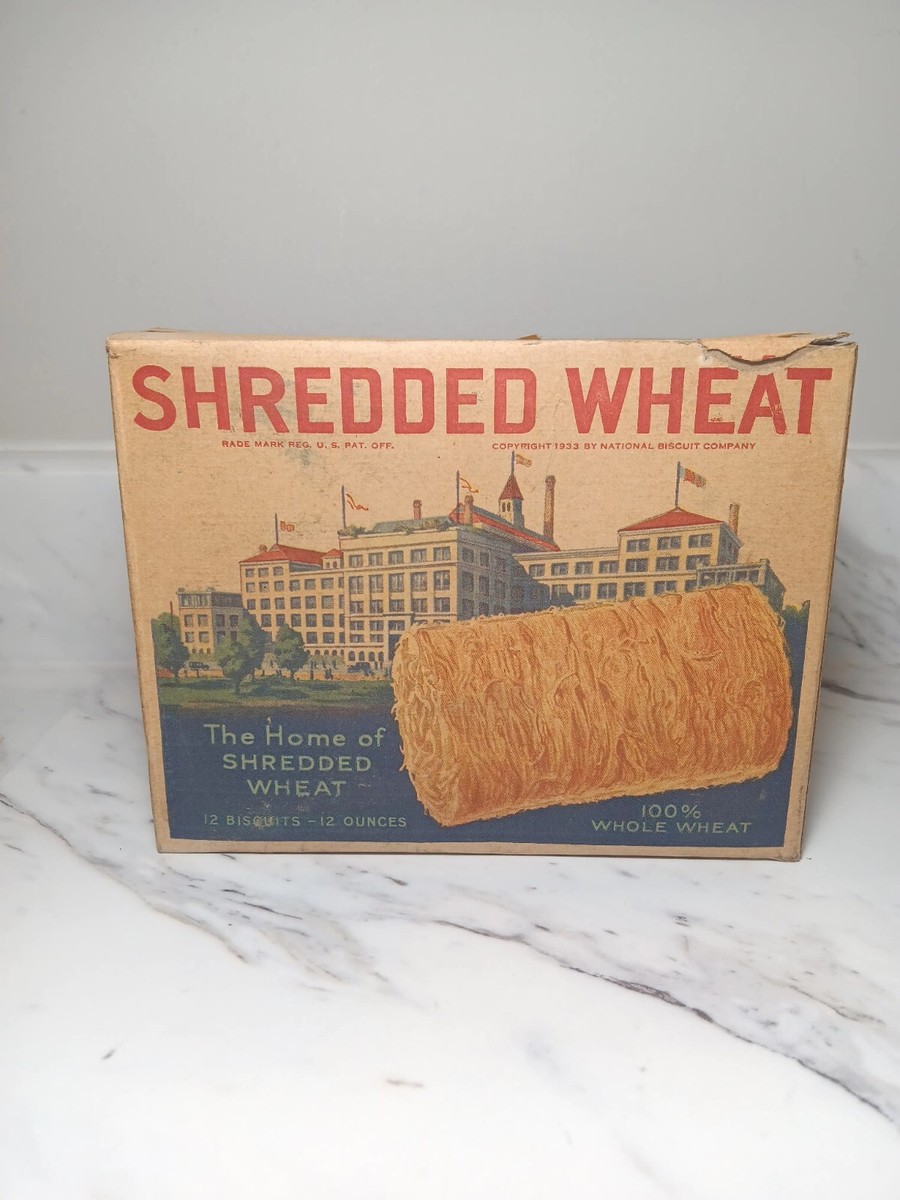
Credit
National Biscuit Company (original package design); photograph uploader/seller not identified.
Licence
Historical Ephemera
Displayed for commentary, criticism, research and historical documentation where permitted by applicable law. No permission for reuse is granted.
Caption
First specification page of Henry D. Perky’s US Patent 548086, Bread and Method of Preparing Same, granted 15 October 1895. A period patent document, rather than a biscuit illustration.
Credit
Henry D. Perky, US Patent 548086, 15 October 1895 — United States Patent Office; public domain
Licence
The source records this image as public domain. No copyright licence is required for the photograph; other rights may apply.
Caption
First specification page of Henry D. Perky’s US Patent 548086, Bread and Method of Preparing Same, granted 15 October 1895. A period patent document, rather than a biscuit illustration.