Trunki and Kiddee Case
The Registered-Design Dispute
Forgotten Engineering · 2003–2016
Archived on
Region
United Kingdom; Germany
Associated With
Magmatic Limited - registered-design owner
Defining Feature
A child’s ride-on suitcase registration with an animal-like form and contrasting components.
Status
Historical event - Supreme Court appeal dismissed in 2016
Overview
Trunki’s animal-like suitcase design reached the Supreme Court in a dispute over a competing children’s suitcase.
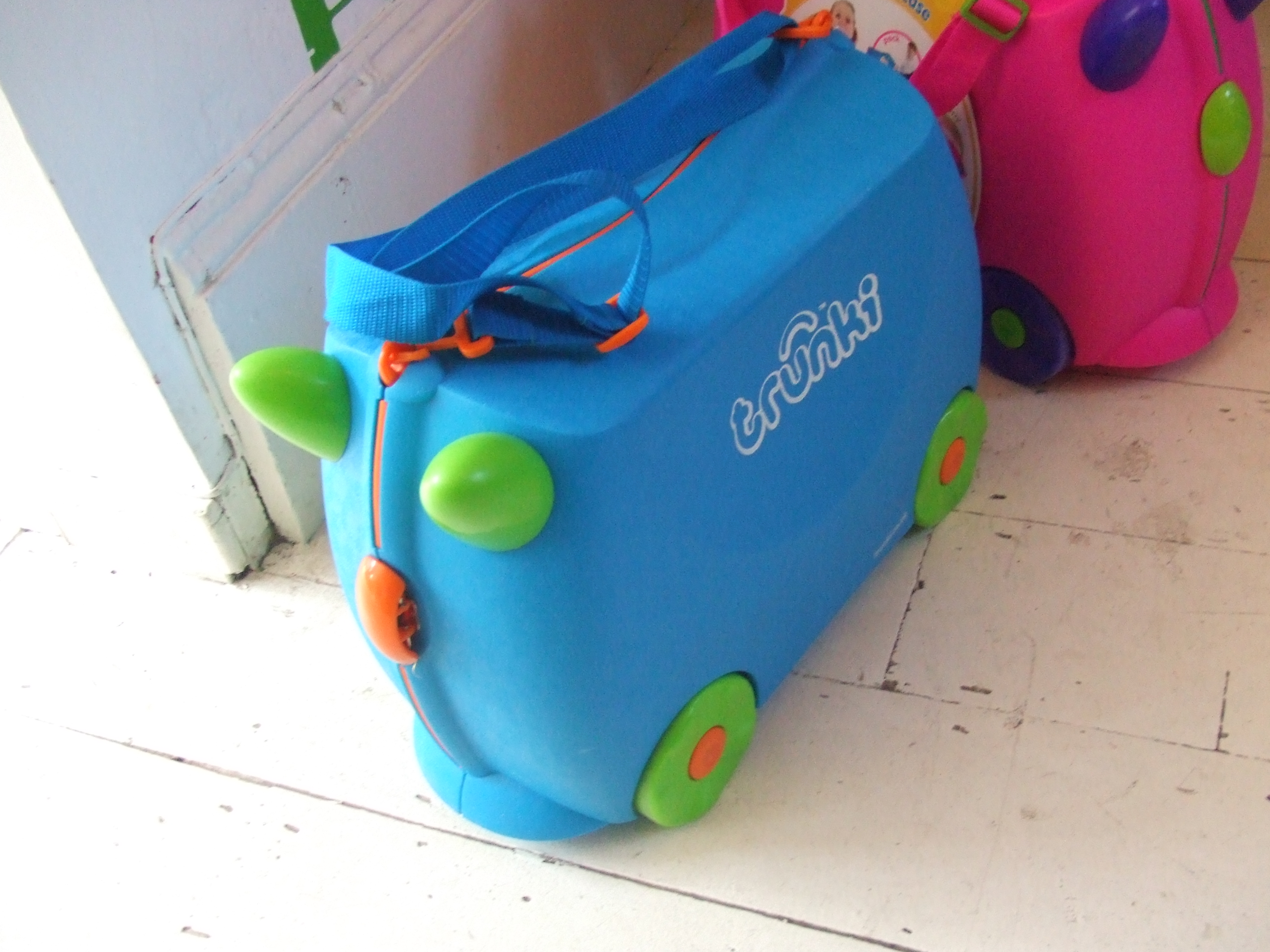
Magmatic’s 2003 Community registered design consisted of six greyscale computer-generated views. They showed a horned-animal form with wheels, a strap and end strips contrasting with the body. Those details formed part of the appearance being protected.
Magmatic alleged that PMS International’s Kiddee Case infringed the registration. On 9 March 2016, the Supreme Court dismissed its appeal, leaving standing the finding that Kiddee Case created a different overall impression and did not infringe this particular registered design.
Why It Mattered
The images submitted for registration helped determine the limits of protection. Shading and contrasting components carried legal significance alongside the suitcase’s outline, showing why the choice of representations mattered. The decision distinguished protection for a particular appearance from ownership of the broader idea of luggage children could ride on.
The Registered Appearance
- Community Registered Design No. 43427-0001 was published on 28 October 2003 for suitcases and consisted of six monochrome CAD views.
- Across the views, the body elements were light grey, while the wheels, spokes, top strap and front and rear strips were black.
- The Supreme Court described the registration as more than a suitcase shape: it conveyed a wheeled case with a horned-animal appearance, nose, tail and contrasting components.
What the Court Compared
- Community-design protection turned on whether a later design created a different overall impression on the informed user.
- The applicable regime defined a design through visible features including lines, contours, colours, shape, texture, materials and ornamentation.
- The case concerned the scope of Magmatic’s particular registration, not ownership of the general idea of a children’s ride-on suitcase.
From Concept to Final Appeal
- Robert Law conceived the ride-on suitcase concept while studying Product Design at Northumbria University in 1997.
- Magmatic Limited was incorporated on 18 February 2003; Trunki cases began selling through a licensee in May 2004, before Magmatic manufactured and sold them itself from 2006.
- On 9 March 2016, the Supreme Court unanimously dismissed Magmatic’s appeal and left the Court of Appeal’s non-infringement finding in place.
Sources & Records
PMS International Group Plc v Magmatic Limited 2016 UKSC 12 — Judgment
The full Supreme Court reasons identify the registration, CAD representations, sales chronology and final non-infringement analysis. Printed pp. 2, 18–20; PDF pp. 3, 19–21.
PMS International Group Plc v Magmatic Limited 2016 UKSC 12 — Press Summary
Official plain-language summary of the unanimous dismissal and the relevance of animal appearance, decoration and tonal contrast. PDF pp. 1–2.
PMS International Group Plc v Magmatic Limited — UKSC/2014/0147
The official docket identifies the parties, UKSC case number, 9 March 2016 judgment date, neutral citation and court-hosted documents.
Gallery
Credit
Christian Heilmann
Licence
Reuse and sharing, including commercial use, are allowed with attribution. Credit the creator, link the licence and identify any changes. ShareAlike applies to adaptations. Other rights may apply.
Caption
A blue Trunki ride-on suitcase photographed by Christian Heilmann, 23 August 2007.
Credit
UK Supreme Court
Caption
The Supreme Court dismissed Magmatic’s appeal on 9 March 2016.