Reebok EasyTone Advertising
The 28–11–11 Claims
Forgotten Adverts · 2009–2011
Archived on
Region
United States; Japan
Associated With
Reebok International Ltd. - advertiser
Defining Feature
28%–11%–11% muscle-toning claims
Status
Historical event - 2011 stipulated FTC order
Overview
Reebok EasyTone adverts promised that an ordinary walk could tone three muscle groups more effectively.
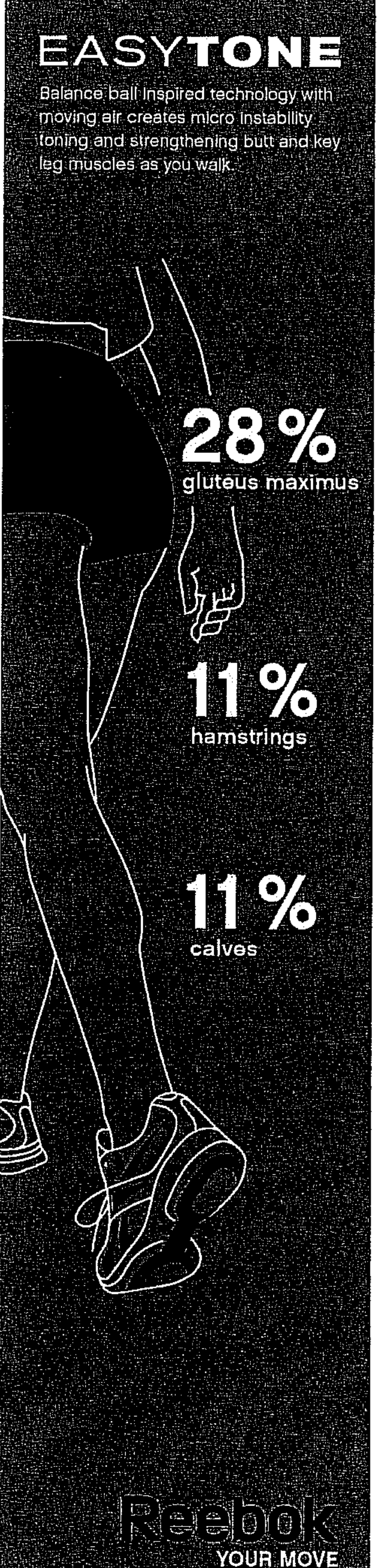
Reebok Japan said EasyTone launched worldwide in February 2009. adidas Group placed it in an emerging toning-shoe market. A filed advert paired the shoes with 28%, 11% and 11% claims for the glutes, hamstrings and calves.
In 2011, a stipulated FTC order required consumer-redress funding and instructed retailers to remove or cover 28–11–11 promotions; future quantified claims needed specified support.
Why It Mattered
Advertising turned specialised muscle measurements into a familiar everyday promise: walking in a particular shoe could do extra work. Reebok's small treadmill comparison supplied the figures, but NAD found it insufficient for the quantified and general toning claims. The episode shows why a neat percentage can make a narrow test sound like a broader consumer benefit.
The Filed Advertisement
- FTC Exhibit 3 shows EasyTone footwear beside a walking figure and the claims “28% gluteus maximus”, “11% hamstrings” and “11% calves”.
- The FTC complaint linked those figures to advertising that described the shoes’ moving-air “micro-instability”.
The Test Behind the Percentages
- In the NAD proceeding, Reebok described averages from EMG readings taken while five participants walked for five minutes in EasyTone and comparison shoes on a treadmill.
- Reebok described the University of Delaware study as unpublished.
- NAD concluded that this testing did not support the quantified or general strengthening and toning claims, and recommended discontinuance.
The 2011 FTC Order
- The stipulated final judgment and order was filed on 29 September 2011 in the United States District Court for the Northern District of Ohio.
- The $25 million fund was designated for consumer refunds, not a general fine.
- The order instructed specified retailers to remove promotional material containing the 28–11–11 claims or cover those claims on boxes, and set substantiation conditions for future quantified representations.
Sources & Records
Federal Trade Commission v. Reebok International Ltd.: Exhibits 1 and 3–16
Preserves the filed EasyTone advert carrying the 28%, 11% and 11% muscle claims.
Complaint for Permanent Injunction and Other Equitable Relief
FTC complaint identifying Reebok and alleging United States EasyTone marketing from at least March 2009. It sets out the challenged moving-air and percentage advertising claims. Complaint ¶¶6, 10, 17; PDF pp. 2–3, 6.
Stipulated Final Judgment and Order for Permanent Injunction and Other Equitable Relief
Records the 2011 consumer-redress fund, retailer actions on the percentage promotions and substantiation conditions.
Reebok Japan: New EasyTone Models and Colours for June Release
A first-party June 2009 release that describes EasyTone as having launched worldwide in February 2009.
Gallery
Credit
Reebok
Licence
Historical Ephemera
Displayed for commentary, criticism, research and historical documentation where permitted by applicable law. No permission for reuse is granted.
Caption
A Reebok EasyTone advertisement filed as Exhibit 3 in the FTC’s 2011 case, showing the campaign’s 28%, 11% and 11% muscle claims.