Kellogg’s Frosted Mini-Wheats Attentiveness Advertising Campaign
Cereal Claims and an FTC Consent Order
Forgotten Adverts · 2008–2009
Archived on
Region
United States
Associated With
Kellogg Company - advertiser and research commissioner
Defining Feature
A nearly-20% attentiveness claim across cereal advertising
Status
Historical event - FTC consent order issued in 2009
Overview
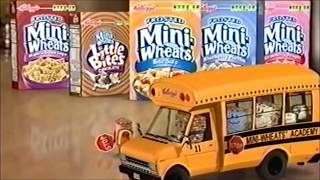
Kellogg’s Frosted Mini-Wheats campaign claimed the cereal could improve children’s attentiveness by nearly 20%.
The US campaign carried the claim across television, packaging, online advertising and print. Kellogg cited research it had commissioned comparing children aged 8–12 who ate the cereal for breakfast with children given water.
In 2009, the FTC alleged that the advertising overstated the findings: the cereal group averaged just under 11% better attentiveness than the no-breakfast group, and only about one in nine cereal-eating children improved by 20% or more. Kellogg settled without admitting the allegations. A final consent order restricted future claims and prohibited misrepresentations of research.
Why It Mattered
The campaign turned a breakfast choice into a measurable promise about children’s performance. Its scientific language and precise percentage made the underlying evidence central to what parents were being told. The resulting order required Kellogg’s covered claims about cognitive benefits to be truthful, non-misleading and supported by competent and reliable scientific evidence.
Campaign Footprint
- Broadcast-monitoring sheets log a 30-second Frosted Mini-Wheats advert in Minneapolis/St. Paul on 28 January 2008 and a Detroit placement on 29 July 2008.
- The Minneapolis/St. Paul entry is the earliest inspected airing, not a confirmed national campaign launch.
- The FTC described the material as a national advertising campaign, though the records do not provide a complete media-buy or package-distribution history.
The Attentiveness Claim
- Kellogg’s 12 March 2008 release described tests of children aged 8–12 after Frosted Mini-Wheats or water, and said the company had paid for research whose results were then unpublished.
- The FTC’s proposed-order analysis described an alleged average 10.6% attentiveness comparison with children who had skipped breakfast.
- The complaint alleged that only about half of participants improved and that one in nine improved by 20% or more; Kellogg did not admit those allegations in the settlement.
FTC Order and Later Modification
- The FTC issued its final Decision and Order in Docket C-4262 on 27 July 2009.
- The order barred specified percentage-attentiveness representations unless true and non-misleading, and required competent and reliable scientific evidence for covered cognitive-function claims.
- On 28 May 2010, the FTC modified the order after a later Rice Krispies matter, extending Part II to cognitive and other health-benefit claims for Frosted Mini-Wheats or other Kellogg food products.
Sources & Records
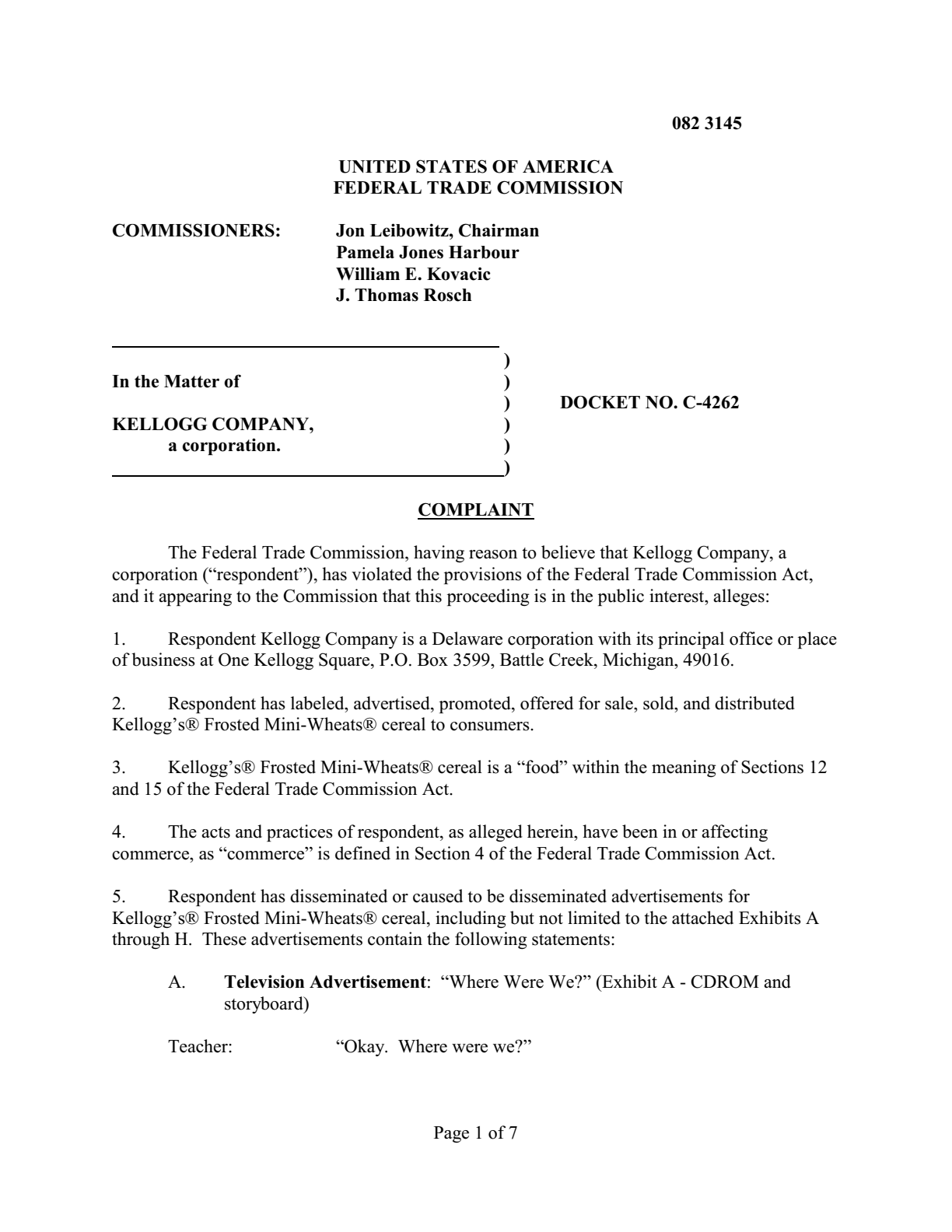
Kellogg Company Complaint, FTC Docket No. C-4262
Sets out the FTC’s allegations about campaign media, package wording and study representations. Printed and PDF pp. 2–7; allegations are not admissions or findings.
Complaint Exhibits A–H: Kellogg’s Frosted Mini-Wheats Advertising Material
Preserves broadcast-monitoring sheets, packaging, web, search, print and press material, including Kellogg’s 12 March 2008 release. PDF pp. 1–14; commercial artwork rights are not established.
Kellogg Company Decision and Order, FTC Docket No. C-4262
Records the final 2009 consent order, its no-admission settlement language, cognitive-claim substantiation standard and Kellogg principal-office address. Printed and PDF pp. 1–5.
Kellogg Settles FTC Charges That Ads for Frosted Mini-Wheats Were False
Announces the proposed settlement and describes the material as a national advertising campaign. It summarises FTC allegations rather than establishing an admission by Kellogg.
Order to Show Cause and Order Modifying Order, In the Matter of Kellogg Company
Records the 28 May 2010 modification extending the prior order’s Part II beyond the original Frosted Mini-Wheats cognitive-claim coverage. Printed and PDF pp. 1–2.
Gallery
Credit
Unresolved; candidate is hosted on YouTube. Kellogg Company is the advertised brand, but the specific video origin and rights holder were not established from the source page.
Licence
Historical Ephemera
Displayed for commentary, criticism, research and historical documentation where permitted by applicable law. No permission for reuse is granted.
Caption
Opening page of the FTC complaint concerning Kellogg’s Frosted Mini-Wheats advertising, 27 July 2009, docket C-4262. The complaint states allegations; it is distinct from the consent order.
Credit
United States Federal Trade Commission — Kellogg complaint, C-4262, 27 July 2009, p. 1
Licence
The source records this image as public domain. No copyright licence is required for the photograph; other rights may apply.
Caption
Opening page of the FTC complaint concerning Kellogg’s Frosted Mini-Wheats advertising, 27 July 2009, docket C-4262. The complaint states allegations; it is distinct from the consent order.