The Blair Witch Project missing-person campaign
The disappearance that advertised a film
Forgotten TV & Film · 1998–1999
Archived on
Region
United States
Associated With
Haxan Films and Artisan Entertainment - campaign creators and distributor
Defining Feature
A film campaign framed as a missing-person case
Status
Ended
Overview
The Blair Witch Project did not advertise only a film. Its campaign presented a disappearance to investigate.
Haxan Films launched blairwitch.com months before the 1999 Sundance Film Festival. After acquiring distribution rights there, Artisan Entertainment relaunched the site on 1 April 1999 with fictional police reports, newspaper articles, journals and interviews.
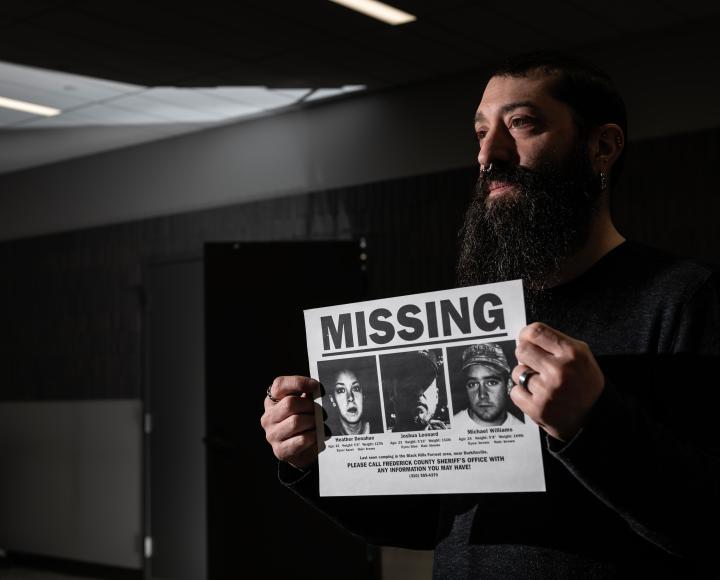
Artisan paired the expanding website with documentary-style television promotion and realistic-looking Missing posters carried by street teams. The film opened in Los Angeles on 16 July 1999. Missing-person posters and an archive of the original website now survive in the University of Pittsburgh’s Horror Studies Collection.
Why It Mattered
The campaign made publicity behave like part of the story. A Missing poster could be encountered as an apparent public appeal; the website then offered the reports, testimony and fragments that made the invented case feel explorable.
Its power came from that controlled uncertainty. The website did not explicitly announce that the tale was fiction, yet the police-style documents were campaign inventions, not official Maryland records. The distinction matters: the campaign borrowed the authority of real information formats without receiving it from the authorities themselves.
The case began online
- Haxan Films launched blairwitch.com months before Sundance. Artisan acquired distribution rights at the festival and relaunched the site on 1 April 1999.
- The online material expanded the fictional disappearance through police-style reports, newspaper articles, journals and interviews.
How the campaign worked
- Artisan combined website updates with documentary-style television promotion and street teams carrying realistic-looking Missing posters.
- The film opened in Los Angeles on 16 July 1999, placing these materials inside its documented release campaign.
Fictional evidence, surviving evidence
- The retained sources identify the police reports as fictional. They do not establish authentic Maryland police documents, official seals, approval or objection.
- The University of Pittsburgh now preserves campaign posters and an archive of the original website. The exact poster designer, printer and first distribution date remain unresolved.
Selected Sources
How The Blair Witch Project Revolutionized Movie Marketing
2024 — Corrected retrospective identifying Haxan’s pre-Sundance site, Artisan’s 1999 relaunch and the fictional police reports, newspapers, journals and interviews.
The Marketing Wizard Behind the Witch
1999 — Contemporary report describing weekly site updates, documentary-style promotion and street teams carrying realistic-looking Missing posters.
The Blair Witch Project Archive Has Joined Pitt’s Horror Studies Collection
2025 — University collection record confirming preservation of missing-person posters and an archive of the original website.
Gallery
Credit
Aimee Obidzinski / University of Pittsburgh
Licence
Historical Ephemera
Displayed for commentary, criticism, research and historical documentation where permitted by applicable law. No permission for reuse is granted.
Caption
Horror Studies Collection coordinator Ben Rubin holds a missing-person poster from The Blair Witch Project campaign.