McDonald’s Monopoly promotion fraud
The winning pieces diverted before distribution
Forgotten History · 1995–2003
Archived on
Region
United States
Associated With
McDonald’s and Simon Marketing - promotion owner and contractor
Defining Feature
High-value game pieces diverted before legitimate distribution
Status
Ended
Overview
McDonald’s Monopoly promised rare prizes, but high-value pieces were diverted before legitimate distribution.
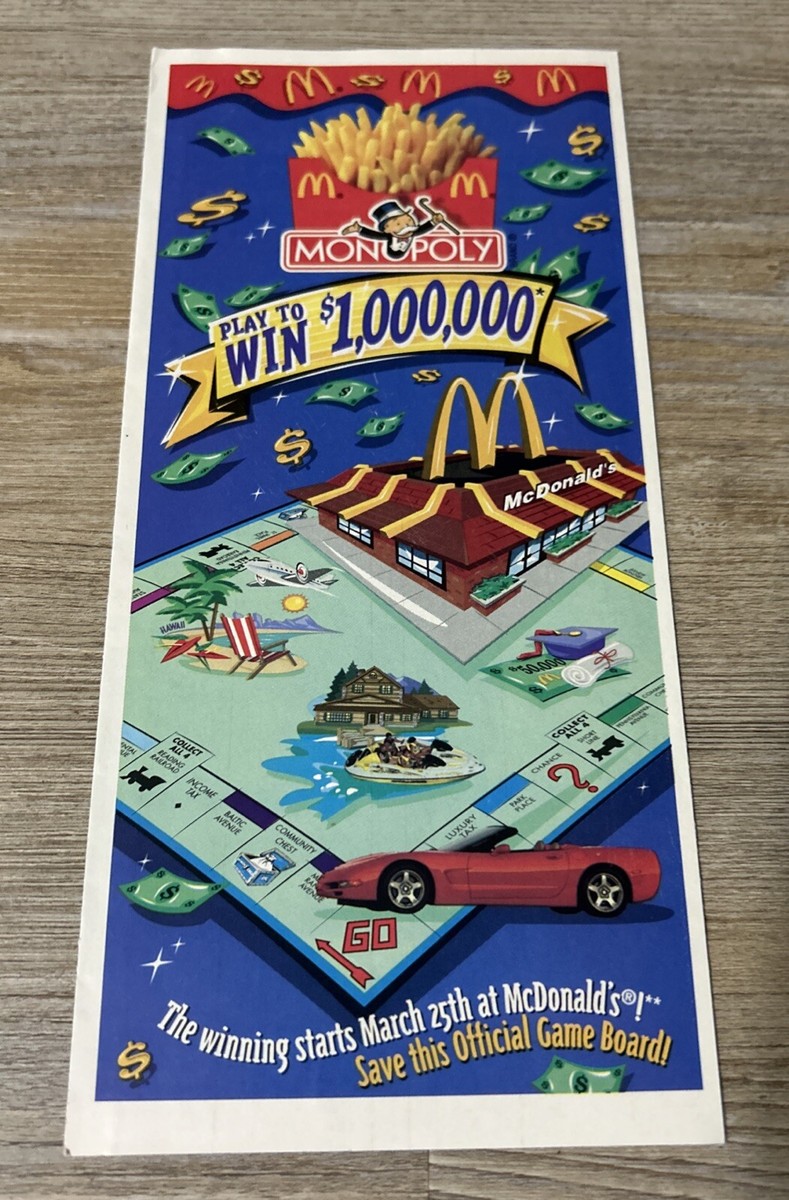
Customers collected property stamps from food packaging, written requests and newspaper promotions, or found instant-win pieces. The FBI said a 2001 criminal complaint alleged that, from as early as 1995, a Simon Marketing employee diverted valuable pieces and used recruiters and purported winners to redeem them.
After eight arrests were announced on 21 August 2001, McDonald’s ended its relationship with Simon Marketing and created an independent security task force. Monopoly returned in 2003 under guidelines the company said had been set by a Games Advisory Board formed in autumn 2001.
Why It Mattered
The game’s appeal depended on a process customers could not see. A common stamp could be checked at the table; the fairness of a rare prize depended on secure handling before that stamp reached a restaurant at all.
The scandal did not end the format. McDonald’s changed contractors and oversight, then brought Monopoly back. That response shows how a familiar promotion could survive a failure in the hidden distribution system that made its promised odds credible.
How the promotion worked
- Customers received game stamps on food packaging, through written requests or in newspaper promotions.
- Collect to Win pieces completed property groups; Instant Win pieces carried an immediate prize. Major claims went through validation.
How distribution failed
- The FBI said the complaint alleged that high-value pieces were taken before legitimate distribution and passed through recruiters to purported winners.
- The allegations concerned several McDonald’s promotional games. They do not establish that every claimant knew a piece had been diverted.
What changed after 2001
- McDonald’s ended its Simon Marketing relationship and announced an independent security task force after the arrests.
- The 2003 Monopoly return was presented as complying with Games Advisory Board guidelines formed after the scandal.
Selected Sources
Eight Arrested for Defrauding McDonald’s Corp. and Its Customers
2001 — FBI announcement recording the criminal-complaint allegations, the 21 August 2001 arrests and the alleged diversion method.
United States v. Chandler, 376 F.3d 1303
2004 — Published appellate opinion describing Simon Marketing’s role, Jacobson’s security responsibility and the distribution of high-value game stamps.
McDonald’s Celebrates the MONOPOLY Best Chance Game
2003 — Corporate release documenting the promotion’s return and the stated Games Advisory Board safeguards.
Gallery
Credit
McDonald’s promotional artwork; photograph via eBay seller ischellfindit
Licence
Historical Ephemera
Displayed for commentary, criticism, research and historical documentation where permitted by applicable law. No permission for reuse is granted.
Caption
A game board listed as 1999 advertises McDonald’s Monopoly and its million-dollar prize.