Netville
The wired suburb that organised to keep its network
Forgotten Internet · 1996–1999
Archived on
Region
Canada — Toronto area
Associated With
Magenta - pseudonymous network consortium
Defining Feature
A wired-suburb trial whose residents organised after its withdrawal
Status
Ended
Overview
Netville gave residents of a suburban Canadian development a shared broadband network and local online services.
Resident access began in December 1996. In July 1997, after residents and the investigator pressed for it, Magenta created NET-L: a neighbourhood email list rather than an automatic feature of the broadband system.
An email from Magenta’s director announced the planned withdrawal in early October 1998, with public confirmation at the end of the month. The technology trial ended in January 1999, although some residents later retained narrower forms of access and local communication.
Why It Mattered
Netville made a network part of neighbourhood infrastructure rather than a private household utility. When withdrawal was announced, residents responded through an in-person meeting as well as networked communication, showing how a local technical service could become entangled with everyday organising.
Its aftermath also complicates a simple story of online community. The original system was not saved, and the study’s neighbourly-contact results do not prove that connectivity alone created community. What remained was a patchwork of email addresses, temporary dial-up, replacement services and replicated local functions: enough to show that the loss of a shared network changed how the neighbourhood could stay connected.
Trial and Withdrawal
- Resident access began in December 1996.
- Magenta established NET-L, a neighbourhood email list, in July 1997 after residents and the investigator pressed for it.
- An early-October 1998 email from Magenta’s director preceded public confirmation of the withdrawal at the end of that month.
- The technology trial ended in January 1999; the inspected material does not establish an August 1999 end date for fieldwork.
Organising Across Two Spaces
- Residents’ action against Magenta began at an in-person meeting organised by the provider.
- Networked communication also figured in the attempted continuation campaign, but the record does not support describing NET-L as its main coordinating mechanism.
- The campaign did not preserve the original trial network.
What Continued
- After January 1999, some residents received free 56Kb dial-up access for six months; others waited for ADSL or subscribed to @Home cable service.
- Residents retained email addresses, and some local functions were replicated after the trial.
- Wired respondents reported recognising, talking with and visiting more neighbours than non-wired respondents. These setting-specific findings are associational, not proof that connectivity alone caused stronger community ties.
Selected Sources
2001 — Primary research record. Hampton’s doctoral dissertation sets out Netville’s services, resident study and the withdrawal response, including the post-trial arrangements that followed January 1999.
“Grieving for a Lost Network: Collective Action in a Wired Suburb,” The Information Society, 2003
2003 — Primary research record. This later analysis distinguishes the in-person and online parts of residents’ collective action, the October 1998 withdrawal sequence, and the study’s setting-specific findings on local ties.
2000 — Primary research record. This chapter describes the neighbourhood list’s local functions and the limited continuity available after the original network trial ended.
Gallery
Credit
Keith N. Hampton, Living the Wired Life in the Wired Suburb, Figure 4.2
Licence
Historical Ephemera
Displayed for commentary, criticism, research and historical documentation where permitted by applicable law. No permission for reuse is granted.
Caption
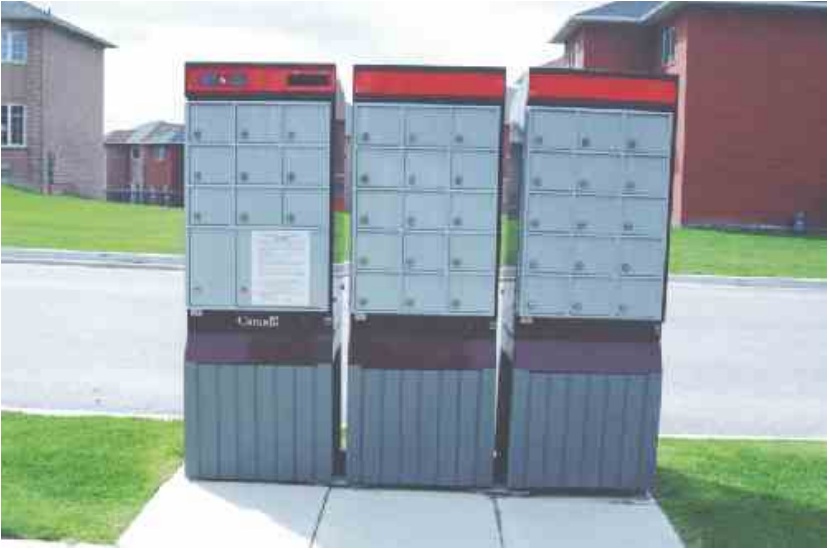
A printed NET-L message on neighbourhood mailboxes shows how Netville’s online list reached shared physical space.