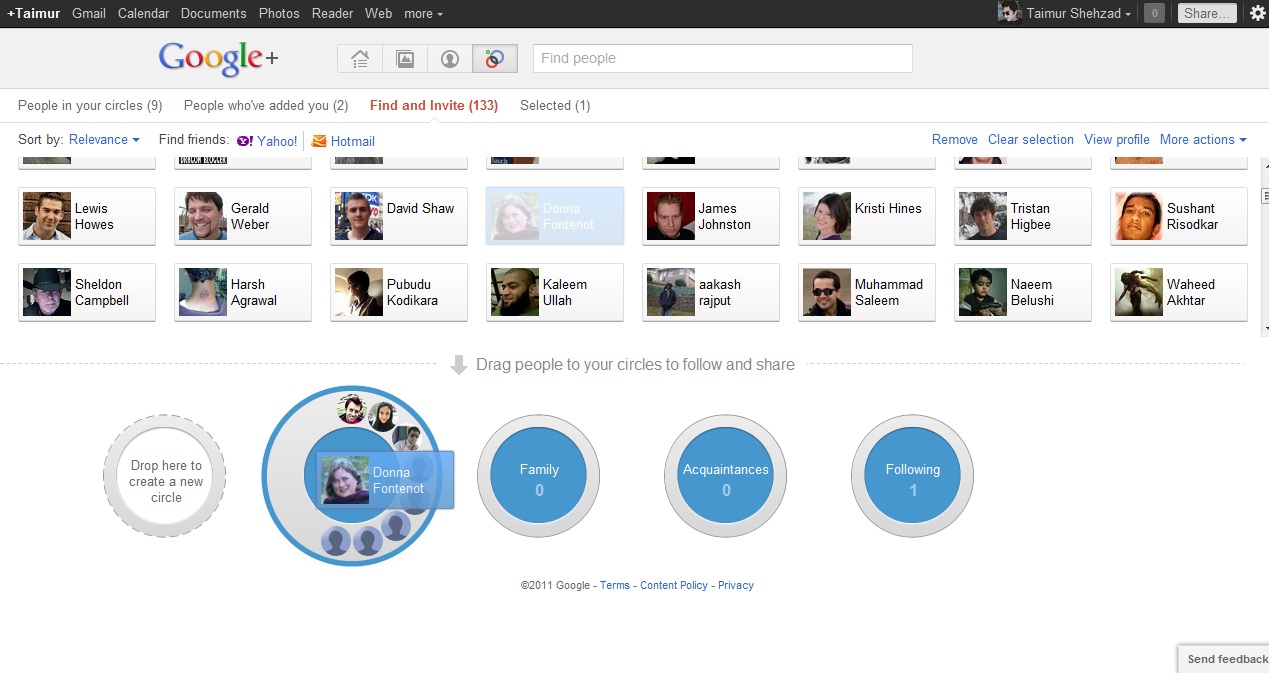
Google launched Google+ in 2011 as its answer to the growing social web. Circles organised contacts, Hangouts brought people together on video, and later features added communities, events and extensive photo tools. Despite being woven through Google’s wider account system, the consumer network closed in April 2019.
Why It Mattered
Google+ was one of the largest attempts to build a social network around services people already used every day. Some of its individual ideas were genuinely influential, but the platform never developed the clear identity or everyday pull needed to keep its enormous registered audience active.
Service development
- Google dated the project’s start to 2011.
- Google reported that more than 250 million people had upgraded to Google+ by June 2012.
- By June 2012 it offered native mobile apps, a tablet version and Events.
Community features
- Google later added topic-based Communities.
- Sharing, photographs, comments and Hangouts were integrated into the service.
Consumer sunset
- Google moved the consumer shutdown from August to April 2019.
- The accelerated timetable followed Google's discovery of a bug affecting a Google+ API.
- The company also said Google+ APIs would be shut down within 90 days of its December 2018 notice.
Associated With
Google - creator or operator
Defining Feature
Profiles, sharing, conversations, events, communities and photo features linked through Google accounts
Status
Discontinued - Consumer Google+ was sunset in April 2019
- All three image sources are not yet verified — editorial review required.
Rights Notice
Images are included for historical and archival reference.
Rights holders may contact Forgotten Archive through the publishing account to request a credit correction or removal.
Gallery
Credit
Google+ interface: Google; screenshot contributor not established
Licence
Historical Ephemera
Displayed for commentary and research. Fair dealing under the UK CDPA 1988 applies only where its conditions are met. No permission for reuse is granted.
Caption
Google+ made sorting contacts into Circles a central part of its identity. This early interface let users drag people into groups before deciding what to share with them.