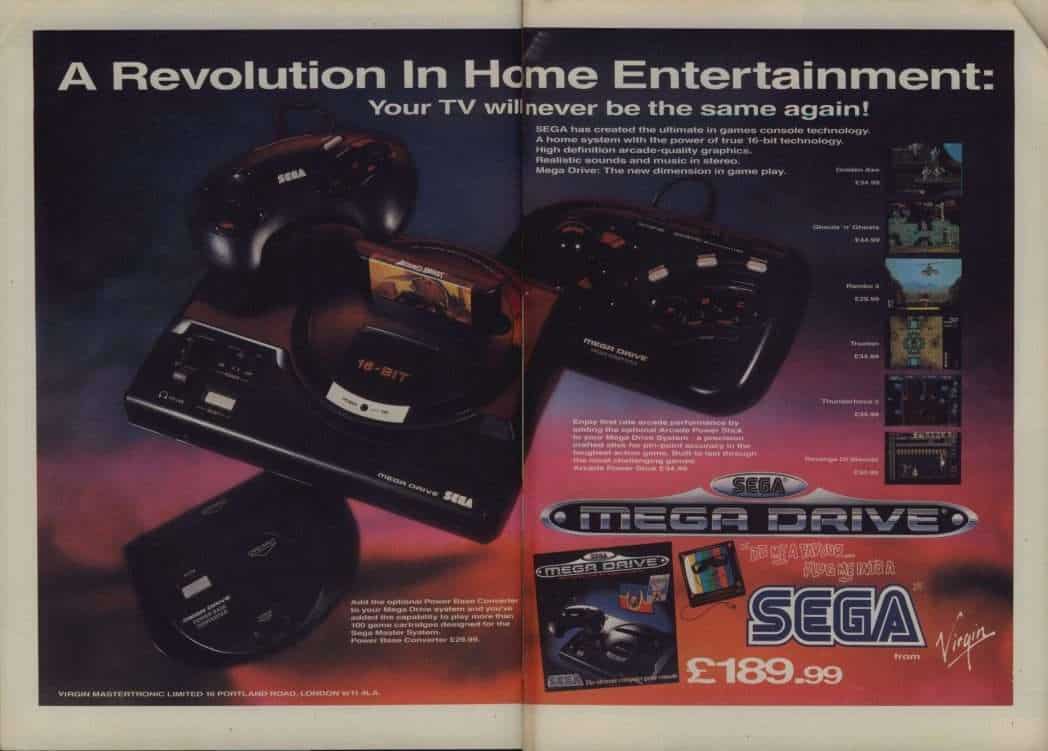
Sega grew from a business supplying amusement machines into one of the defining names in arcades and home gaming. It entered the console market with the SG-1000 in 1983, then built a hardware line that included the Mega Drive, Game Gear, Saturn and Dreamcast. After the Dreamcast, Sega left the console business in 2001 to concentrate on games.
Why It Mattered
Sega brought arcade speed, colour and attitude into the home, often taking risks its larger rivals avoided. The Dreamcast’s built-in modem and online ambitions showed that the company was still looking forward even as its hardware era came to an end.
Amusement origins
- Sega's predecessor businesses imported, maintained and manufactured commercial amusement equipment.
- The name Sega derived from “Service Games.”
Consumer hardware
- The SG-1000, released in July 1983, was Sega's first consumer game console.
- The official timeline also records the Mega Drive in 1988, Game Gear in 1990 and Saturn in 1994.
Dreamcast endpoint
- Dreamcast launched in Japan on 27 November 1998 with a standard 33.6 Kbps modem.
- Sega decided in January 2001 to stop Dreamcast manufacture and concentrate its consumer business on content.
Associated With
Sega and its predecessor companies - creator or operator, brand
Defining Feature
A business spanning arcade equipment, game software and successive home consoles
Status
Discontinued - games company; manufacture of Sega home-console hardware ended in 2001
- All one image sources are not yet verified — editorial review required.
Rights Notice
Images are included for historical and archival reference.
Rights holders may contact Forgotten Archive through the publishing account to request a credit correction or removal.
Sega advertising artwork; scan contributor not identified
Licence
Historical Ephemera
Displayed for commentary and research. Fair dealing under the UK CDPA 1988 applies only where its conditions are met. No permission for reuse is granted.
Caption
The Mega Drive advertisement promises a revolution in home entertainment, using the console and its games to sell an upgrade in the experience of playing at home.