Creative Labs
Forgotten Technology · 1989
Published
Creative launched the first Sound Blaster card at COMDEX in 1989, giving IBM-compatible PCs far richer audio than their built-in beeps could provide. Installed inside the computer, it handled digital sound, music synthesis and a game-controller port, quickly becoming a familiar requirement on game boxes.
Why It Mattered
Sound Blaster gave PC games voices, explosions and music with an impact the standard speaker could never deliver. Its enormous compatibility turned one company’s expansion card into the practical audio standard for an entire era of DOS gaming.
Launch record
- Creative's 1999 tenth-anniversary release dates the original Sound Blaster launch to Fall COMDEX 1989.
- The product belonged to Creative's earlier line of PC audio expansion cards.
Expansion-card design
- Sound Blaster was installed as an add-on sound card for IBM-compatible PCs.
- Its additional game port distinguished it from otherwise similar competing cards.
Compatibility and reach
- The Sound Blaster family became an industry compatibility standard for PC audio.
- Creative announced that cumulative Sound Blaster shipments had exceeded 100 million by 1999.
Associated With
Creative Technology Ltd. - creator or operator
Defining Feature
An IBM PC add-on audio card that also incorporated a game port
Status
Active - Creative and the Sound Blaster product family continue
Primary Records
Image Sources
- All one image sources are not yet verified — editorial review required.
Rights Notice
Images are included for historical and archival reference.
Rights holders may contact Forgotten Archive through the publishing account to request a credit correction or removal.
Gallery
Credit
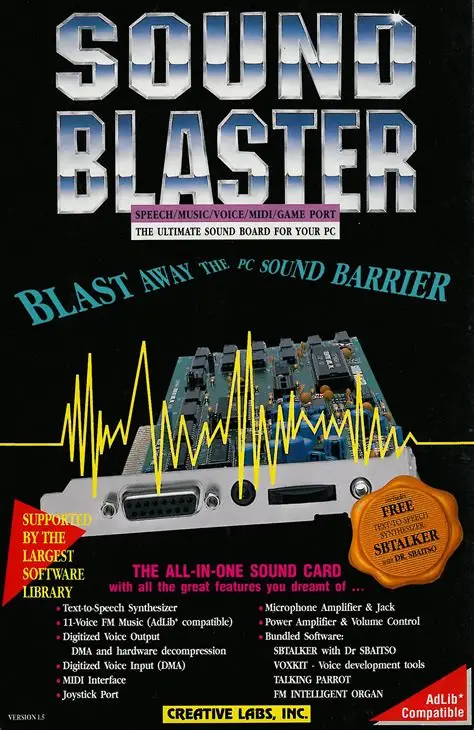
Creative Sound Blaster packaging; preserved by salient on Wavetable.nl
Licence
Historical Ephemera
Displayed for commentary and research. Fair dealing under the UK CDPA 1988 applies only where its conditions are met. No permission for reuse is granted.
Caption
Sound Blaster's packaging sells sound as a major PC upgrade, reflecting a period when music and speech capabilities were additions users often bought separately.