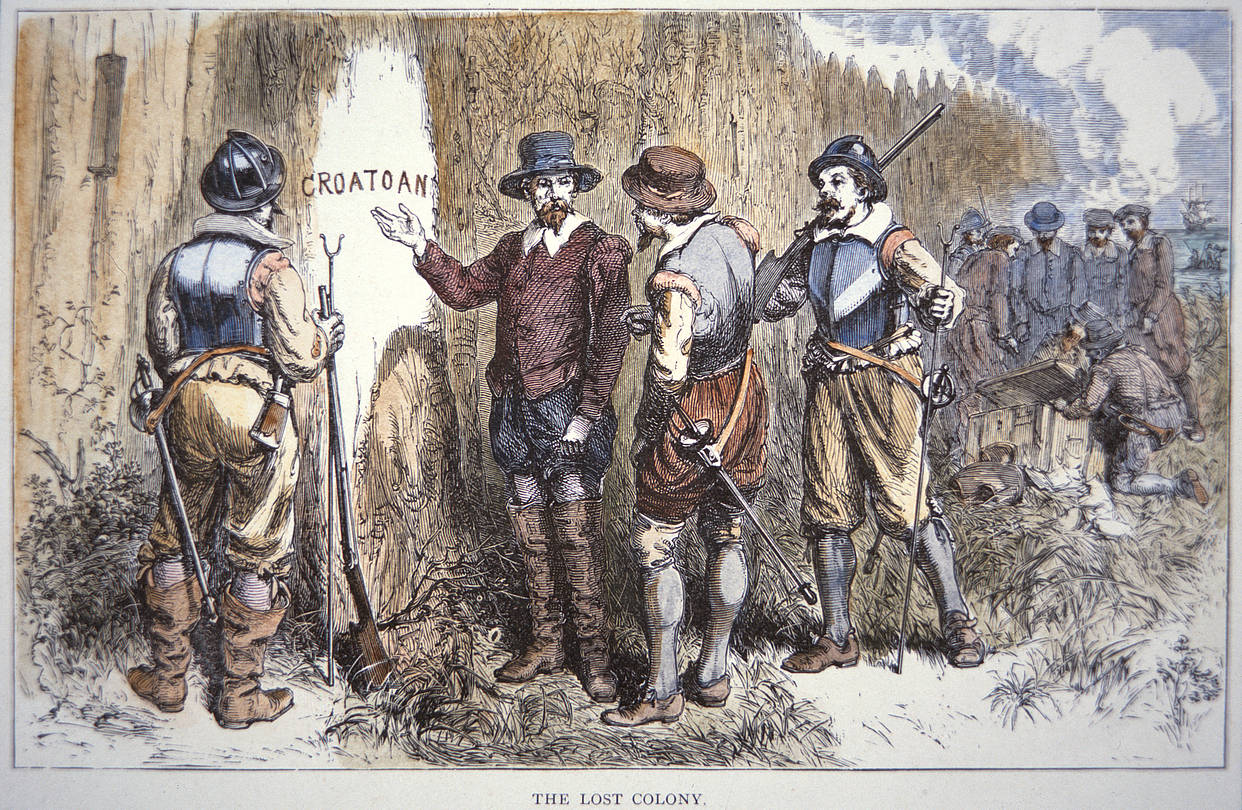
Roanoke’s English settlement was found abandoned in 1590, three years after John White brought colonists there.
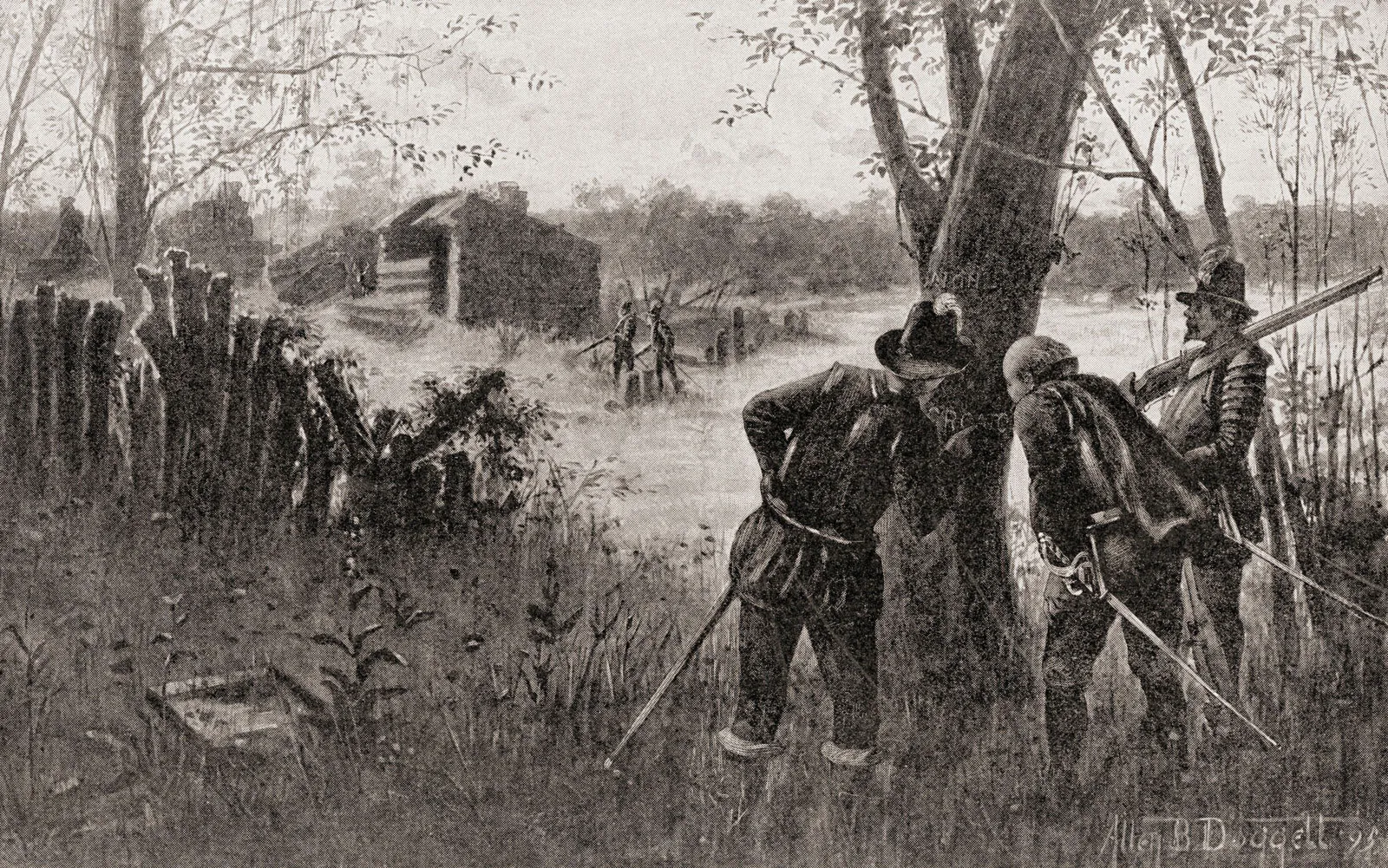
White had returned to England for supplies, leaving a community dependent on an Atlantic crossing for help. When he came back, CROATOAN was carved into a post and CRO into a nearby tree, but the settlers were gone.
The agreed distress symbol was absent. The words offered a clue rather than a complete explanation, and no single account of the colonists’ fate has been conclusively established.
History
White had returned to England for supplies, leaving a community dependent on an Atlantic crossing for help. When he came back, CROATOAN was carved into a post and CRO into a nearby tree, but the settlers were gone.
History
The agreed distress symbol was absent. The words offered a clue rather than a complete explanation, and no single account of the colonists’ fate has been conclusively established.
Significance
The abandoned settlement exposes how vulnerable a colonial venture could be when support depended on long, uncertain voyages. Its story is also one of contact with Indigenous communities, not simply an isolated puzzle about missing Europeans.
The carved message matters because it points towards a possible movement of people rather than supplying a final answer. Preserving that uncertainty keeps the historical question distinct from later tales that treat disappearance as proof of something inexplicable.
The 1587 Settlement
- John White led the 1587 English colony established on Roanoke Island.
- The settlement depended on maritime supply links across the Atlantic.
- White returned to England for supplies and was delayed from returning until 1590.
CROATOAN
- White found the settlement abandoned when he returned in 1590.
- CROATOAN was carved into a post, while CRO appeared on a nearby tree.
- The agreed distress symbol was absent, complicating claims that the departure had been forced.
An Unresolved Fate
- Proposed explanations include relocation, integration with Indigenous communities, conflict and environmental hardship.
- No single explanation has been conclusively demonstrated.
- Colonial documents and archaeology continue to shape interpretation of the colony’s fate.
Key facts
**Region:** United States
**Associated With:** John White - colony governor
**Defining Feature:** Abandoned English settlement whose colonists’ fate remains uncertain
**Status:** Unresolved - the colonists’ eventual fate is unconfirmed
Region
United States
Associated With
John White - colony governor
Defining Feature
Abandoned English settlement whose colonists’ fate remains uncertain
Status
Unresolved - the colonists’ eventual fate is unconfirmed
- Image 1 — Historical engraving reproduced by Posterazzi / Granger Collection; original artist not established. Editorial review; no reuse licence established.
- Image 2 — Historical map detail; mapmaker and scan contributor unknown; reproduced by Berita Harian. Editorial review; no reuse licence established.
- Image 3 — Historical Roanoke illustration; artist unknown; reproduced by Encyclopaedia Britannica. Editorial review; no reuse licence established.
- Image 4 — John White; digital image courtesy of the Trustees of the British Museum, via Christina Faraday / ResearchGate; resized for display. CC BY-NC-SA 4.0.
- Image 5 — Historical illustration; artist unknown. Digital copy via Wikimedia Commons. Recorded public domain; artist unknown.
Rights Notice
Displayed for commentary, criticism, research and historical documentation where permitted by applicable law. No permission for reuse is granted. Image-specific open licences and public-domain statements are recorded separately in the image provenance.
Historical engraving reproduced by Posterazzi / Granger Collection; original artist not established
Licence
Historical Ephemera
Displayed for commentary, criticism, research and historical documentation where permitted by applicable law. No permission for reuse is granted.
Caption
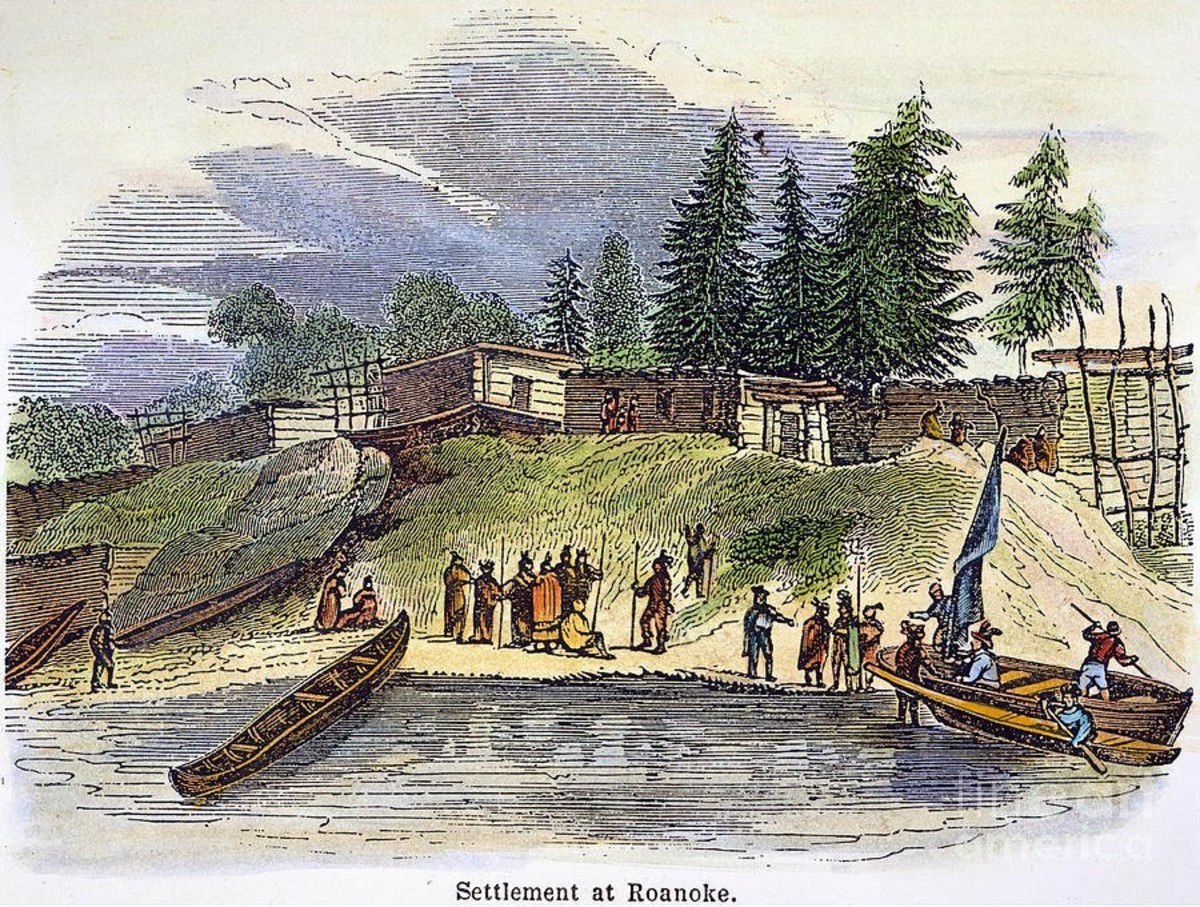
A nineteenth-century engraving imagines the English settlement at Roanoke, illustrating how the lost colony was represented long after the events it depicts.
Historical map detail; mapmaker and scan contributor unknown; reproduced by Berita Harian.
Licence
Historical Ephemera
Displayed for commentary, criticism, research and historical documentation where permitted by applicable law. No permission for reuse is granted.
Caption
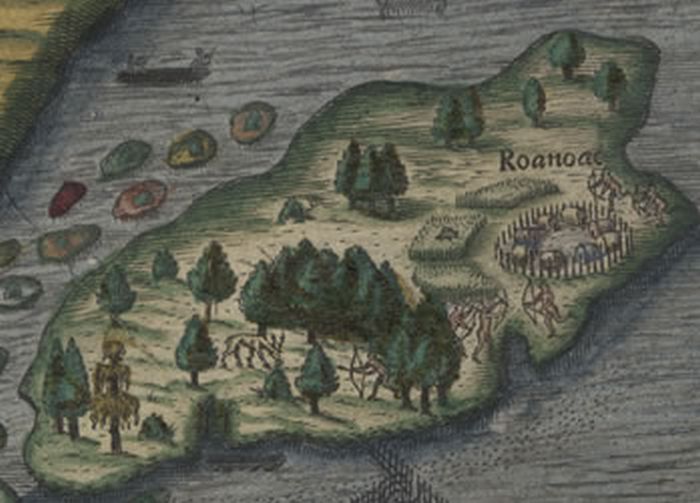
An early map places Roanoke within a coastal landscape already inhabited and named, a setting often overshadowed by the later mystery of the English colony.
See the licence terms for attribution, reuse and any other conditions.
Caption
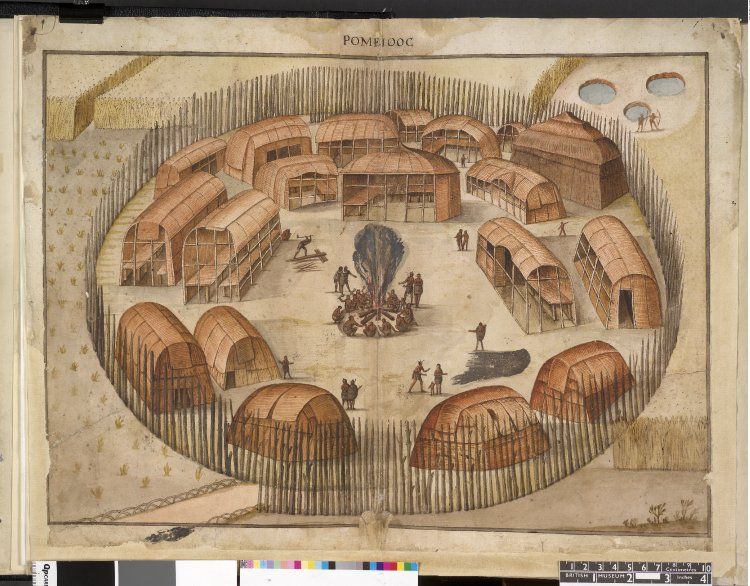
John White's depiction of Pomeiooc records an Indigenous settlement in the region encountered by the Roanoke expeditions, placing Native communities at the centre of the landscape.