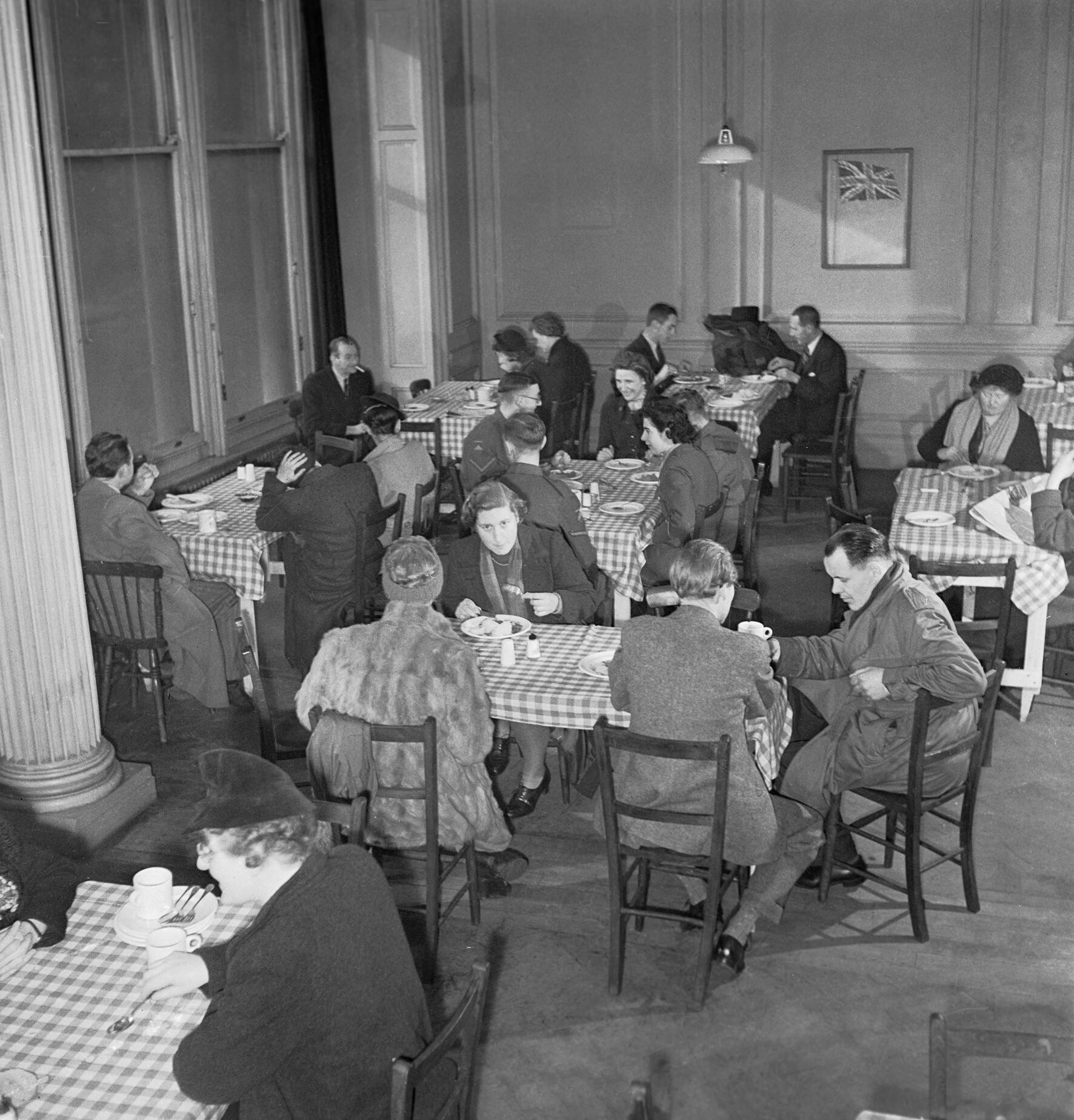
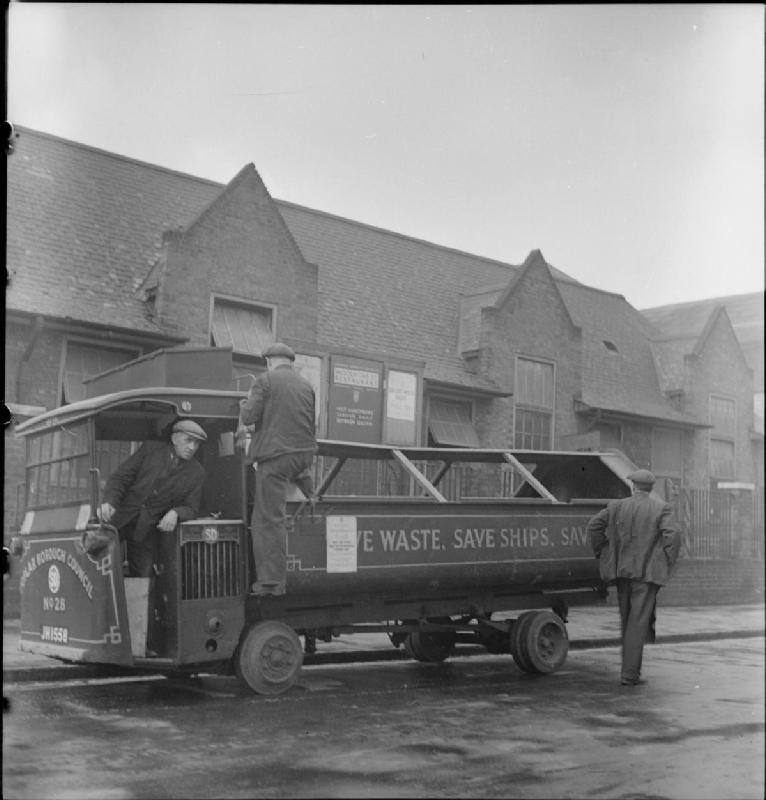
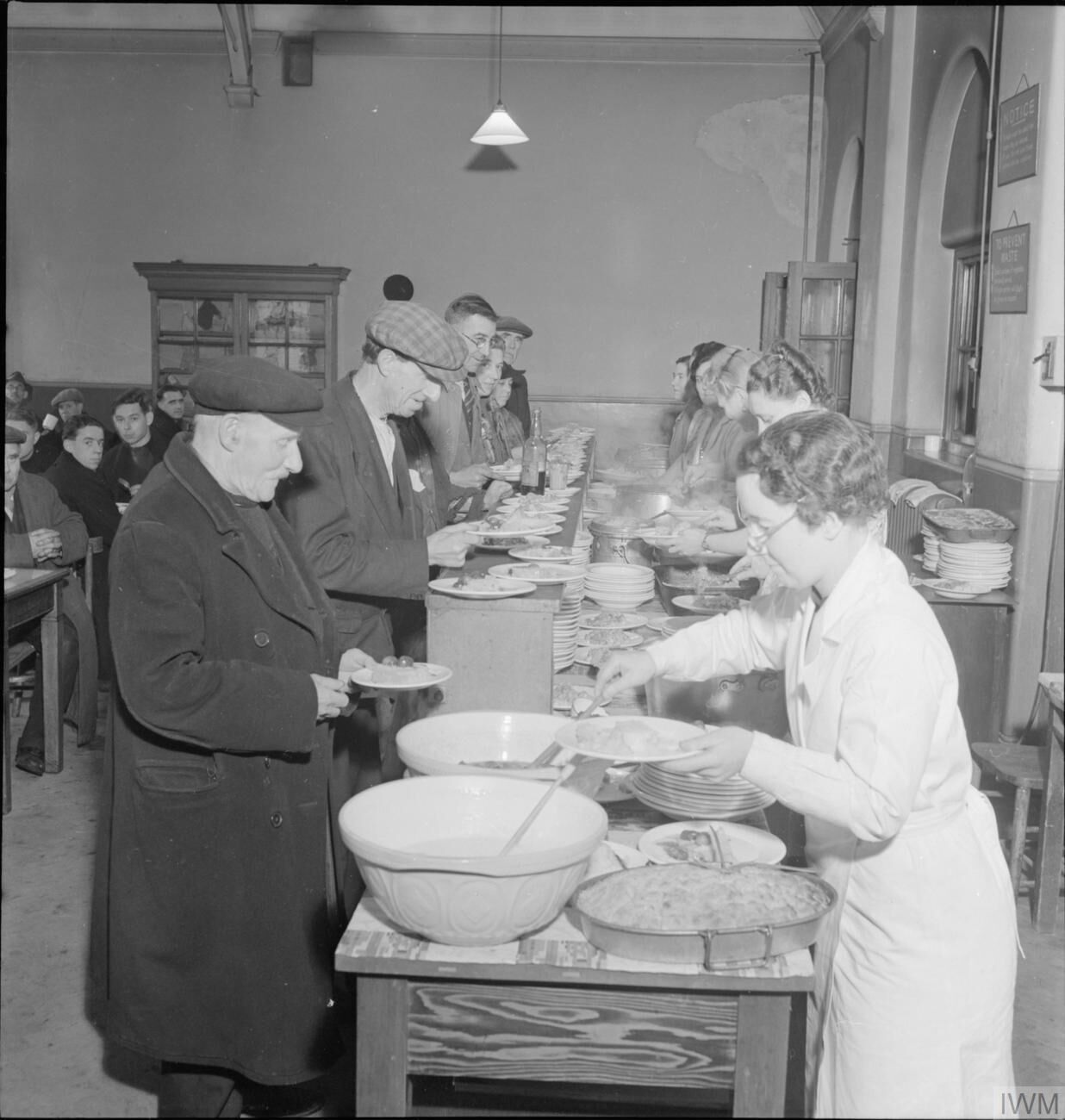
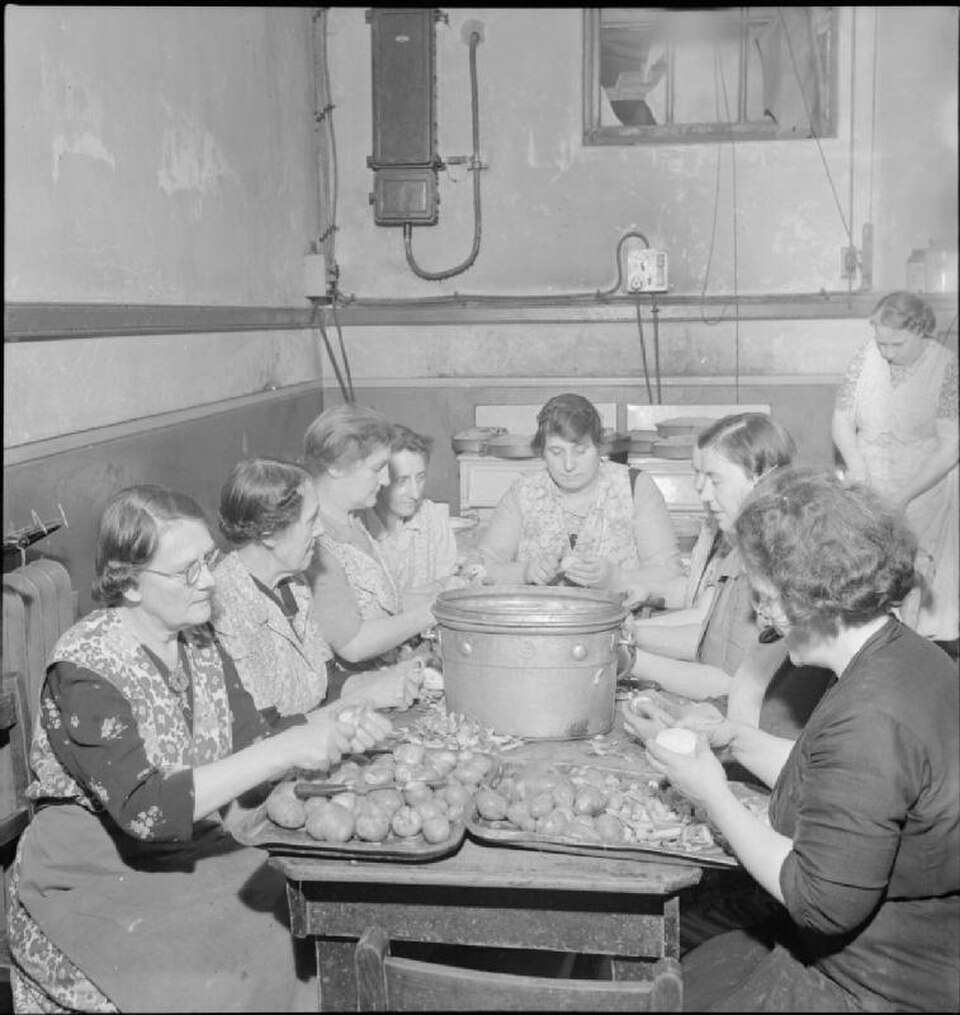
British Restaurants sold inexpensive cooked meals to the public across wartime Britain from 1940 to 1947.
Created under Ministry of Food supervision and largely run by local authorities, the canteens served workers, evacuees and households whose normal meal arrangements had been disrupted. Customers paid for prepared food, while restaurants worked within wartime controls.
The network grew to more than 2,000 restaurants serving over 500,000 meals a day at its May 1943 peak. In 1947 the wartime system ended administratively, but some premises continued under local control as civic restaurants.
History
Created under Ministry of Food supervision and largely run by local authorities, the canteens served workers, evacuees and households whose normal meal arrangements had been disrupted. Customers paid for prepared food, while restaurants worked within wartime controls.
History
The network grew to more than 2,000 restaurants serving over 500,000 meals a day at its May 1943 peak. In 1947 the wartime system ended administratively, but some premises continued under local control as civic restaurants.
Significance
Their significance lay in making an affordable cooked meal part of Britain’s practical wartime support. They helped workers without canteens, evacuees and displaced households maintain an everyday routine when cooking or finding food had become difficult.
The scheme also linked national food policy with local public service on a vast scale. Its civic successors carried the idea of council-operated public restaurants into the post-war period.
Origins and Official Identity
- By November 1940, the Ministry of Food was pressing local authorities to establish British Restaurants.
- In 1941, the Ministry assumed responsibility for community kitchens in 289 reception areas and opened them to the general public.
- “British Restaurants” was official terminology by early 1941.
Meals, Prices and Service
- Restaurants charged customers and were expected to operate on a self-supporting or non-profit basis within wartime food controls.
- Merton records describe soup, a main course and hot pudding, with child portions at 4d and adult meals between 6d and 9d; these were local examples, not a national tariff.
- A 1942 parliamentary debate discussed queues, entrances, decoration and counter-service design as practical parts of the customer experience.
Expansion and Peacetime Transition
- By March 1942, approximately 1,320 restaurants were serving more than 350,000 meals daily.
- Approximately 1,200 restaurants were still operating in early 1947 as Ministry of Food control approached its end.
- The Civic Restaurants Act 1947 provided a separate peacetime basis for qualifying local authorities in England, Wales and Scotland; it did not extend to Northern Ireland.
Key facts
**Associated With:** Ministry of Food - scheme sponsor and supervisor; local authorities - principal operators
**Defining Feature:** Inexpensive cooked meals served through locally run public canteens
**Status:** Discontinued - wartime scheme ended administratively in 1947
Associated With
Ministry of Food - scheme sponsor and supervisor; local authorities - principal operators
Defining Feature
Inexpensive cooked meals served through locally run public canteens
Status
Discontinued - wartime scheme ended administratively in 1947
Images are included for historical and archival reference.
Rights holders may contact Forgotten Archive through the publishing account to request a credit correction or removal.