The MP3 Player Boom
Forgotten Trends · 1990s–2000s
Published
The MP3 player boom shifted portable listening from physical recordings to libraries of digital files.
From the late 1990s, flash-memory players, hard-drive jukeboxes and inexpensive USB-stick models let people transfer music from a computer and carry it in their pockets. Apple’s iPod and iTunes helped bring portable digital music into the mainstream.
Smartphones later took over much of that everyday listening. Apple discontinued the iPod line in 2022, although specialist digital audio players have continued beyond the boom.
Why It Mattered
MP3 players changed what people packed for a journey: instead of choosing a few CDs or cassettes, they could carry a much larger selection of music in one device. Loading it became its own ritual—ripping CDs, sorting filenames and deciding what would fit.
A player’s contents could feel like a personal collection: favourite albums, downloaded tracks and carefully arranged playlists, all available without a mobile connection. Choosing what went onto it was part of the experience.
How Early Players Worked
- Early portable MP3 players commonly relied on a computer, transfer software and a cable or adapter to load music.
- Rio Manager let owners select files and arrange their playing order before transferring them to the player.
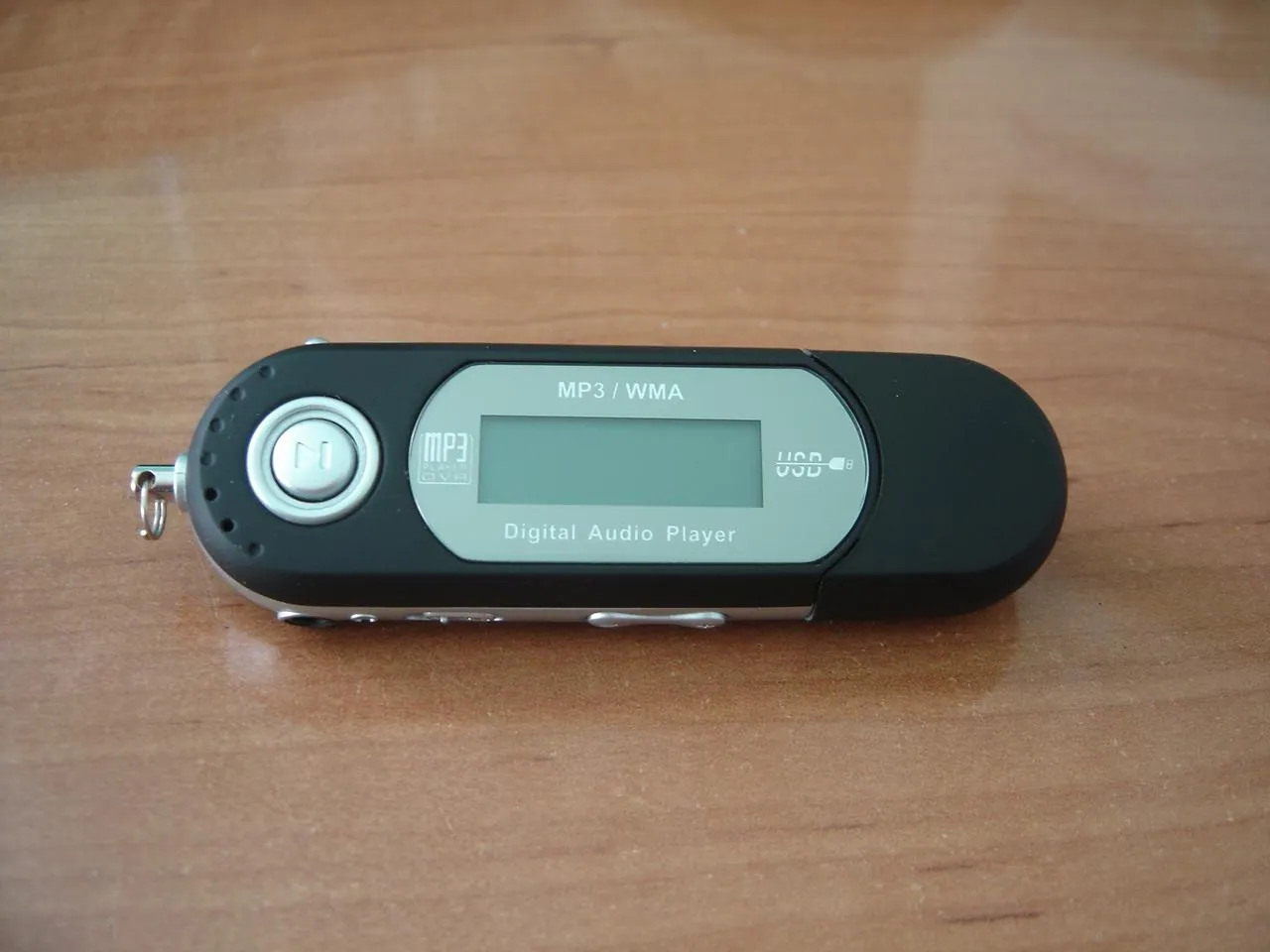
- The market included limited-capacity flash players, hard-drive jukeboxes and USB-stick designs operated through compact controls and displays.
Storage, Stores and Market Growth
- Apple’s original 2001 iPod used a 5GB hard drive, advertised room for up to 1,000 songs and offered automatic iTunes synchronisation with FireWire transfer.
- The US iTunes Music Store launched in 2003 with more than 200,000 tracks and individual songs priced at 99 cents.
- US factory-level figures for 2004 put sales of MP3-type headphone players at about 7.13 million units and $1.29 billion.
- IFPI estimated that 120 million portable digital players were sold worldwide in 2006, with flash-memory models representing about three quarters of them.
What Filled the Music Libraries
- Player libraries could combine music ripped from physical recordings, legal downloads and files obtained from free websites or peer-to-peer services.
- IFPI research found that portable-player owners were more likely than other internet users to purchase music legally, so file sharing was not their only source.
- “MP3 player” became the familiar label, but portable digital audio player is the broader term because the category was not limited to one file format.
Associated With
Fraunhofer – MP3 audio technology; Diamond Multimedia, Creative Technology and Apple – portable digital audio players
Defining Feature
Compact players that carried computer-transferred digital music libraries
Status
Superseded - specialist digital audio players remain available
Primary Records
Image Sources

Rights Notice
Images are included for historical and archival reference.
Rights holders may contact Forgotten Archive through the publishing account to request a credit correction or removal.
Gallery
Credit
XAVeRY
Licence
Public domain
This image is recorded as public domain. Its source provides the provenance.
Caption
An unidentified MP3/WMA digital audio player with a monochrome display.