Witkar was Amsterdam’s membership-based electric car-sharing network, using tiny cars between city stations.
Members unlocked a two-seat, three-wheeled vehicle with a coded magnetic key. A central computer checked space at the chosen destination and recorded the trip; the member drove the car and connected it to a charging rail on arrival.
Luud Schimmelpennink designed the system amid debates over traffic and pollution. A prototype was shown in 1968, the public station network ran from 1974 until October 1986, and the last street vehicles disappeared in 1988.
History
Members unlocked a two-seat, three-wheeled vehicle with a coded magnetic key. A central computer checked space at the chosen destination and recorded the trip; the member drove the car and connected it to a charging rail on arrival.
History
Luud Schimmelpennink designed the system amid debates over traffic and pollution. A prototype was shown in 1968, the public station network ran from 1974 until October 1986, and the last street vehicles disappeared in 1988.
Significance
Decades before app-based car sharing became commonplace, Witkar demonstrated that electric vehicles could be shared across a city without each user owning a car. Its automated stations and computer-managed journeys offered an early vision of urban transport built around shared access rather than private ownership.
Although the network remained small, with just five stations and 35 vehicles, it exposed challenges that later mobility services would also face: maintaining vehicles, balancing availability between locations and attracting enough users to sustain the system.
Vehicle Design and Charging
- The Amsterdam Museum vehicle has a 24-volt electric motor and a stated maximum speed of 30 kilometres per hour.
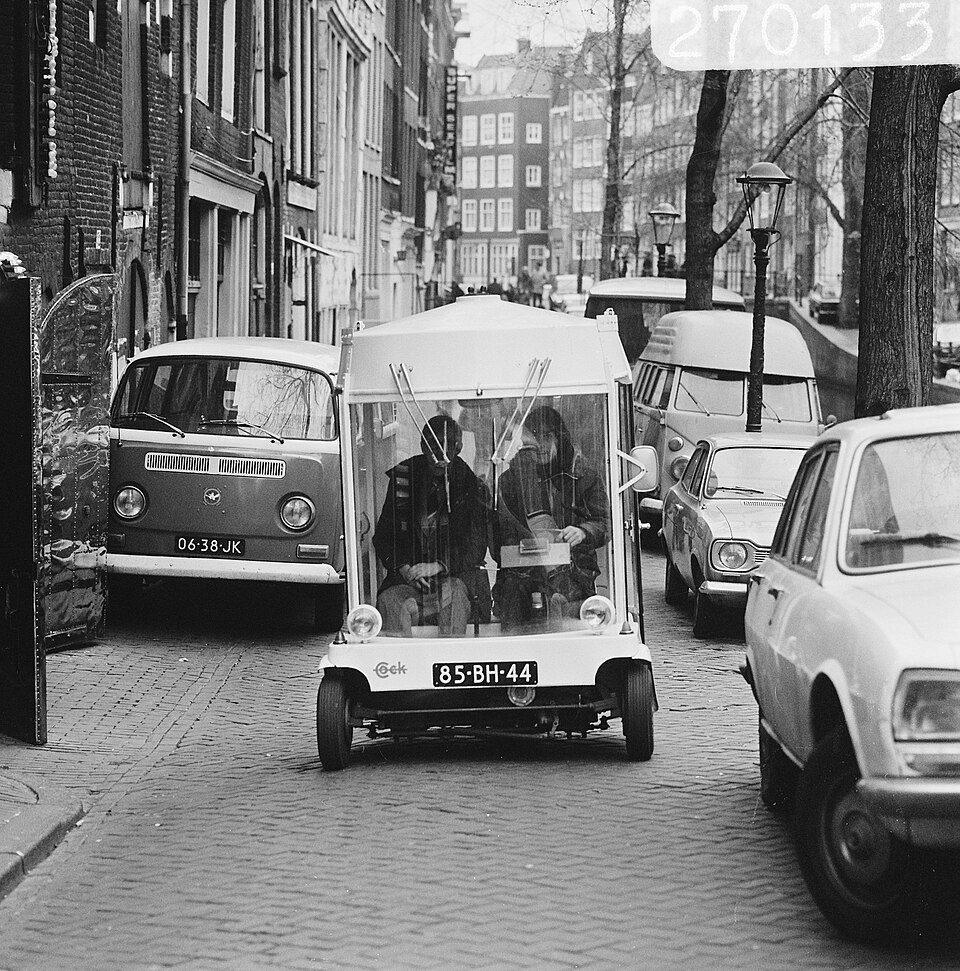
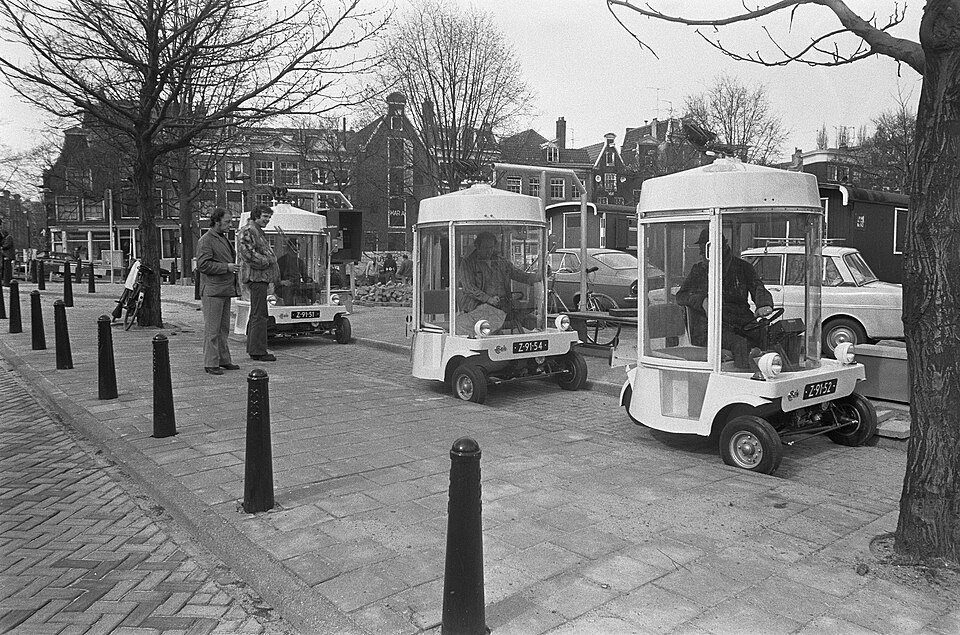
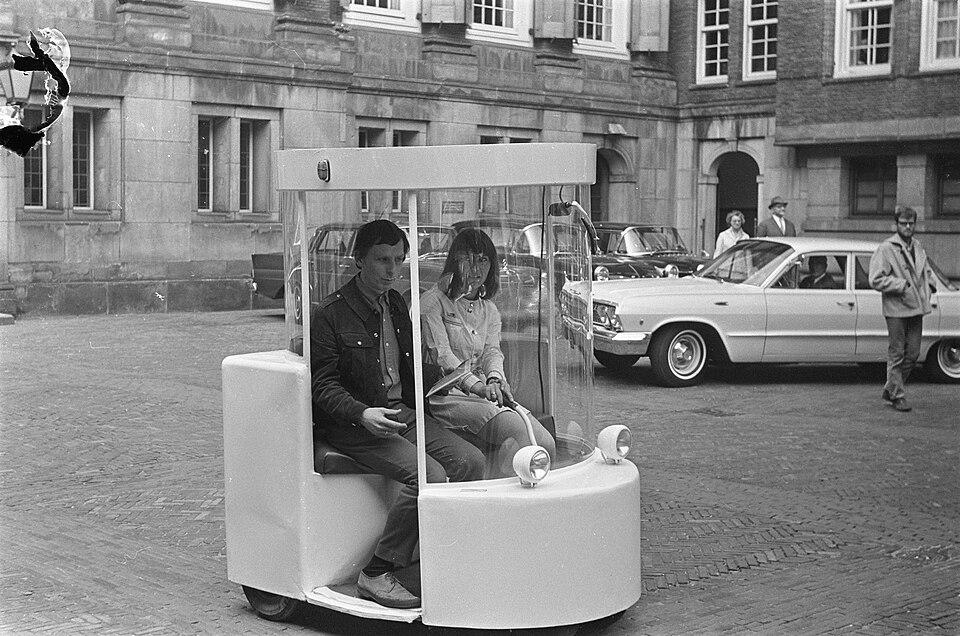
- Its tall white body has three wheels, two seats, extensive glazing and sliding side doors.
- A roof-mounted adaptor connected each parked vehicle to the station charging rail.
From Prototype to Public Network
- Luud Schimmelpennink was photographed presenting an early Witkar in Amsterdam on 24 May 1968.
- The first operational public station opened at Amstelveld on 21 March 1974, with Irene Vorrink performing the opening ceremony.
- The five documented station sites were Amstelveld, Elandsgracht, Nieuwmarkt, Oude Brugsteeg and Spui.
- Twenty-five new Witkars were assembled at Amstelveld in October 1975; the eventual fleet reached 35 vehicles.
Operating Limits and Preservation
- Worn batteries, electronic faults and uneven distribution of vehicles and empty destination spaces reduced availability.
- A transport-system review concluded that substantially more stations and participating members would have been needed for economic viability.
- Only three stations and about nine vehicles reportedly remained active shortly before the service ended in October 1986.
- Original Witkars survive in the collections of Amsterdam Museum, NEMO Science Museum and Louwman Museum.
Key facts
**Region:** Netherlands
**Associated With:** Luud Schimmelpennink - designer
**Defining Feature:** Station-based, one-way electric car sharing with computer-checked destinations
**Status:** Discontinued - operational service ended in October 1986; the last street vehicles were reported to have disappeared in 1988
Region
Netherlands
Associated With
Luud Schimmelpennink - designer
Defining Feature
Station-based, one-way electric car sharing with computer-checked destinations
Status
Discontinued - operational service ended in October 1986; the last street vehicles were reported to have disappeared in 1988
Images are included for historical and archival reference.
Rights holders may contact Forgotten Archive through the publishing account to request a credit correction or removal.