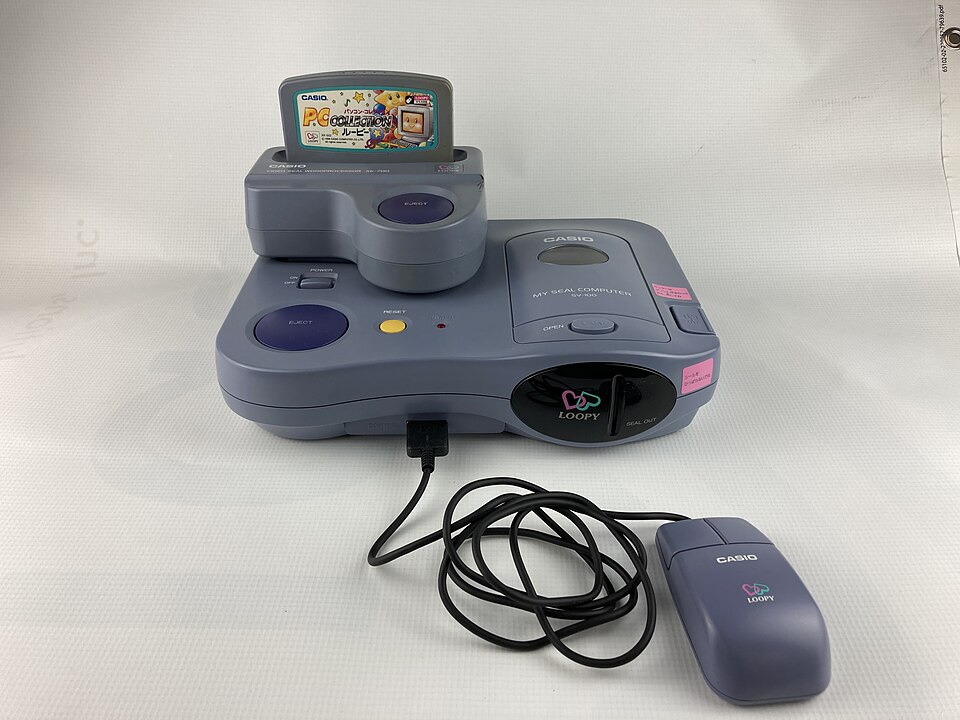
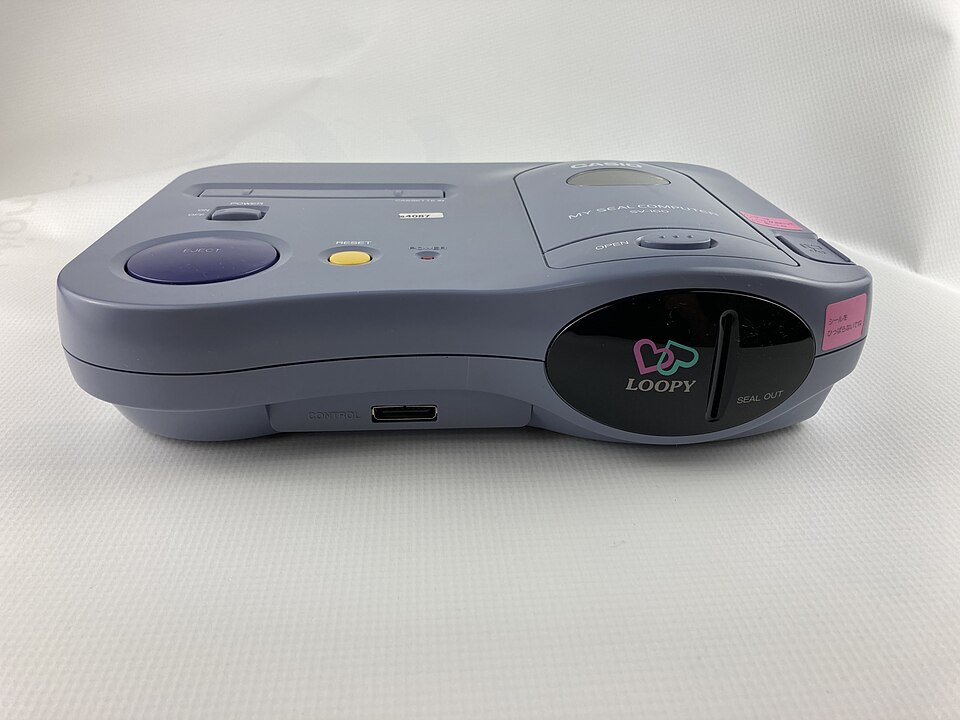
Casio My Seal Computer Loopy SV-100 was a Japan-only console with a built-in colour sticker printer.
Released in Japan in 1995, the 32-bit cartridge system connected to a television. Its software focused on dress-up, drawing, characters and making stickers. Games could also send selected on-screen images to the printer.
The optional Magical Shop captured still images from external audiovisual equipment for editing and printing. FEMICOM records the Loopy as sold between 1995 and 1997.
History
Released in Japan in 1995, the 32-bit cartridge system connected to a television. Its software focused on dress-up, drawing, characters and making stickers. Games could also send selected on-screen images to the printer.
History
The optional Magical Shop captured still images from external audiovisual equipment for editing and printing. FEMICOM records the Loopy as sold between 1995 and 1997.
Significance
The Loopy combined video gaming with physical creativity, allowing players to turn on-screen artwork and characters into printed stickers. Its focus on fashion, illustration and personal expression offered a different direction from the action-oriented console market of the mid-1990s.
Its marketing towards girls also reflected an attempt to reach an audience underserved by mainstream console manufacturers. The optional Magical Shop extended the concept beyond games, letting users incorporate images captured from external video equipment into their own sticker designs.
Hardware and Sticker Printing
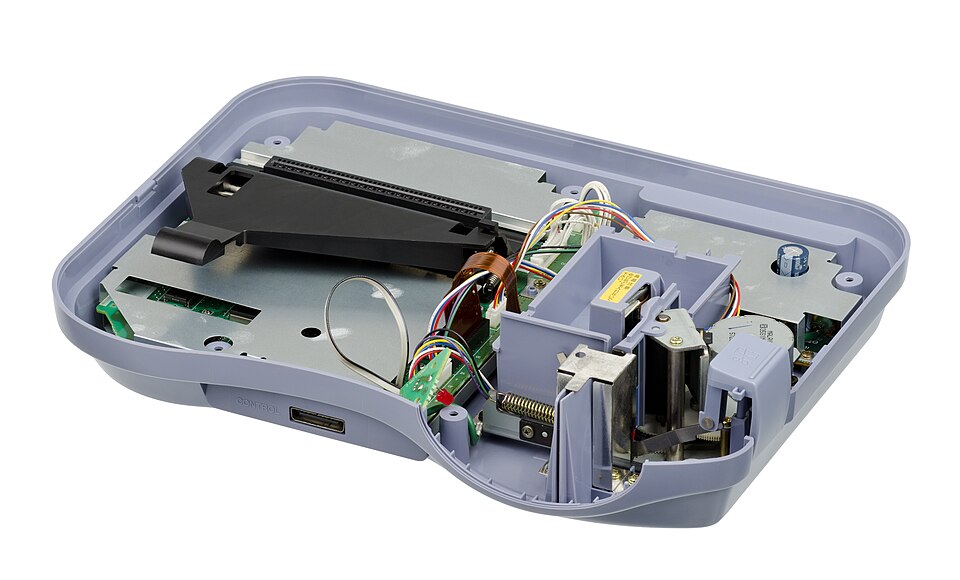
- Casio’s related patent describes the controller, CPU and printer section within the same housing.
- The built-in full-colour thermal printer could turn selected images from games into stickers.
- Magical Shop accepted input from equipment such as camcorders and VCRs, capturing still images for editing and printing.
Software and Japanese Release
- FEMICOM lists ten software titles plus Magical Shop, a hardware peripheral with built-in software rather than an eleventh cartridge game.
- The catalogue focused on fashion, dress-up, illustration, characters and sticker-making activities.
- The Loopy was released only in Japan in October 1995; the exact day remains unresolved.
- FEMICOM records the console as sold between 1995 and 1997.
Preservation and Technical Research
- FEMICOM preserves Loopy hardware, packaging and documentation, while the Centre for Computing History preserves console CH46785.
- Specialist preservation work has documented BIOS extraction and preliminary Loopy emulation.
- The Loopy-Tools repository contains development tools, scripts and hardware information for ongoing technical study.
- Ryuji Usami is named as inventor on Casio’s related printer-controller patent, but individual authorship of the retail console is not established.
**▶️ Watch Related Video**
Images are included for historical and archival reference.
Rights holders may contact Forgotten Archive through the publishing account to request a credit correction or removal.