TAKERU
Japan’s On-Demand PC-Software Kiosk Network
Forgotten Games · 1986–1997
Published
Region
Japan
Associated With
Brother Industries - developer
Defining Feature
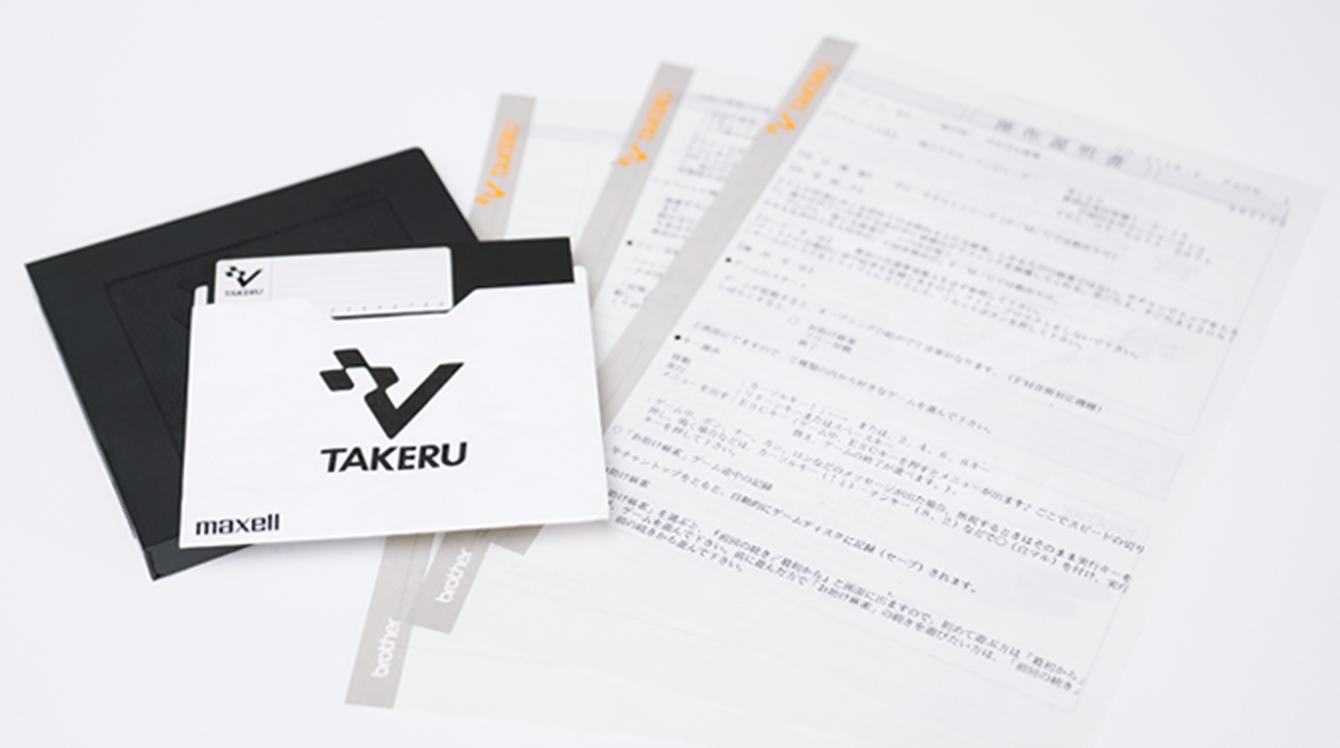
Cash-operated kiosks that wrote selected software to blank media and printed documentation
Status
Discontinued - trading ended in February 1997 after phased shop closures during January and February.
Overview
ソフトベンダーTAKERU was Brother’s Japanese kiosk network for selling computer software on demand from 1986 to 1997.
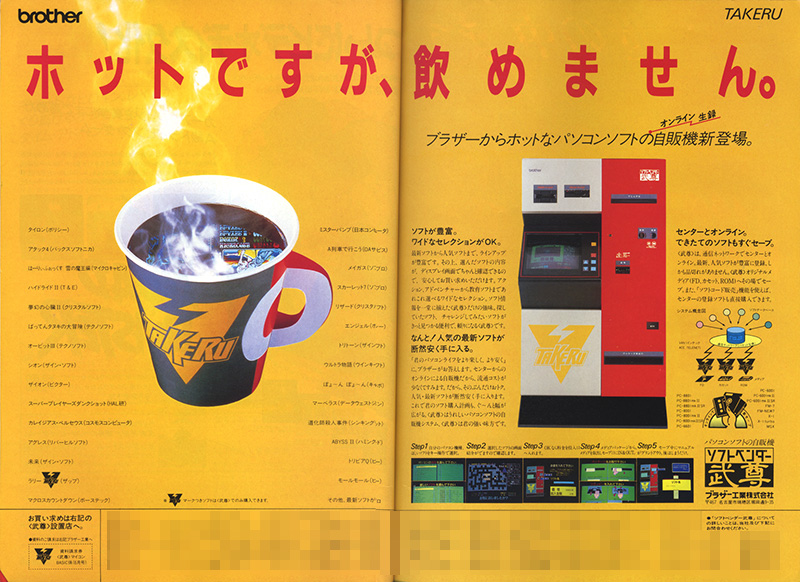
Customers chose a title and format, paid cash and received software written to blank media, with documentation printed by the machine. Frequently requested software could be cached inside the machine rather than retrieved again from the central network.
At its peak the network had approximately 300 machines across Japan, carrying games, utilities, business products, music data and independent software. Trading ended in February 1997, after shop closures phased across January and February.
Why It Mattered
TAKERU allowed Japanese computer shops to sell software without stocking a physical copy of every title. Its networked catalogue gave smaller publishers and independent developers access to retail customers, while supporting Japan’s unusually diverse home-computer formats.
The system anticipated aspects of digital distribution years before internet downloads became commonplace. Customers still visited a shop, inserted cash and left with freshly written media and printed instructions. Brother later applied experience gained through TAKERU to its JOYSOUND online-karaoke business.
Development and Commercial Rollout
- Yuichi Yasutomo’s interview chronology dates the concept proposal to 15 August 1983 and four blue SV-2000 prototypes to March 1985.
- Trial operation had reached Tokyo, Osaka and Nagoya by December 1985.
- Formal commercial service began on 21 April 1986 with a redesigned red cabinet, distinct from the blue prototype machines.
Machines and Software Delivery
- Customers searched an on-screen catalogue, selected a title and computer format, paid cash and handled blank media as directed by the kiosk.
- The machine wrote the software and printed its documentation; frequently requested data could be stored locally instead of being retrieved again over the network.
- Brother identifies three hardware generations: the blue SV-2000, red SV-2100 and yellow SV-2300.
Closure and Later Legacy
- Individual shop machines closed progressively during January and February 1997, with all TAKERU trading due to finish at the end of February.
- ASCII identifies 28 February as the final service day and reports final purchases and a farewell gathering at Laox in Akihabara.
- Brother associates the service’s end with larger software, the shift from floppy disks to CD-ROM and the spread of internet distribution.
- Brother staged a thirtieth-anniversary exhibition at Akihabara UDX in 2016, displaying a TAKERU machine and period software.
Primary Records
Gallery
Credit
Brother Industries — original 1986 advertisement; reproduced by AKIBA PC Hotline / Impress Watch.
Licence
Historical Ephemera
Displayed for commentary, criticism, research and historical documentation where permitted by applicable law. No permission for reuse is granted.
Caption
Brother revived a surviving TAKERU machine for its 30th-anniversary exhibition, restoring the yellow-and-white kiosk that once sold PC software from shop floors.
Credit
Brother Industries — TAKERU historical archive, surviving software media and documentation
Licence
Historical Ephemera
Displayed for commentary, criticism, research and historical documentation where permitted by applicable law. No permission for reuse is granted.
Caption
With its rear panel open, the machine reveals the physical hardware behind a service remembered as an early form of software downloading.