Count Duckula
Cosgrove Hall’s Vegetarian Vampire Duck
Forgotten TV & Film · 1988
Archived on
Associated With
Cosgrove Hall Productions; produced for Thames Television - creator or production company
Defining Feature
An animated Gothic comedy about a harmless vegetarian vampire, Igor, Nanny and a teleporting castle
Status
Discontinued - The original four-series run ended in 1993; episodes and production artwork survive
Overview
Count Duckula was a British animated comedy made by Cosgrove Hall Productions for Thames Television.
First broadcast on ITV on 6 September 1988, it followed a good-natured vegetarian vampire created when ketchup replaced blood during his resurrection.
He travelled with Igor and Nanny in a castle that could teleport around the world. The original run comprised four series and 65 episodes through 1993.
Why It Mattered
By turning Gothic horror into an eccentric children’s adventure, the series gave its Danger Mouse spin-off a distinctive identity and became closely associated with Cosgrove Hall’s inventive British animation of the late 1980s and early 1990s.
The Vegetarian Vampire Premise
- Duckula preferred broccoli, travel and fame to the bloodthirsty life Igor expected.
- His harmless nature conflicted with Igor’s expectations of a traditional vampire count.
- That contradiction supplied the programme’s central Gothic joke.
Voices and the Teleporting Castle
- David Jason voiced Count Duckula, Jack May voiced Igor and Brian Trueman voiced Nanny.
- Castle Duckula could teleport to new locations, allowing stories to move beyond Transylvania.
- The series developed from an earlier villainous Count Duckula in Danger Mouse.
- Episodes ran for approximately 22 minutes.
Original Run and Surviving Artwork
- The original run comprised four series and 65 episodes broadcast between 6 September 1988 and 16 February 1993.
- The Cosgrove Hall Films Archive preserves material associated with the studio.
- The Science Museum Group catalogues a Count Duckula animation cel and background made between 1988 and 1992.
- The programme also survives through home-media releases and streaming catalogues.
Sources & Records
- Science Museum Group — Count Duckula animation artwork — Identifies surviving animation artwork made by Cosgrove Hall and dates it to 1988–1992.
- Cosgrove Hall Films Archive — studio history — Places Count Duckula in the studio’s work and identifies it as a Danger Mouse spin-off.
- ITVX — Count Duckula episode catalogue — Documents the programme’s characters, episode stories and 22-minute format.
- ITV — Count Duckula returns for CITV’s anniversary weekend — Corroborates Cosgrove Hall’s authorship and the programme’s later anniversary screening.
Gallery
Credit
Count Duckula title artwork: Cosgrove Hall Productions / Thames Television; reproduced via Cosgrove Hall Wiki / Fandom.
Licence
Historical Ephemera
Displayed for commentary, criticism, research and historical documentation where permitted by applicable law. No permission for reuse is granted.
Caption
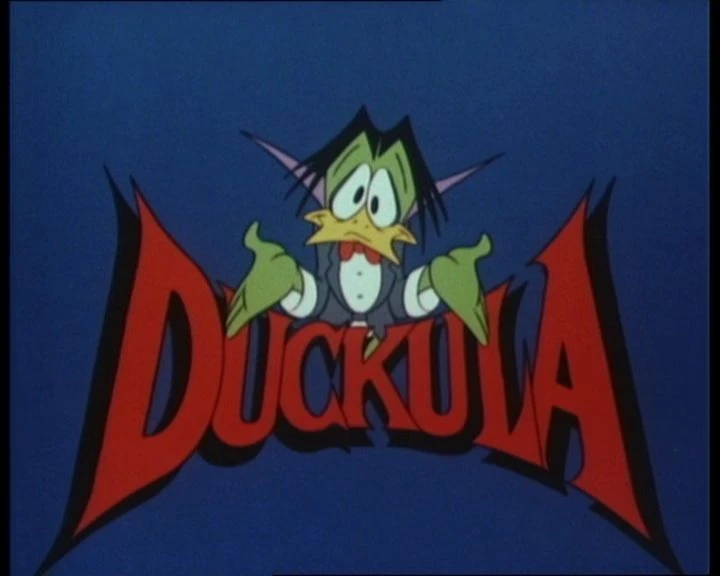
Count Duckula's title pairs the familiar vampire pose with a cartoon duck, signalling the comic reversal at the heart of the series.
Credit
Count Duckula programme still: Cosgrove Hall Productions / Thames Television
Licence
Historical Ephemera
Displayed for commentary, criticism, research and historical documentation where permitted by applicable law. No permission for reuse is granted.
Caption
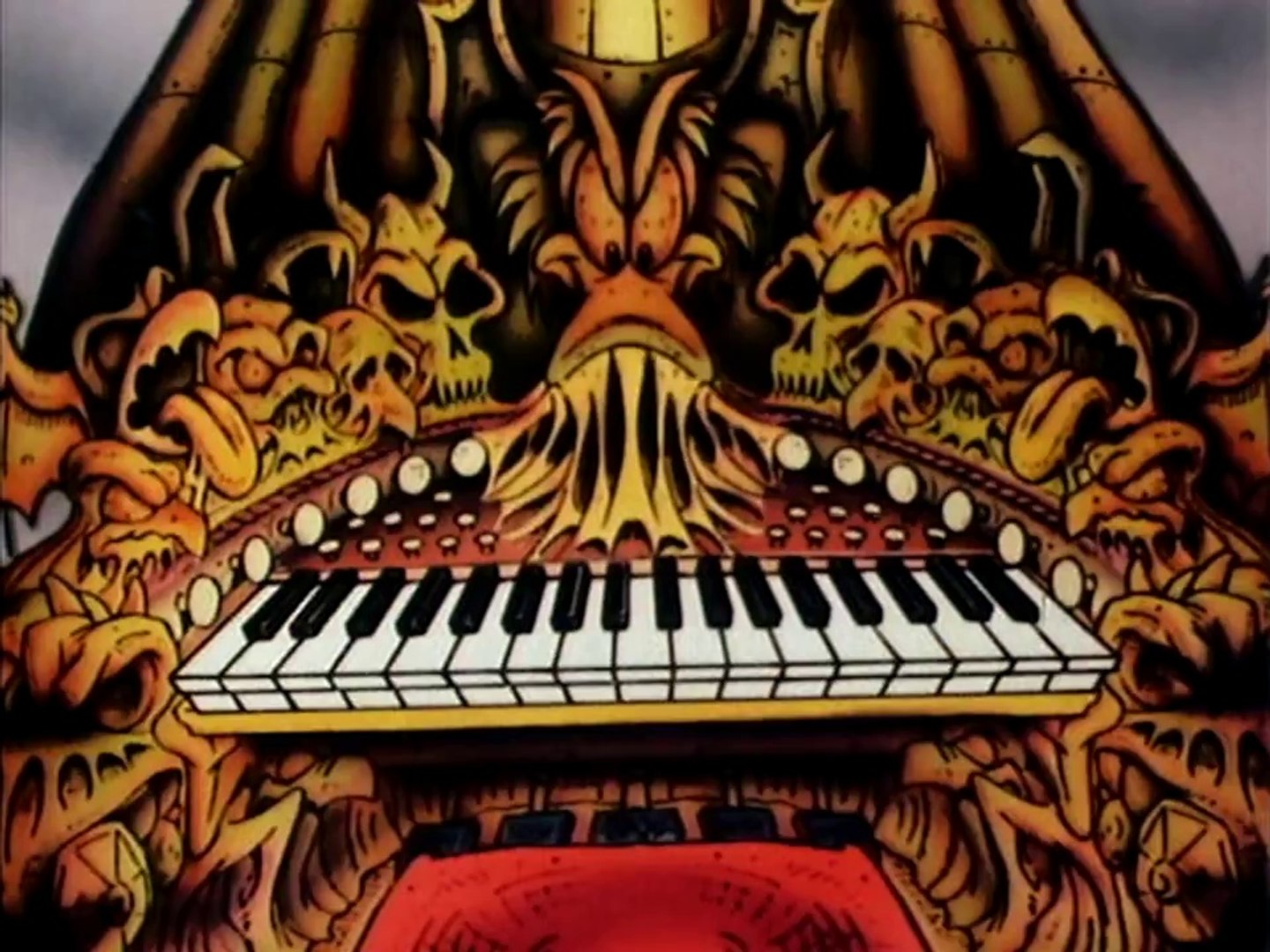
The elaborate organ sequence leans into gothic spectacle, giving Count Duckula a dramatic setting that the programme repeatedly undercuts with humour.
Credit
Count Duckula character artwork: Cosgrove Hall Productions / Thames Television
Licence
Historical Ephemera
Displayed for commentary, criticism, research and historical documentation where permitted by applicable law. No permission for reuse is granted.
Caption
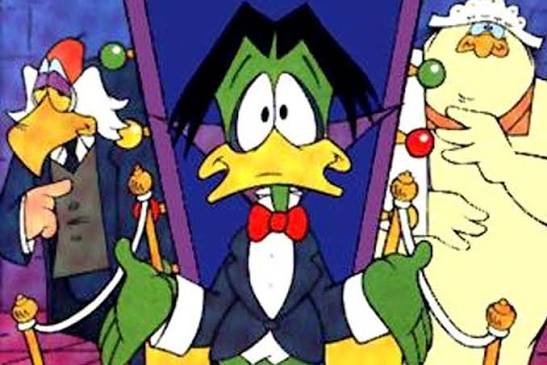
Duckula, Igor and Nanny bring incompatible expectations to the same household, with the vegetarian count's ambitions clashing with his companions' attachment to vampire tradition.
Credit
Count Duckula programme still: Cosgrove Hall Productions / Thames Television
Licence
Historical Ephemera
Displayed for commentary, criticism, research and historical documentation where permitted by applicable law. No permission for reuse is granted.
Caption
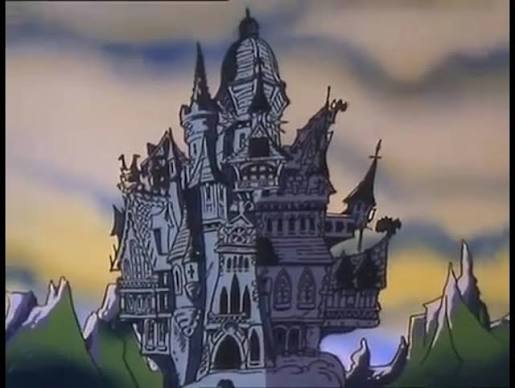
Castle Duckula's ability to travel turns the gothic home into a vehicle for adventures, letting the series move beyond its apparently fixed Transylvanian setting.
Credit
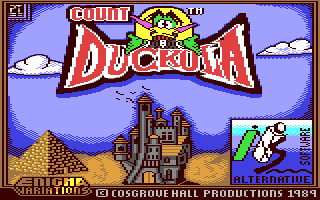
Count Duckula game title screen: Alternative Software; preserved by C64-Wiki
Licence
Historical Ephemera
Displayed for commentary, criticism, research and historical documentation where permitted by applicable law. No permission for reuse is granted.
Caption
The Commodore 64 adaptation carries Count Duckula's cartoon identity into a home-computer game, part of the character's life beyond the original television episodes.