The Pogles
The Children’s Series Considered Too Frightening
Forgotten TV & Film · 1965
Archived on
Associated With
Oliver Postgate and Peter Firmin / Smallfilms - creator or production company
Defining Feature
Six-part black-and-white stop-motion fairy tale featuring a shape-changing Witch
Status
Discontinued - Ended after one series; reworked as the gentler Pogles’ Wood
Overview
The Pogles was a six-part BBC stop-motion children's series first broadcast in black and white in 1965.
Created by Oliver Postgate and Peter Firmin through Smallfilms, it used physical puppets to tell a continuous woodland fairy tale about the Pogle family and a threatening shape-changing Witch.
The programme ended after one series and was reworked as the gentler Pogles’ Wood in 1966. All six original episodes survive, along with Firmin’s Witch puppet.
Why It Mattered
The Pogles took a darker fairy-tale approach than the gentler Smallfilms programmes that followed, with kidnapping, imprisonment and repeated threats from the Witch. The BBC considered its tone too frightening for the young Watch with Mother audience.
Smallfilms recast the concept around everyday woodland life. The Witch disappeared, the baby became Pippin, and the characters returned in 1966 as Pogles’ Wood.
Production and Broadcast
- Oliver Postgate and Peter Firmin created the programme through Smallfilms in Blean, near Canterbury.
- Postgate wrote, animated and narrated it, while Firmin made its puppets and artwork.
- The BBC broadcast six episodes from 29 July to 2 September 1965.
- Vernon Elliott composed the music.
The Witch’s Continuous Story
- Mr and Mrs Pogle lived inside a hollow tree and discovered an abandoned baby carrying the King of the Fairies’ silver crown.
- A shape-changing Witch pursued the crown through a continuous story involving kidnapping, imprisonment and magical transformations.
- The BBC considered the tone too frightening for the young Watch with Mother audience.
- Smallfilms was asked to develop gentler stories centred on everyday woodland life.
The Gentler Successor and Survival
- The characters returned in 1966 in Pogles’ Wood without the Witch.
- The baby became Pippin, while Tog appeared only in the successor series.
- Twenty-six episodes were produced between 1966 and 1968, with BBC repeats continuing until 1973.
- Firmin’s Witch puppet is preserved at The Beaney House of Art and Knowledge and appeared in the V&A Museum of Childhood’s Bagpuss & Co. exhibition in 2016.
Sources & Records
- Radio Times — the making of Pogles’ Wood — Explains the six-part original’s frightening Witch, its gentler successor and the puppets preserved at the Beaney.
- Fantasy/Animation — handmade television and the Pogles Witch — Documents the surviving Witch puppet at the 2016 museum exhibition and discusses the original programme’s frightening tone.
- The Beaney — Bagpuss and Friends exhibition guide — Lists The Pogles as six black-and-white BBC episodes from 1965 and distinguishes it from the 26 episodes of Pogles’ Wood made in 1966–68.
Gallery
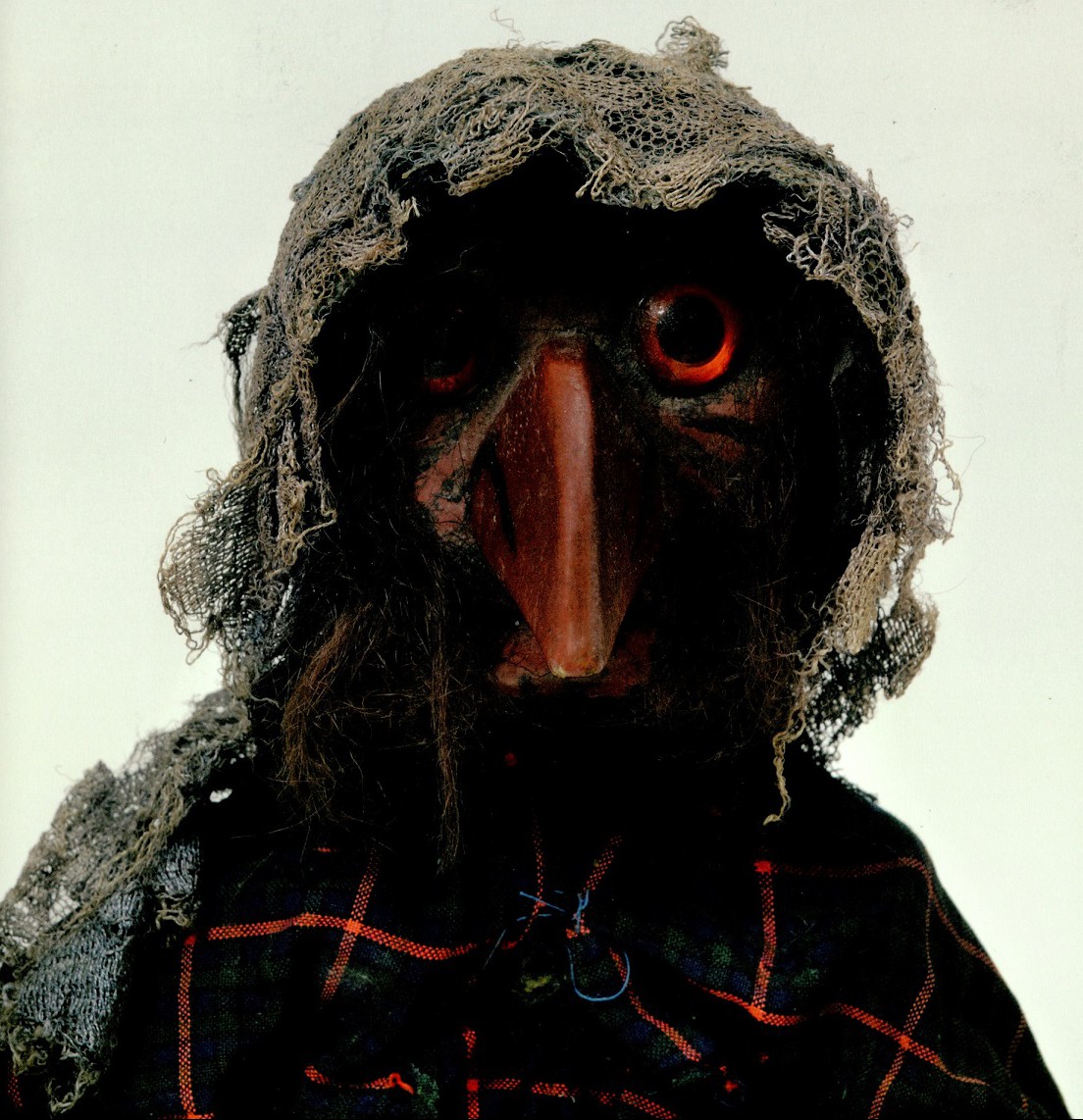
Credit
The Pogles puppet and programme imagery; reproduced by Tyger Tale
Licence
Historical Ephemera
Displayed for commentary, criticism, research and historical documentation where permitted by applicable law. No permission for reuse is granted.
Caption
The Witch introduced a threatening presence into The Pogles' woodland world, showing how unsettling the earliest stories could be.
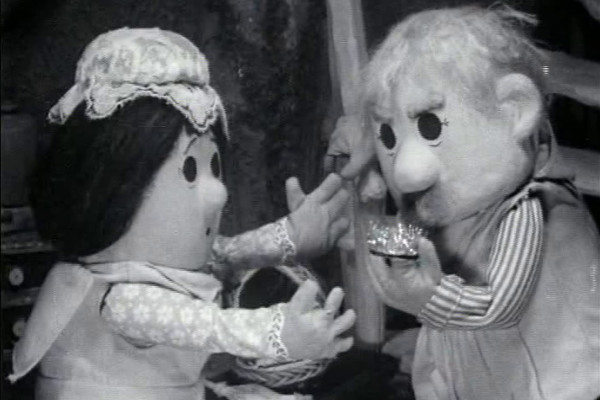
Credit
The Pogles programme still; reproduced by AnorakZone
Licence
Historical Ephemera
Displayed for commentary, criticism, research and historical documentation where permitted by applicable law. No permission for reuse is granted.
Caption
Mr and Mrs Pogle's domestic routines grounded the series' magic in a small, recognisable woodland household.
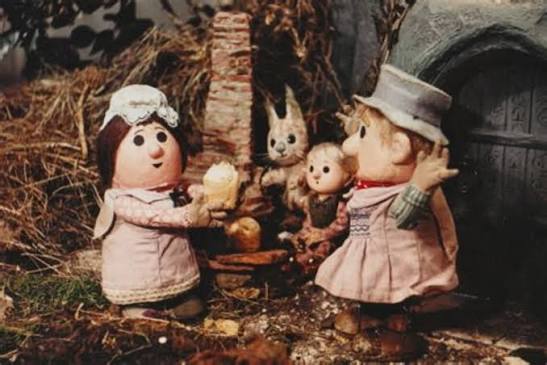
Credit
The Pogles programme imagery; supplied via BAFTA's Peter Firmin feature
Licence
Historical Ephemera
Displayed for commentary, criticism, research and historical documentation where permitted by applicable law. No permission for reuse is granted.
Caption
The woodland family reflects the small-scale puppet worlds associated with Peter Firmin's work, where handmade characters lived among recognisable natural textures.