Ghost Turnip
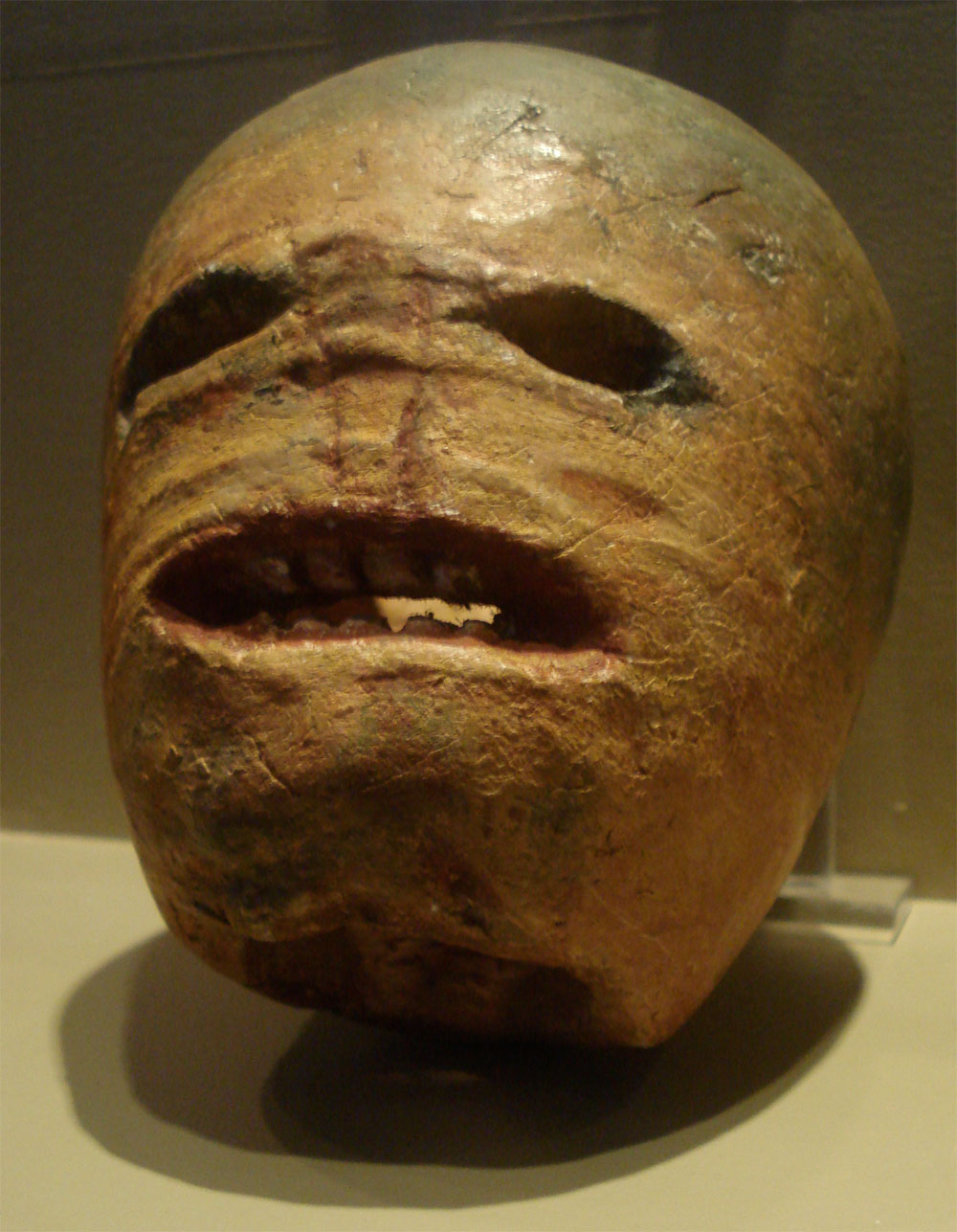
Painted Cast of a Donegal Halloween Lantern
Forgotten History · 1943
Archived on
Region
Ireland
Associated With
National Museum of Ireland - recipient and custodian; Róis Ní Braonáin - donor of original lantern; Eileen Barnes - creator and painter of plaster-cast model
Defining Feature
Painted plaster cast preserving the face of a Donegal Halloween turnip lantern
Status
Preserved - plaster-cast model listed as on display
Overview
Ghost Turnip is a painted plaster cast of a carved Halloween turnip lantern from County Donegal.
The National Museum of Ireland received the original lantern from Fintown schoolteacher Róis Ní Braonáin in 1943. Museum artist Eileen Barnes created and painted the cast, reproducing its narrow eyes, small mouth and tooth-like forms.
Ní Braonáin described this kind of lantern as typical of local Halloween practice around 1900. The cast is listed as on display at the Museum of Country Life in County Mayo.
Why It Mattered
Casting preserved something that would normally shrivel and disappear. The painted model kept the particular face of a Donegal household lantern available to later museum visitors. It gives the wider Halloween tradition a specific object, donor and place, rather than reducing many local practices to one generic symbol.
Dates and Attribution
- 1943 is the confirmed year when the museum received the original lantern, not a confirmed carving or casting date.
- Róis Ní Braonáin associated this kind of lantern with local practice near Fintown around 1900, but that does not date this specimen.
- The original carver is unidentified; Ní Braonáin donated the lantern, while Eileen Barnes created and painted the plaster-cast model.
Museum Object and Display
- The National Museum of Ireland catalogues “Ghost turnip” as accession F1943.350, associated with Fintown, County Donegal.
- When accessed on 04/10/2026, the museum listed the cast as on display in the National Folklife Collection at the Museum of Country Life, Turlough Park, Castlebar.
- The original vegetable was reported to be close to disintegration, but its eventual fate and the cast’s moulding process are undocumented in the cited records.
- No measurements are supplied for the cast.
Recorded Donegal Lantern Practice
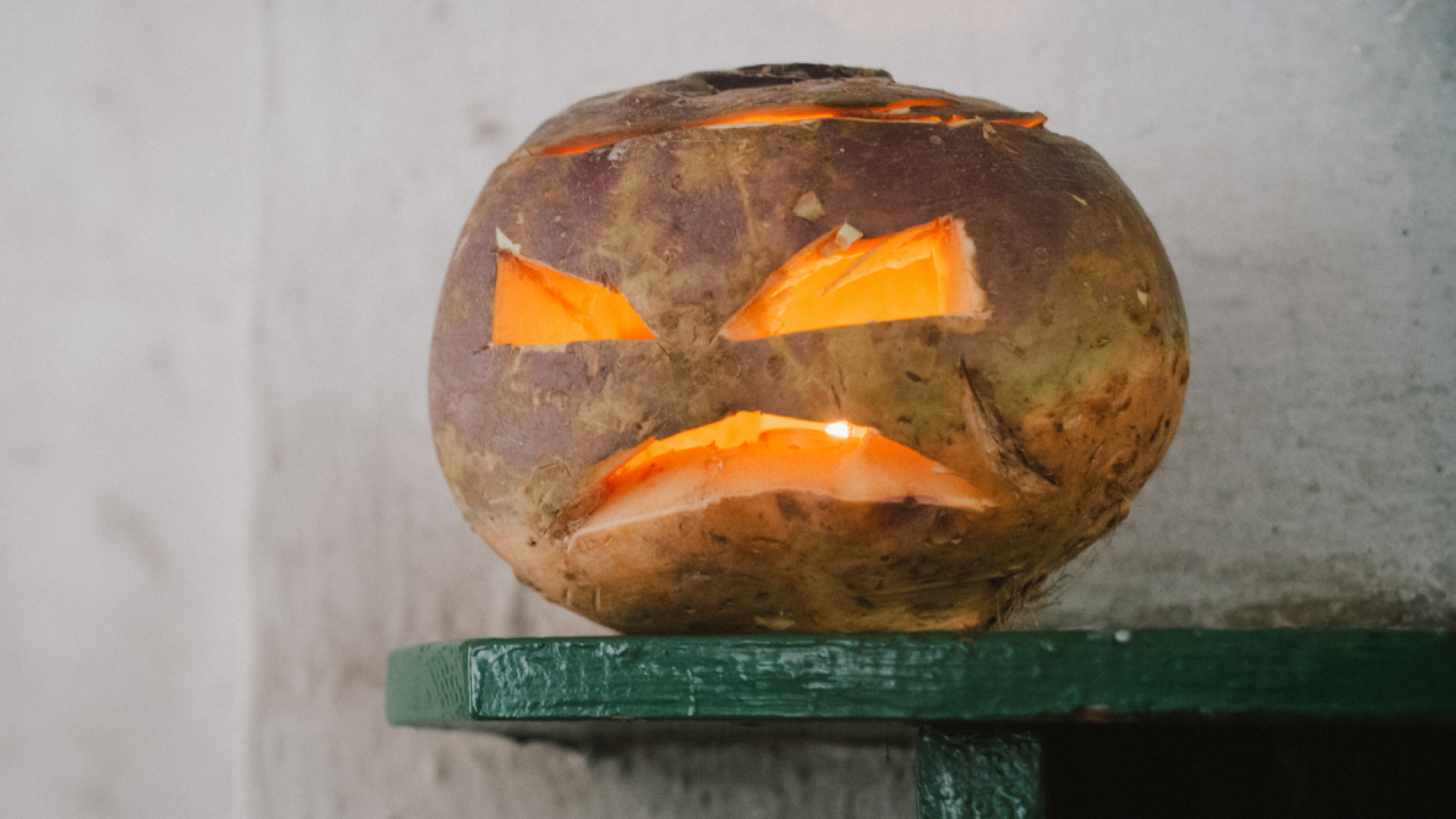
- A Donegal account in The Schools’ Collection describes hollowing a turnip, cutting facial openings and placing a lighted candle inside.
- The account says young people hung the lanterns from trees to frighten people on Halloween night.
- This testimony documents a wider Donegal practice rather than the individual history of accession F1943.350.
- No manufacturer, retail market, standard lantern pattern or named turnip variety is associated with the museum object.
Sources & Records
National Museum of Ireland — Ghost turnip, F1943.350
Identifies the painted plaster cast, its Donegal donor, Eileen Barnes and the museum’s receipt of the lantern in 1943.
“Don’t forget the turnip this Halloween” says English Heritage
English Heritage release documenting a 2015 Dover Castle display and providing a bounded UK comparison. It is not evidence for the provenance or manufacture of F1943.350. Accessed 2026-10-04.
Highlight objects from the Irish Folklife Collection
National Museum of Ireland collection guide locating the object in the National Folklife Collection at the Museum of Country Life, Turlough Park. Accessed 2026-10-04.
Homemade Toys: Three Trees, Donegal — Schools’ Collection, page 415
Records a separate Donegal account of making and hanging candle-lit turnip lanterns; it is not the biography of the museum object.
Gallery
Credit
Rannpháirtí anaithnid
Caption
Eileen Barnes’s painted plaster cast preserves the likeness of a Donegal Halloween turnip lantern. The original lantern reached the museum in 1943; that date does not establish when the cast was made.
Credit
Ulster Folk Museum
Licence
Historical Ephemera
Displayed for commentary, criticism, research and historical documentation where permitted by applicable law. No permission for reuse is granted.
Caption
The lantern tradition depended on a light inside a carved root. This example helps explain the practice preserved by the museum’s painted plaster cast.
Credit
Culture Vannin
Licence
The source records this image as public domain. No copyright licence is required for the photograph; other rights may apply.
Caption
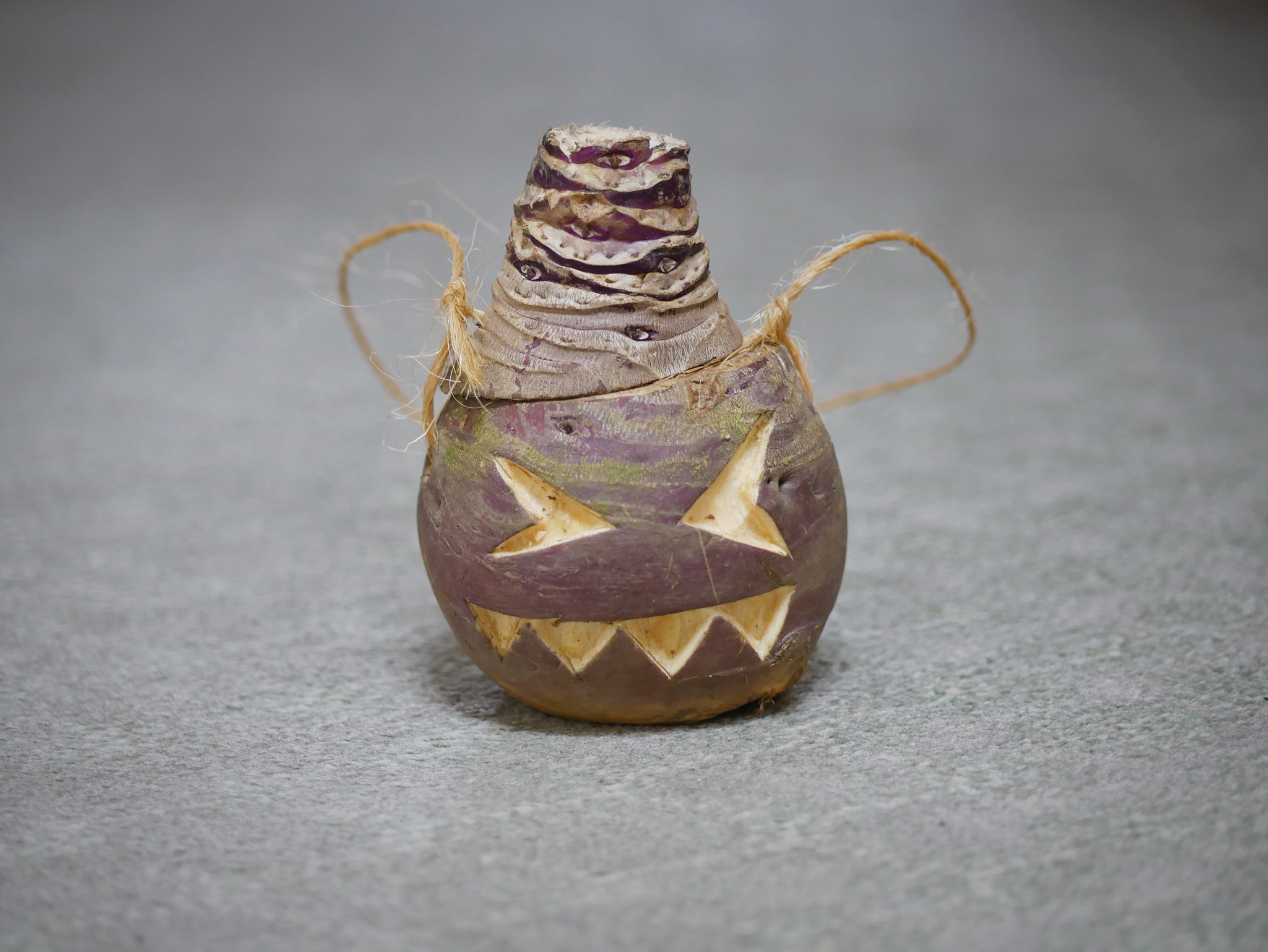
A carrying handle made a carved turnip portable as well as frightening. Such examples give context to the Donegal lantern recorded in 1943.