Pears’ Soap advertising
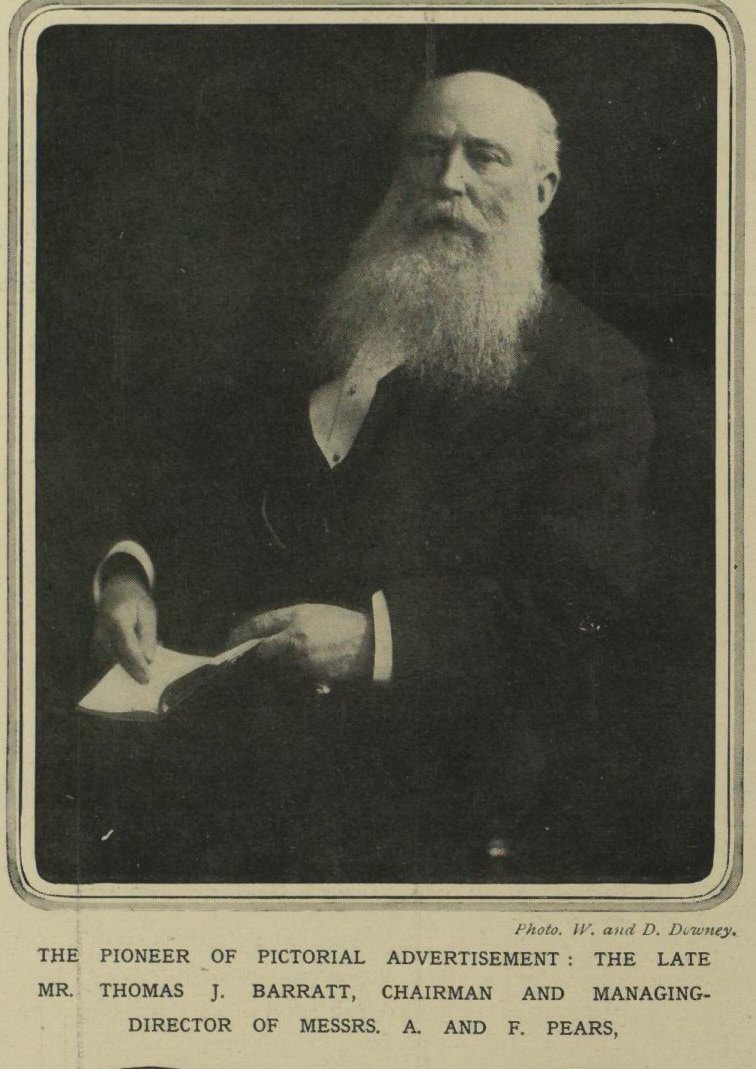
How Thomas J. Barratt made advertising recognisable
Forgotten Adverts · 1864–1890s
Archived on
Region
United Kingdom
Associated With
A. & F. Pears - advertiser
Defining Feature
Soap advertising that combined product claims, art and named endorsements
Status
Preserved
Overview
Pears turned soap advertising into a visual system of product claims, art and recognisable images.
Barratt joined A. & F. Pears in 1864 and became its central advertising figure. Surviving advertisements from the 1880s and 1890s show practical claims about skin and complexion alongside commissioned artwork, celebrity names, children and scenes of washing or shaving.
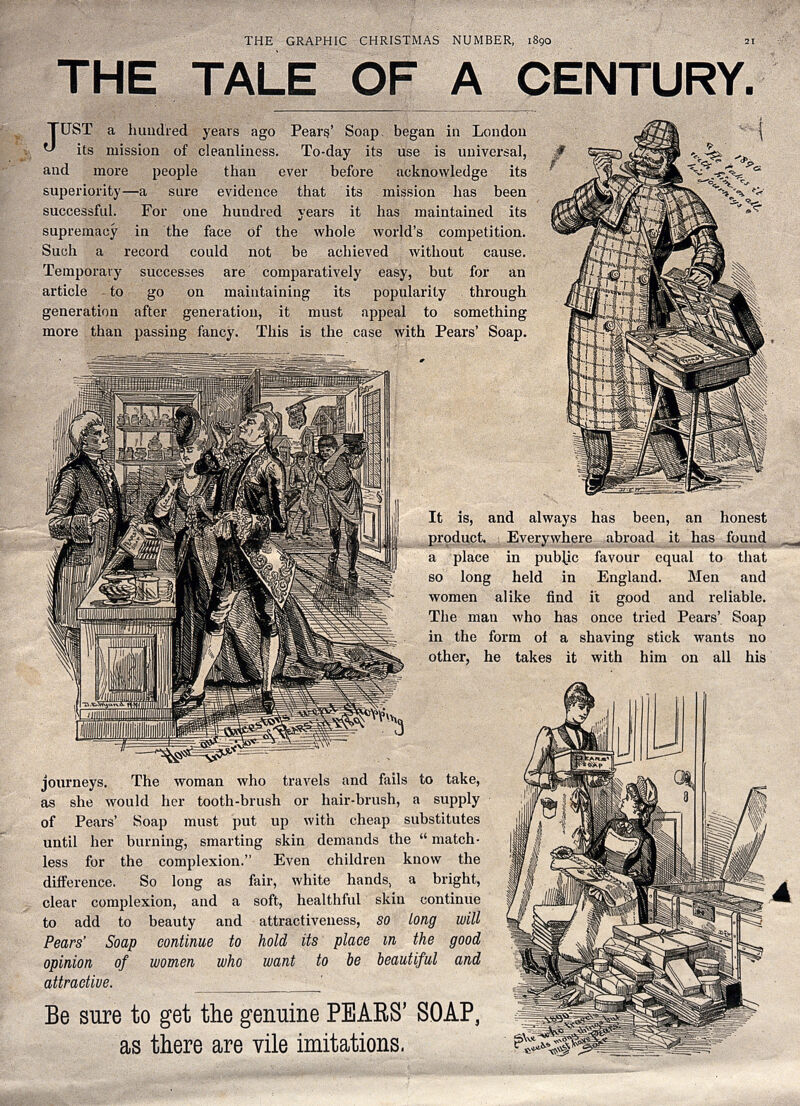
The 1890 ‘Tale of a Century’ advertisement made the method explicit: long claims about reliability and everyday use sat beside illustrated scenes of shopping, travel and domestic life. ‘Bubbles’, catalogued as a Pears magazine insert in 1890, became another durable part of that visual repertoire.
Why It Mattered
Advertising gave a routine household product cultural meaning beyond its immediate use. Art and endorsement gave soap the authority of taste, medicine and celebrity, while repetition made the brand easy to recognise across different formats. That legacy was not neutral. Pears also used racist whitening imagery, tying cleanliness and complexion to discriminatory Victorian ideas about race. The surviving adverts therefore document both an influential advertising method and the values it helped circulate.
Barratt and the system
- Barratt joined A. & F. Pears in 1864 and became its central advertising figure, but the surviving record does not support calling him the sole creator of every campaign or artwork.
- No single defensible date marks one first Pears campaign; the retained objects establish a developing system across the 1880s and 1890s.
Art, endorsements and repetition
- Pears repeated its name across product claims, commissioned art, celebrity endorsements and scenes of everyday washing or shaving.
- The Tale of a Century and Bubbles show how different visual formats could still reinforce one recognisable brand.
What the imagery carried
- The adverts linked soap to cleanliness, complexion, taste and social approval.
- Some Pears advertising also used racist whitening imagery; preserving the campaign history requires recording that discriminatory message rather than treating the visual system as neutral.
Selected Sources
Science Museum Group collection record — The institutional history records Barratt joining Pears in 1864 and documents the company’s advertising development and problematic racial imagery.
Pears’ Soap: The Tale of a Century
1890 — The surviving advertisement combines extended product claims with illustrated scenes of shopping, travel and domestic use.
1880s–1890s — The Wellcome record preserves a Pears complexion advertisement and its visual and medicalised product language.
Gallery
Credit
After D. E. Wyund; The Graphic, 1890; Wellcome Collection
Caption
The 1890 Tale of a Century advertisement combines Pears product claims with scenes of shopping, travel and domestic use.
Credit
W. & D. Downey; via Wikimedia Commons
Caption
A printed portrait identifies Thomas J. Barratt as chairman and managing director of A. & F. Pears.