Tampax TSS Advertising and Litigation
When Health Warnings Entered Period-Product Advertising
Forgotten Adverts · 1980–1993
Archived on
Region
United States; Spain
Associated With
Tampax Inc. / Tambrands - advertiser and manufacturer
Defining Feature
A brand education campaign alongside new federal warnings and case-specific litigation
Status
Ended
Overview
Tampax’s 1980s advertising unfolded as toxic shock syndrome changed how tampons were discussed and labelled.
The syndrome was recognised in menstruating women in 1980. Later CDC work linked risk particularly to the withdrawn Rely tampon and to absorbency, while an early 52-case study had not found a significant difference by brand or labelled absorbency. Rely was a Procter & Gamble product, not Tampax.
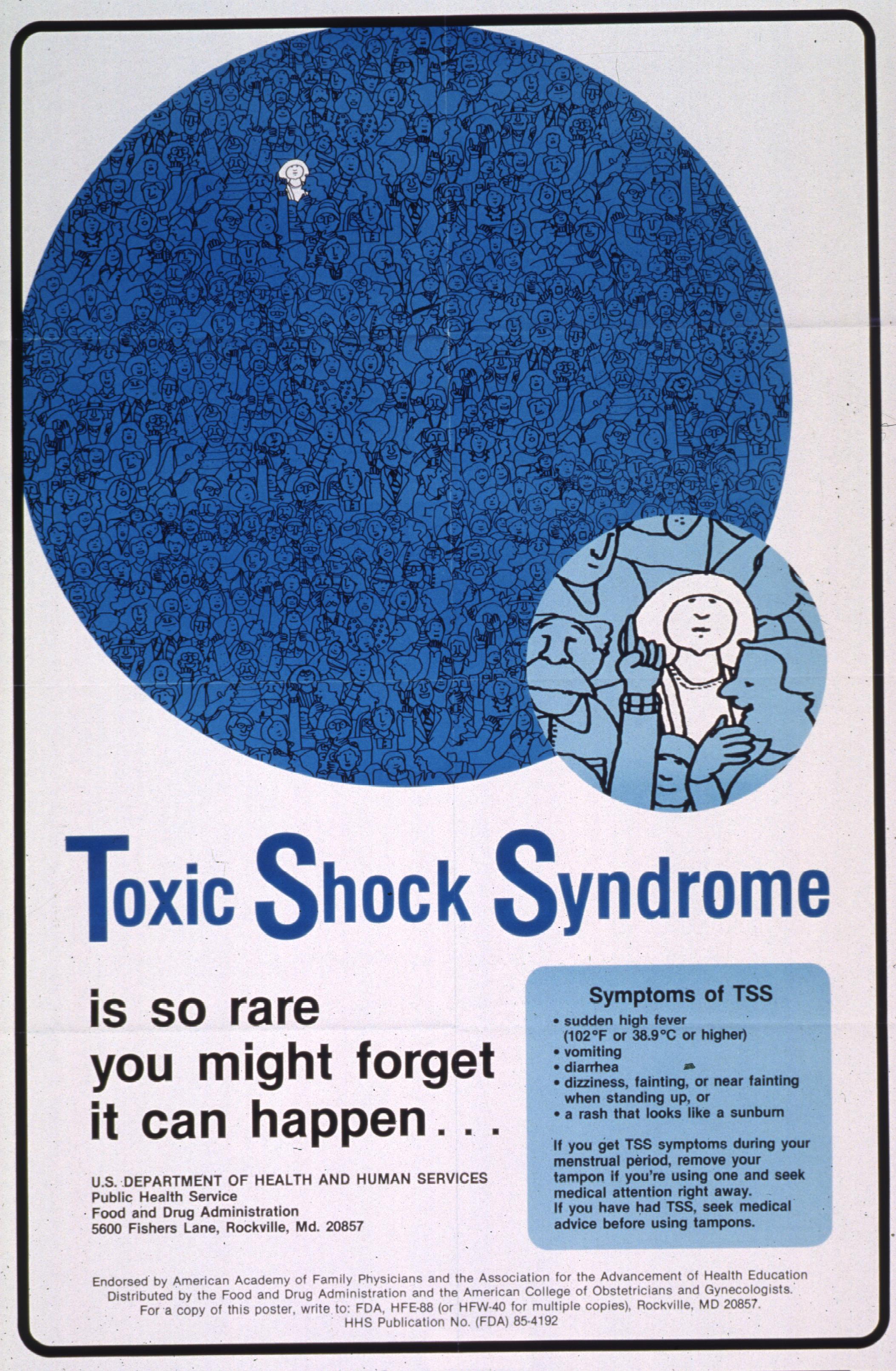
Tampax says it began a TSS education campaign during the decade. In 1982, the FDA required TSS information and warnings on menstrual-tampon packaging. Individual suits involving Tampax followed their own evidence and legal questions; they did not produce one universal verdict on the brand or on tampon use.
Why It Mattered
Risk information moved into the consumer’s encounter with the product itself. A health issue previously carried through medical studies and news coverage now also appeared in regulated package warnings and company education.
That makes the episode more than a story about one advert. It shows advertising, public-health regulation and litigation responding to the same concern through different rules of evidence. Tampax’s 1985 television claim to have used the word “period” belongs to that wider shift toward more direct language, but it should not be mistaken for proof about medical causation or the outcome of any case.
What the medical evidence established
- The 1980 study associated menstrual TSS with tampon use but did not find a significant brand difference in its 52-case sample.
- Later CDC analysis reported substantially greater risk among users of Rely and increasing risk with absorbency.
The 1982 warning rule
- The FDA required TSS information and a package alert for covered menstrual tampons.
- The rule put continuing risk information alongside the consumer product rather than leaving it only in news and clinical material.
Advertising responded separately
- Tampax’s own history says it ran a TSS education campaign during the 1980s.
- The company also dates a television advert using the word period to 1985; the exact first-broadcast claim remains a company account.
- A contemporary Spanish letter described a Tampax advertisement responding to TSS reports; it does not establish identical US advertising.
Litigation was case-specific
- Varley concerned a wrongful-death claim involving Tampax Super and turned on its own evidence and procedure.
- Sloman considered warning and punitive-damages claims, including federal pre-emption; neither decision was a universal verdict on tampon use.
Selected Sources
7 June 1991 — CDC reconstructs recognition of menstrual TSS, the elevated risk associated with Rely, absorbency findings and the later decline in reported cases.
Toxic-Shock Syndrome in Menstruating Women
18 December 1980 — The early case-control study linked cases with tampon use while finding no significant difference by brand or labelled absorbency in its sample.
Menstrual Tampons; User Labeling
22 June 1982 — The FDA final rule required TSS information and warning language for covered menstrual-tampon packaging.
Gallery
Credit
U.S. Food and Drug Administration; National Library of Medicine
Caption
A 1985 FDA poster warned tampon users about toxic shock syndrome symptoms and urged immediate medical attention.