Dunlop Maxaret
The flywheel that fought a skid
Forgotten Engineering · 1952–1966
Archived on
Region
United Kingdom
Associated With
Dunlop Rubber Company Limited - developer
Defining Feature
A flywheel-operated valve that automatically eased brake pressure
Status
Unresolved
Overview
Dunlop Maxaret was a mechanical anti-skid system that eased brake pressure when a wheel began to lock.
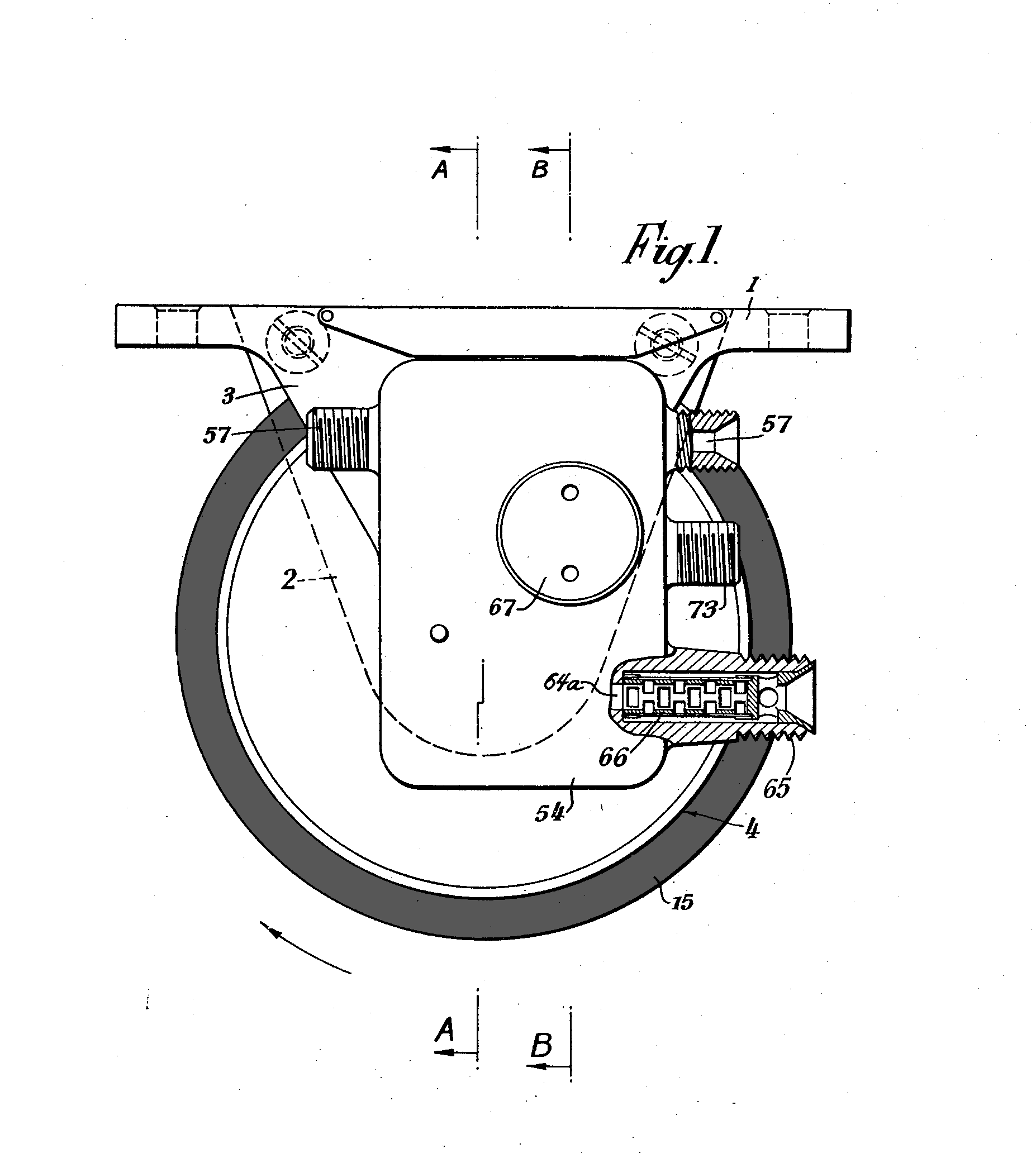
Built for aircraft, it compared a slowing wheel with a wheel-driven inertia flywheel. Their relative movement operated a valve that reduced brake pressure, then restored it as the wheel recovered. A 1959 Motor Sport account said Maxaret had been available for aircraft since 1952; the underlying apparatus had earlier patent milestones.
Dunlop also took the idea onto the road. Aircraft units were adapted for an experimental Mark VII Jaguar, which required powered hydraulic brakes, and Commercial Motor reported an articulated-lorry demonstration in 1966. These were specialised trials, not evidence that Maxaret became a standard production-car feature.
Why It Mattered
A developing skid became a mechanical signal that could trigger automatic brake-pressure changes. Its flywheel-and-valve mechanism could alter brake pressure automatically, and the foundational patent stated an aircraft aim of relieving the pilot of duties connected with brake control.
That control principle matters more than an unsupported claim to being the first ABS. The Jaguar and lorry trials show engineers carrying mechanical feedback from aircraft into road experiments. They also show its limits: the Jaguar installation depended on a full-power braking system, so Maxaret was not simply a device that could be added to an ordinary car.
A flywheel watched the wheel
- The apparatus used relative movement between a decelerating wheel and an inertia flywheel to trigger a reduction in brake pressure.
- Pressure returned as wheel rotation recovered, creating a mechanical feedback cycle without an electronic controller.
- The foundational patent had British priority in 1949 and was published in the United States in 1953; Motor Sport later reported aircraft availability from 1952.
From aircraft to Jaguar
- Motor Sport reported that Dunlop adapted aircraft units to an experimental Mark VII Jaguar.
- The compact test unit drove its flywheel faster than the road wheel and required a full-power hydraulic braking arrangement.
- The experiment demonstrates a road application, not general production-car adoption.
The controlled artic demonstration
- Commercial Motor described a Maxaret-equipped articulated lorry demonstrated at Fort Dunlop in 1966.
- The system acted on the driving axle's air-pressure brakes under deliberately controlled test conditions.
- The retained sources do not establish a formal withdrawal date or final use, so the historical status remains Unresolved.
Selected Sources
Automatic Braking Apparatus for Aircraft — US Patent 2,656,017
20 October 1953 — Primary patent describing Trevaskis's wheel-driven flywheel apparatus, its pressure-release and restoration action, and its assignment to Dunlop.
The Dunlop Maxaret — Motor Sport
January 1959 — Contemporary account of reported aircraft availability and Dunlop's experimental Mark VII Jaguar installation, including its powered-brake requirement.
Maxaret: Controlled Artic — Commercial Motor
16 September 1966 — Contemporary trade report on Dunlop's articulated-lorry demonstration and the system fitted to the driving axle's air brakes.
Gallery
Credit
Henry William Trevaskis / Dunlop Rubber Co. Ltd., US Patent 2,656,017 / Wikimedia Commons
Caption
The foundational Maxaret apparatus used wheel-driven inertia and a valve mechanism to reduce brake pressure when deceleration signalled an incipient skid.