British Airgraph Service
Letters Shrunk for Flight
Forgotten Engineering · 1941–1945
Archived on
Region
United Kingdom; Egypt; India; Sri Lanka; Seychelles
Associated With
Kodak Ltd - photographic work provider
Defining Feature
Handwritten letters photographed on to miniature film and enlarged after air transport
Status
Closed - Postal Museum guide reports service ended on 31 July 1945
Overview
Airgraph turned handwritten wartime letters into microfilm small enough to fly across long routes.
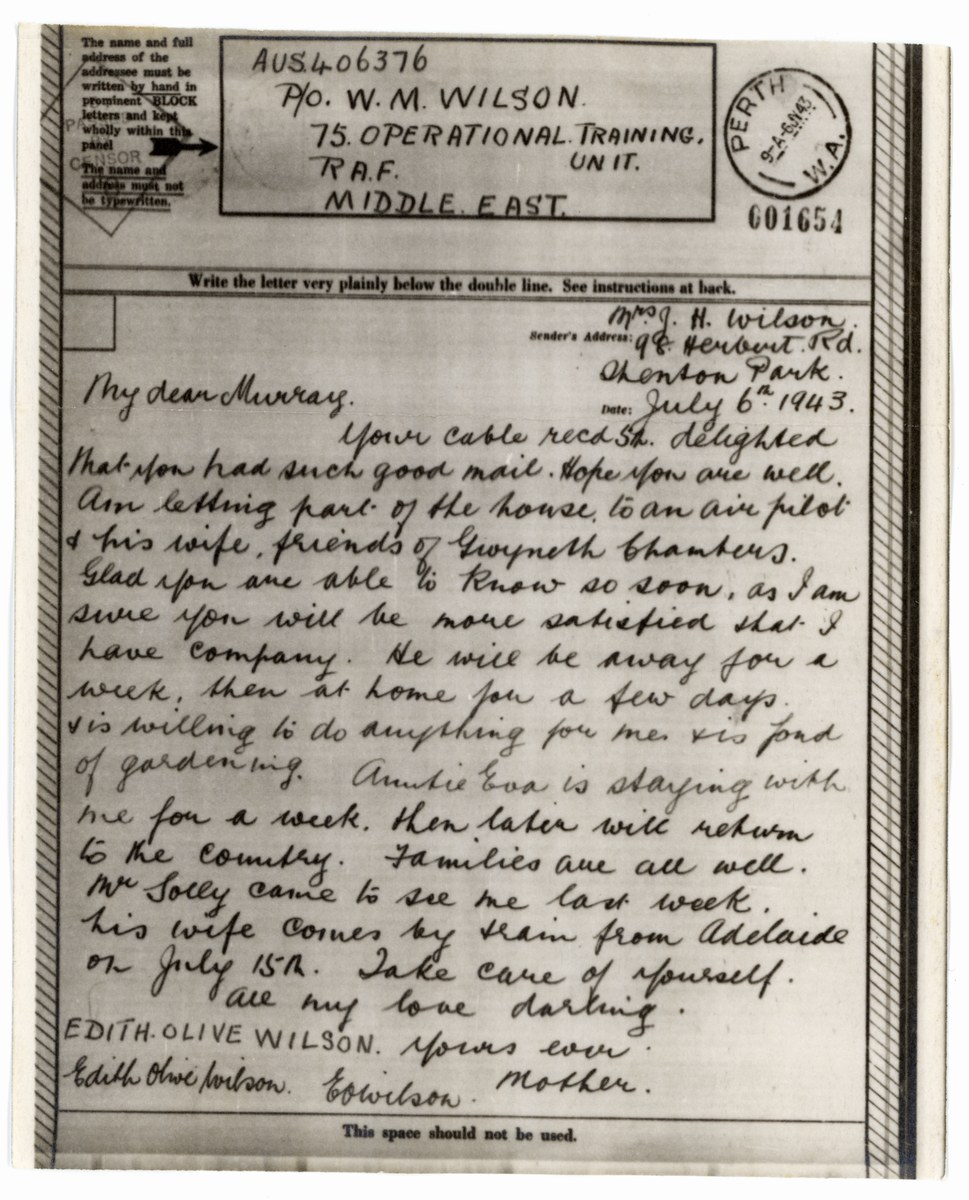
Senders wrote on special forms, which were photographed onto miniature film for air transport. At the receiving end, the images were enlarged and delivered as paper copies of the messages.
The first inward consignment reported to Parliament contained 50,000 letters, dispatched from the Middle East on 2 May 1941 and received in Britain on 13 May. A Postal Museum guide reports that the British service ended on 31 July 1945.
Why It Mattered
Aircraft space was scarce, and shrinking correspondence allowed more personal messages to travel in a limited load. That saving depended on specialist processing facilities: Kodak carried out the photographic work for the participating postal administrations. Photographing, enlarging and delivering the letters still took time, so the flight itself represented only part of a message’s journey.
From Form to Film
- Senders wrote on special forms; the forms were photographed on to miniature film, flown to Britain and enlarged for delivery.
- The first documented inward shipment contained 50,000 letters, despatched from the Middle East on 2 May 1941 and received in Britain on 13 May.
- A 1944 Imperial War Museums newsreel catalogue describes forms passing through a Recordak machine and workers inspecting 16mm film.
The Processing Network
- In January 1943, the Postmaster-General said Kodak Ltd carried out photographic work for his department and participating postal administrations.
- A March 1945 parliamentary answer said that only one unnamed firm could provide the required facilities in several parts of the world for prompt introduction of the service.
End Date and Surviving Examples
- A Postal Museum guide reports 31 July 1945 as the British service's end date; whether it marked final acceptance, operational end, or both remains unresolved.
- Museums Victoria catalogues a surviving Airgraph dated 11 November 1942, sent by Private Jimmy Jones to the Chairman of the Kodak Comforts Fund, with its envelope and attached microfilm.
Sources & Records
Mail Services for Troops Overseas (HL Deb, 20 May 1941)
Explains the Middle East routing problem, reports the first inward Airgraph despatch, and describes special forms photographed onto miniature film and enlarged in Britain.
Airgraph Service (HC Deb, 21 May 1942)
Records British 3d Forces and 8d civilian charges and lists destinations then served. HC Deb vol. 380, c. 404W.
Airgraph Mails and Kodak Arrangements (HC Deb, 20 January 1943)
Records questions about transit timing, photographic handling and local delivery, and identifies Kodak’s photographic work. The correct printed locator is vol. 386, cc. 197–198.
Airgraph Mails (HC Deb, 21 July 1943)
Records five lost Airgraph consignments and duplicate despatches, qualifying claims of perfect reliability. HC Deb vol. 391, cc. 875–876.
Airgraph Service (Contract) (HC Deb, 7 March 1945, vol. 408, c. 2037W)
States that investigation found one firm able to provide the necessary facilities internationally for prompt introduction; it does not establish misconduct or scandal.
The Postal Museum Search Room Guide — Overseas Air Mail Services
The museum’s historical summary gives 31 July 1945 as the service’s cessation date and relates its decline to lighter air letters and increasing aircraft capacity. Printed p. 100; PDF p. 105.
Letter — Airgraph Letter, Private Jimmy Jones to Chairman of Kodak Comforts Fund, 11 Nov 1942
A dated surviving Airgraph output with its envelope and attached microfilm. The page identifies the object as a photographic print and supplies CC BY 4.0 reuse terms for its images.
Describes 1944 footage of women feeding special Airgraph forms through a Recordak machine, checking 16mm film, and comparing film reels with piles of letters.
The Canadian Airgraph Service: Part V — Conclusion
Describes Canadian handling: originals were retained for possible reprints before destruction, while Toronto prepared outgoing messages and handled incoming Kodak prints. Printed pp. 18–21; PDF pp. 20–23.
Airgraph Mails (HC Deb, 20 January 1943, vol. 386, cols. 197–198)
Records Postmaster-General W. S. Morrison’s answers about transit time and Kodak’s photographic work, in response to questions from Mr Hewlett and Mr Bellenger. Questions 35–36; cols. 197–198.
Gallery
Credit
Edith Olive Wilson
Licence
Reuse and sharing, including commercial use, are allowed with attribution. Credit the creator, link the licence and identify any changes. ShareAlike applies to adaptations. Other rights may apply.
Caption
An Airgraph from Edith Olive Wilson to her son Murray in the Middle East, 6 July 1943.